 Skip to content
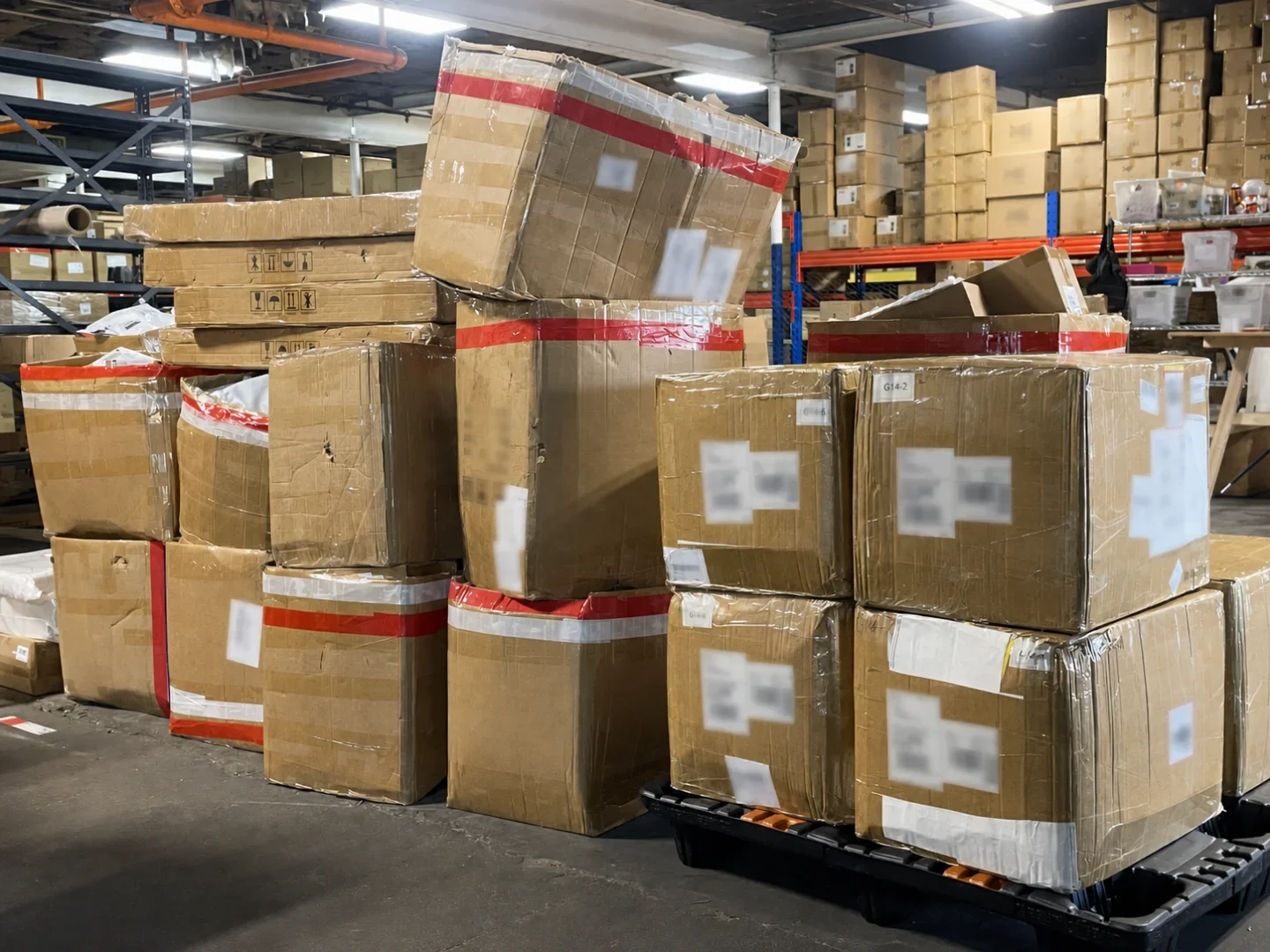
For air freight from China to the USA, set up the importing party first, confirm product requirements, book against a complete shipment brief, and prepare customs documents before arrival. Then track release and arrange delivery. Treat rates, duties, timing, and entry treatment as shipment-specific questions, not fixed assumptions for 2026. [1][3]
1. Establish the importer and check the product
Start with the goods and the party responsible for importing them, rather than a freight quote. CBP says it does not require an importer to have a license or permit, but other agencies may require permits, licenses, or certifications depending on the commodity. “No general CBP importer license” therefore does not mean “no product requirements.” [1]
As a practical setup step, write down the seller, buyer, intended importer of record, forwarder, customs broker, and final receiver. Ask each business to confirm its responsibilities. One business may perform several roles, but do not assume that a courier or customs broker becomes the importer of record simply by handling transport or clearance. Resolve that responsibility explicitly before booking.
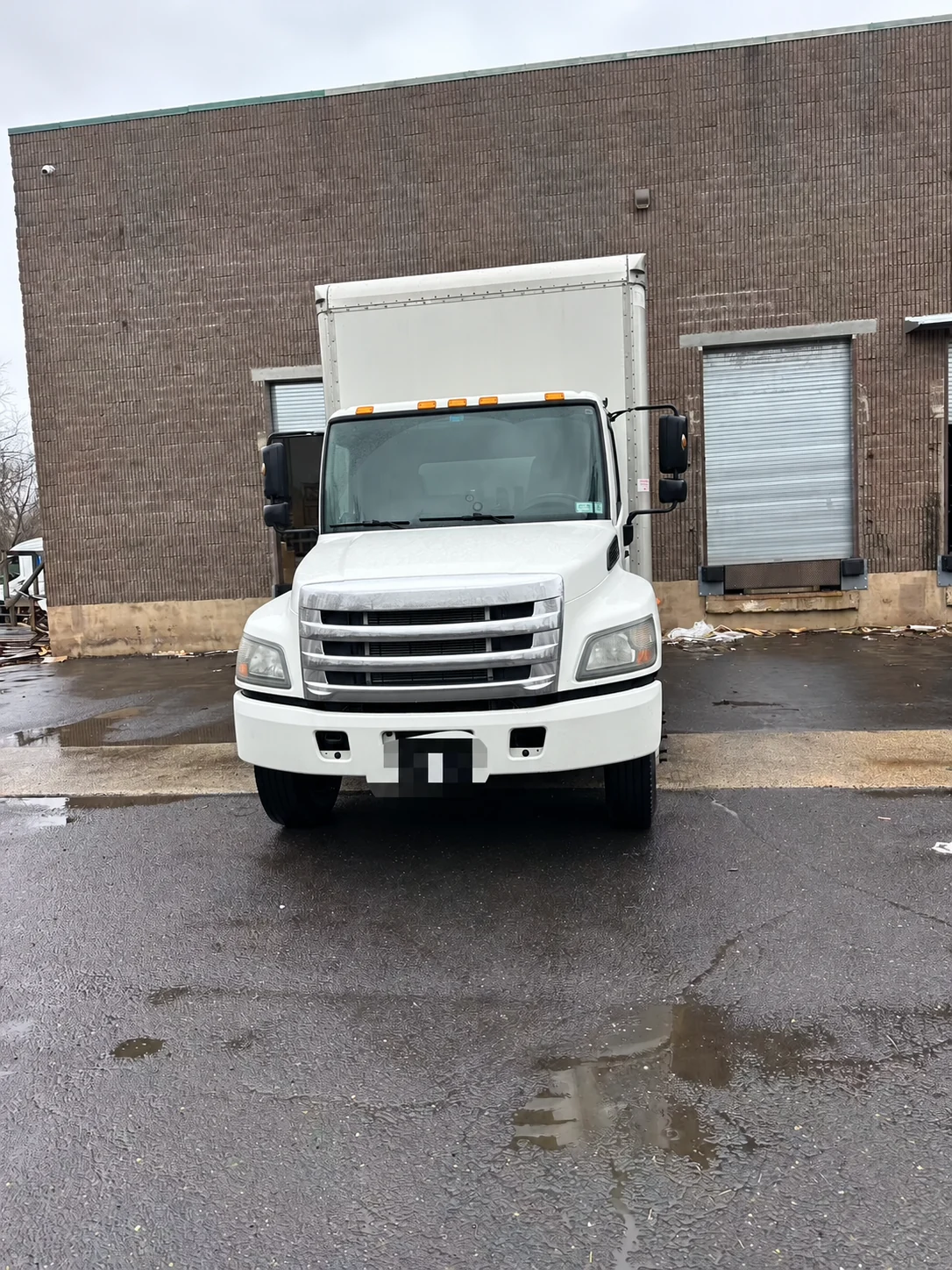
Give the proposed broker a useful product description: what the item is, its materials, intended use, model, and any relevant technical details. Ask which classification information, agency checks, and supporting records are needed. This recommendation follows from CBP’s commodity-specific approach and the export-document guidance to consult the importer or forwarder. [1][3]
For this workflow, assume a commercial shipment with a known buyer and delivery address. Do not apply traveler allowances to commercial cargo: the supplied duty guidance discusses returning travelers and personal effects, not a general commercial air-freight exemption. It does not establish a commercial duty or de-minimis assumption for 2026. [2]
2. Build a booking brief and compare matching scopes
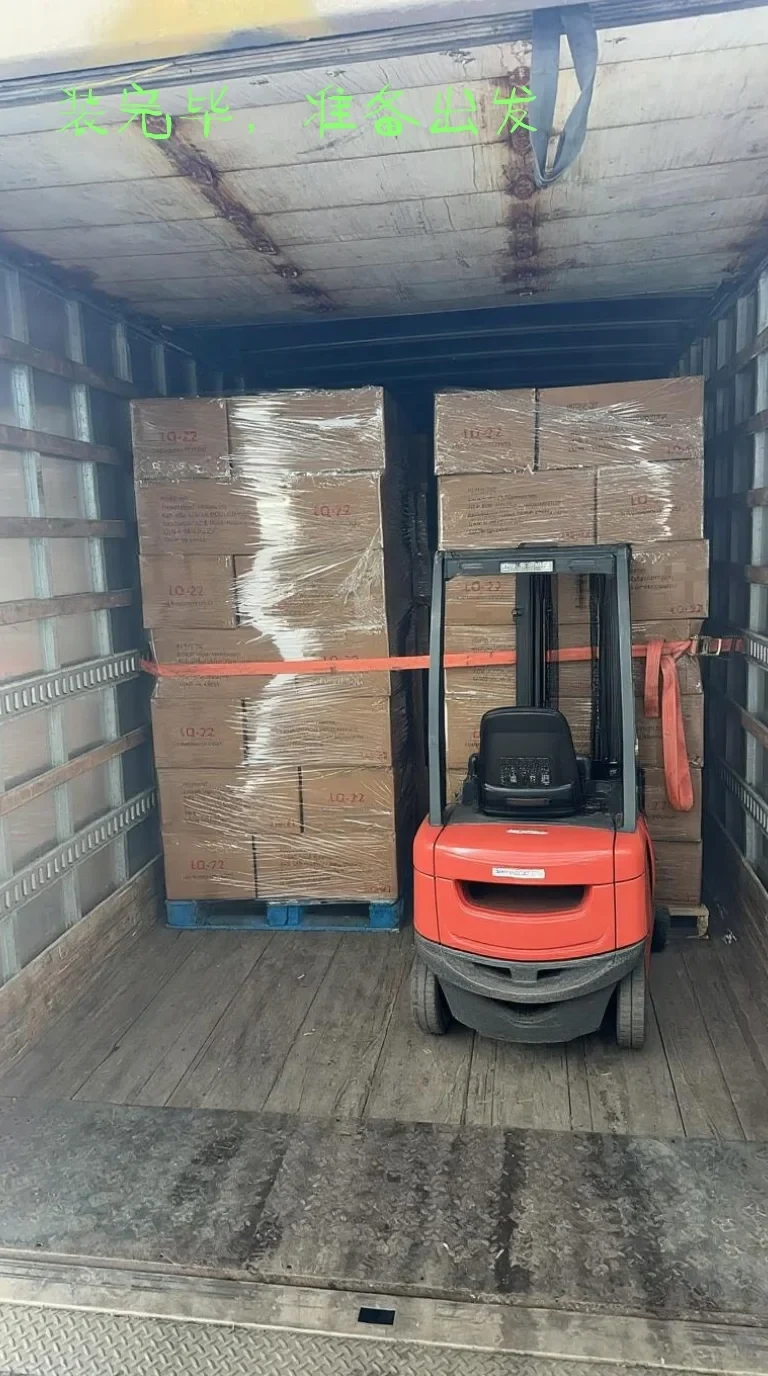
Before requesting prices for air freight China to USA, prepare one brief that every provider receives. Include pickup and delivery addresses, product details, package count, gross weight, outside dimensions, cargo-ready date, and the buyer’s required arrival or delivery date. Treat this as a proposed purchasing method, not a promise that any provider can meet the requested timing.
Ask providers to identify exactly where their responsibility starts and ends. Separate pickup, main transport, destination handling, customs-broker service, and final delivery in the comparison. Request written exclusions and assumptions so that an apparently lower quote is not accepted without understanding its narrower scope.
| Proposed scope | Ask the provider | Buyer’s planning task |
|---|---|---|
| Airport-to-airport | Which origin and destination services are included? | Assign pickup, clearance coordination, and delivery separately. |
| Pickup through destination airport | Does the quote cover origin collection and handling? | Confirm who manages destination charges and collection. |
| Door-to-door proposal | Which clearance services, duties, and delivery conditions are excluded? | Verify importer responsibility rather than relying on the label. |
| Seller-arranged delivery | What trade term, named place, and lawful import arrangement apply? | Check that the sales agreement and transport scope match. |
Compare the calculation method as well as the total. Ask for the quoted weight basis, measurement rules, currency, validity, and possible adjustments. If a proposal uses a dimensional divisor such as 6000 or 5000, treat it as a contractual example to verify, not a universal rule.
Hypothetical worked decision example: A buyer has 12 cartons ready in Shenzhen and needs delivery to a US warehouse. Proposal A covers airport-to-airport transport; Proposal B includes pickup and final delivery but excludes duties. The buyer should add the missing services to A before comparing totals. If B leaves the importer unnamed, the buyer should resolve that gap before accepting. Neither proposal alone proves timely delivery.
Read the infographic as text
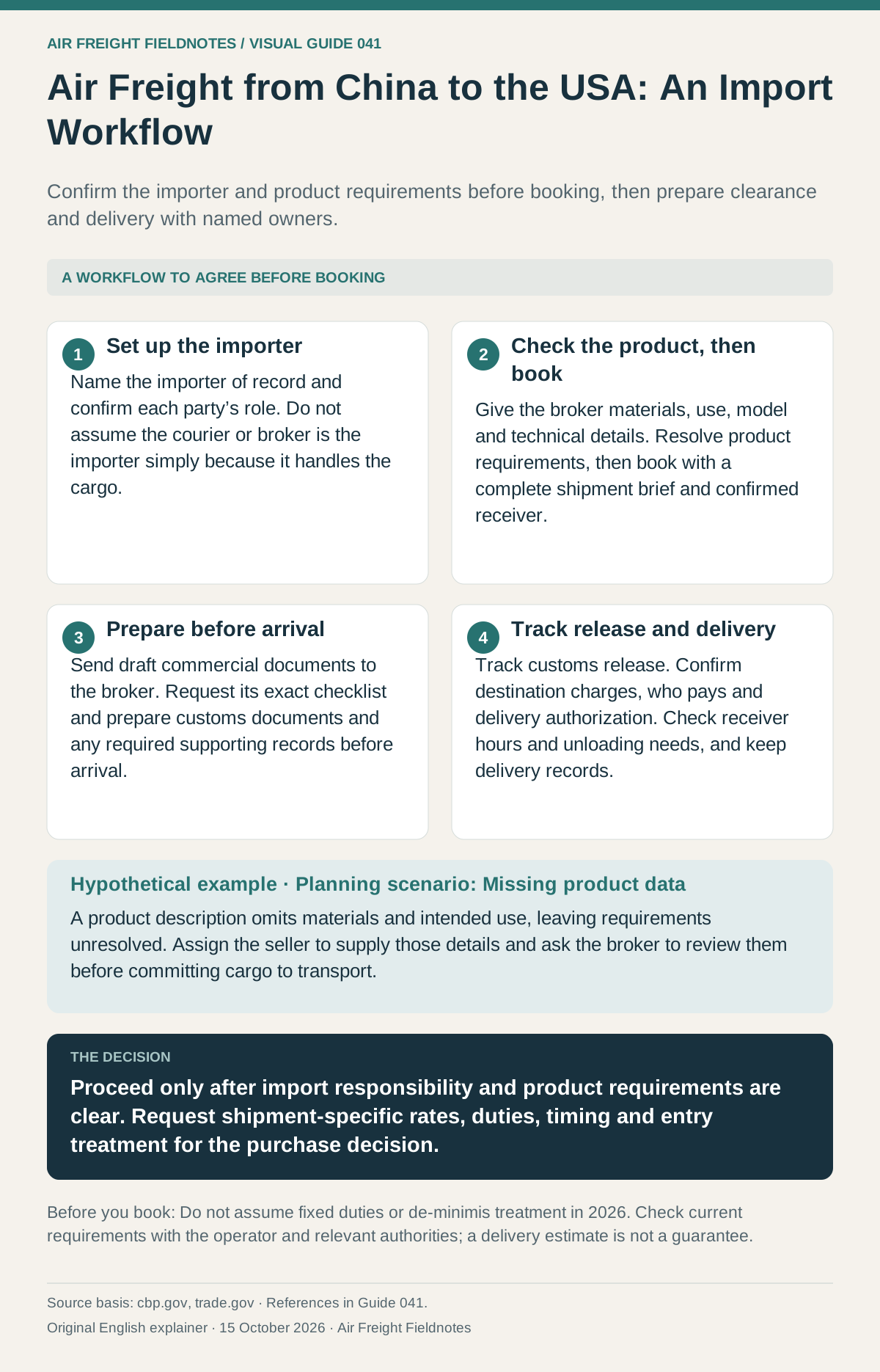
Confirm the importer and product requirements before booking, then prepare clearance and delivery with named owners.
- 1. Set up the importer Name the importer of record and confirm each party’s role. Do not assume the courier or broker is the importer simply because it handles the cargo.
- 2. Check the product, then book Give the broker materials, use, model and technical details. Resolve product requirements, then book with a complete shipment brief and confirmed receiver.
- 3. Prepare before arrival Send draft commercial documents to the broker. Request its exact checklist and prepare customs documents and any required supporting records before arrival.
- 4. Track release and delivery Track customs release. Confirm destination charges, who pays and delivery authorization. Check receiver hours and unloading needs, and keep delivery records.
Planning scenario: Missing product data A product description omits materials and intended use, leaving requirements unresolved. Assign the seller to supply those details and ask the broker to review them before committing cargo to transport.
Decision: Proceed only after import responsibility and product requirements are clear. Request shipment-specific rates, duties, timing and entry treatment for the purchase decision.
Do not assume fixed duties or de-minimis treatment in 2026. Check current requirements with the operator and relevant authorities; a delivery estimate is not a guarantee.
3. Prepare the broker’s file before arrival
Use pre-arrival preparation to find missing information while corrections are still manageable. The supplied export-document guidance recommends starting with the foreign customer/importer or freight forwarder to determine required documents. It also warns that particular products or importing countries may require special documents. The practical recommendation is to obtain a shipment-specific checklist rather than reuse an old file unchanged. [3]
As a working document pack, propose a commercial invoice, packing list, transport reference, and any product-specific records requested by the broker. The supplied guidance identifies commercial invoices and packing lists among commonly used documents, but it does not establish a complete document list for every China-to-USA air shipment. Ask the broker to confirm what is sufficient. [3]
Review drafts against each other. Check the parties’ names, product descriptions, quantities, values, currency, package count, and weights. Ask the seller to explain inconsistencies instead of changing descriptions merely to make documents appear aligned. This is a recommended quality-control step based on the source’s emphasis on correct information for customs clearance. [3]
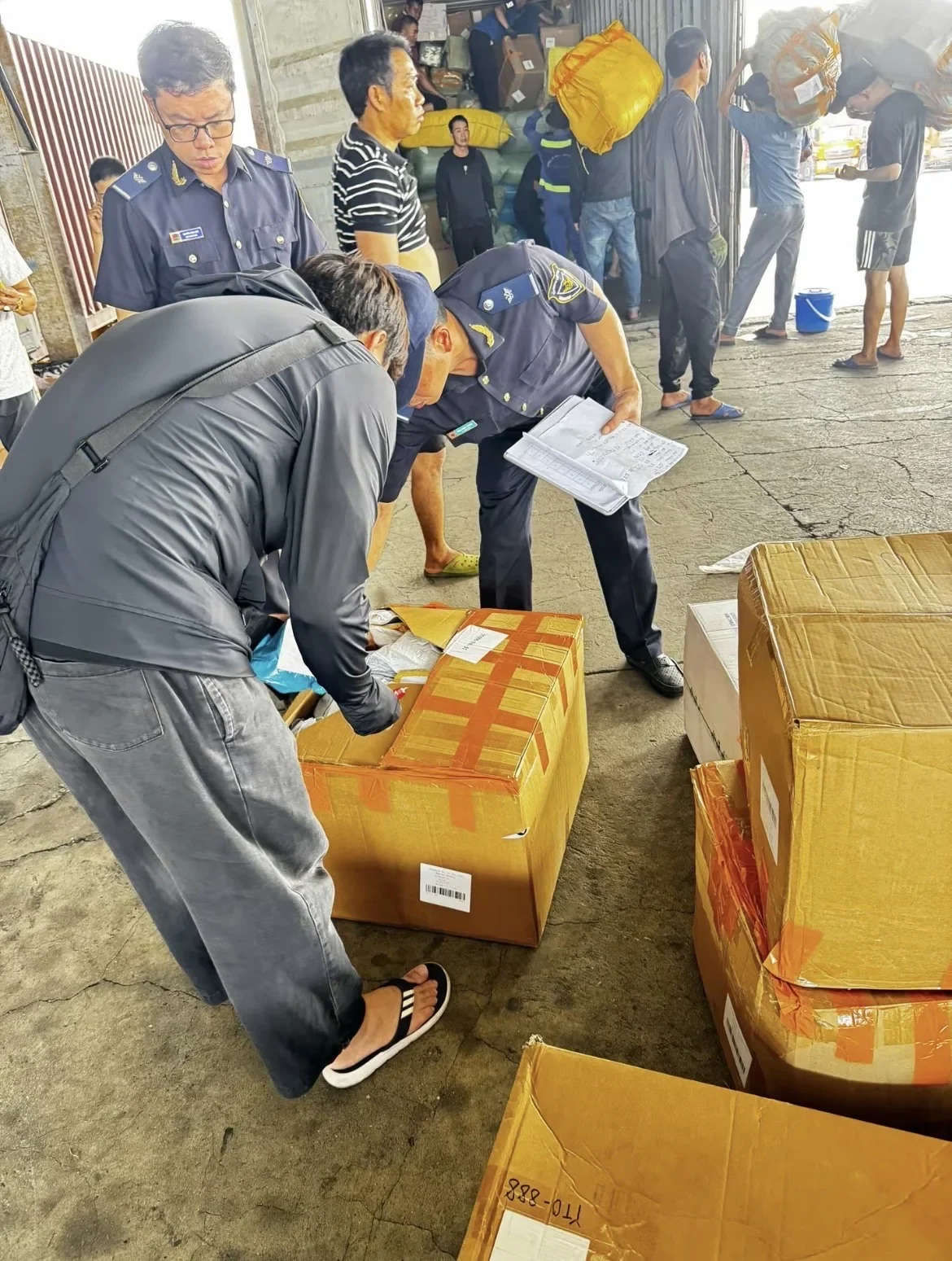
Do not use an air waybill’s existence as your sole departure check: an AWB can be issued before departure. Request separate transport status confirmation. Also keep customs preparation distinct from transport progress; a booking reference should not be treated as proof that the broker has accepted the file.
4. Confirm release, then control final delivery
Agree in advance who will report customs status, who will answer information requests, and who will authorize delivery. CBP’s importer guidance points users toward arrival, entry, classification, and restricted-merchandise requirements. That supports treating clearance as a separate workstream, rather than assuming arrival alone completes import processing. [1]
Use this actionable handover checklist:
- Confirm the intended importer and broker have accepted their roles.
- Obtain the broker’s outstanding-information list before dispatch.
- Record the transport reference and request updated movement status.
- Ask for explicit confirmation of release status and any remaining holds.
- Confirm destination charges, payment responsibility, and delivery authorization.
- Check the receiver’s address, contact, opening hours, and unloading needs.
- Keep delivery records and report visible discrepancies promptly under the applicable contract.
Plan for failure cases: incomplete product information, inconsistent documents, unresolved agency requirements, changed transport arrangements, or an unavailable receiver. These are planning scenarios, not predictions about any shipment. Assign an owner to each issue and request a revised plan when assumptions change; do not treat the original delivery estimate as an unconditional guarantee.
5. Frequently asked questions
Does a US importer always need an import license?
No general CBP importer license is required according to the supplied CBP guidance. However, another agency may require a permit, license, or certification for the particular commodity. Check the product’s requirements before shipping rather than interpreting the general statement as blanket permission. [1]
Can I budget using a fixed duty or de-minimis assumption?
Not from these sources. The supplied duty excerpt concerns traveler and personal-effects situations, so it cannot establish commercial shipment treatment in 2026. Request a shipment-specific assessment instead of building the purchase decision around an assumed exemption or fixed rate. [2]
What should I send the broker first?
Start with clear product information and draft commercial documents, then request the broker’s exact checklist. The export-document guidance recommends consulting the importer or forwarder and notes that special documents may be required. Use that review to identify missing evidence before committing the cargo to transport. [3]
Sources and further reading
- Tips for New Importers and Exporters | U.S. Customs and Border ProtectionPrimary source · Retrieved 15 October 2026
- Customs Duty Information | U.S. Customs and Border ProtectionPrimary source · Retrieved 15 October 2026
- Common Export DocumentsPrimary source · Retrieved 15 October 2026
Field research
- Reddit field research 1Topic discovery and anecdotal context; not evidence of a general rule.
- Reddit field research 2Topic discovery and anecdotal context; not evidence of a general rule.
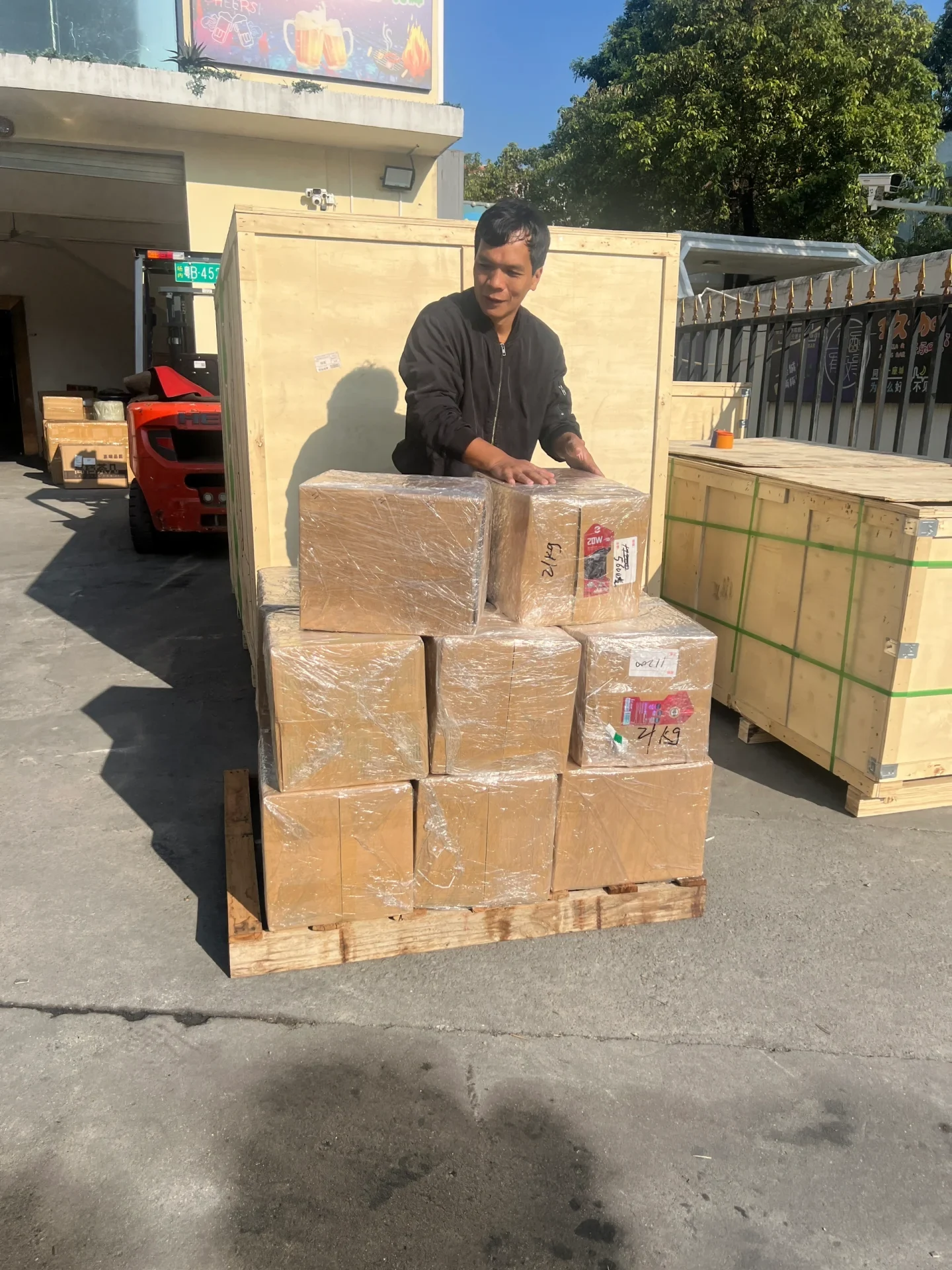
Prepared from the linked primary references and public field research. Field photographs illustrate general handling; worked examples use separate hypothetical figures. Acceptance, charges and destination requirements should be checked against the specific shipment and current operator or authority instructions.