 Skip to content

The practical answer
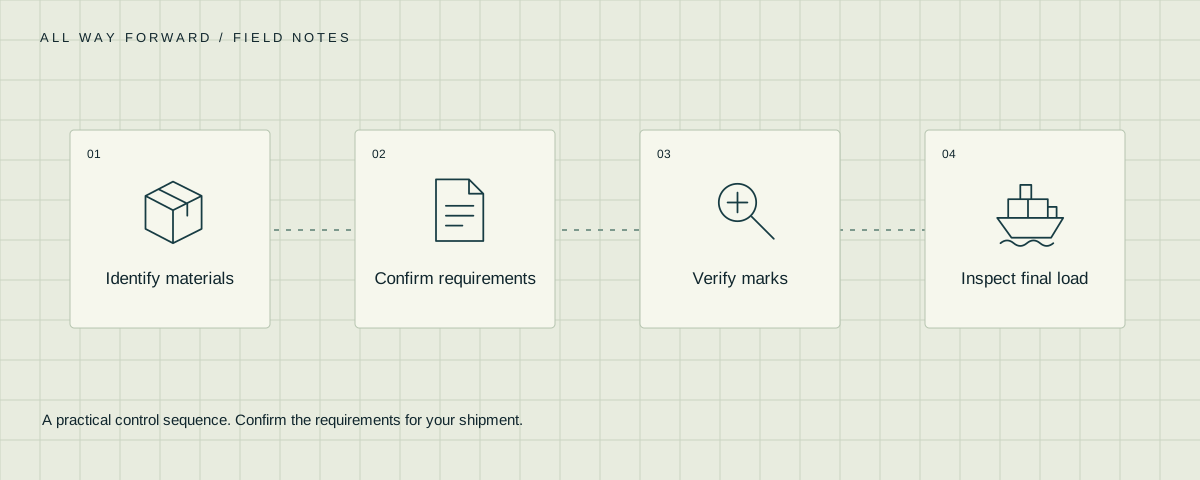
Check the packaging material, not just the product. Solid-wood pallets, crates and dunnage may fall under ISPM 15 requirements. Obtain compliant packaging from an authorized provider, inspect the required marks and verify destination requirements. A plywood panel does not make untreated solid-wood framing disappear.
Separate the product from its packaging
A wooden table and the timber used to support that table during shipping are different things to assess. ISPM 15 concerns wood packaging material, including dunnage. Processed wood such as plywood can fall outside its scope, while a package containing solid-wood components needs those components assessed. [1]
Ask the supplier to identify the material of the base, skids, blocks, frame, panels and loose bracing. “Plywood crate” is incomplete if the feet and internal supports are solid timber. Save a material list and clear photographs before the goods are enclosed.
Use the correct provider and mark
Arrange treatment and marking through an appropriately authorized provider. Treatment is not synonymous with fumigation; applicable approved treatment methods and national implementation must be checked. For U.S. imports, APHIS describes compliance checks, approved sourcing and the information in the ISPM mark. [2]
Inspect mark legibility and the identifying information before loading. For U.S.-bound shipments, APHIS announced resumption of enforcement of the required hyphen separating the country and producer codes from January 1, 2026. [3] Ask the supplier to correct noncompliant packaging through its approved process; do not draw or print an official mark yourself.
Check the whole shipment
Inspect replacement pallets and last-minute dunnage as well as the original crate. A compliant box placed on an unverified solid-wood skid can introduce a new issue. Record what was actually loaded, including any rework performed by a consolidation warehouse.
Look for bark, pest evidence, contamination and physical damage. If marks are unreadable or the provider cannot substantiate compliance, hold the packaging decision for review. Keep the treatment or supplier records requested for the route and any additional destination instructions. A generic fumigation certificate should not be assumed to replace a required mark.
Make the supplier instruction explicit
Suggested brief: “Identify all solid-wood packaging and dunnage for this order. Confirm the destination requirements with the approved packaging provider. Supply photographs of each relevant mark and of the completed package before collection. Notify us before substituting or repairing wooden components.”
The shipment coordinator should confirm the current requirements with the destination broker or plant-protection authority. Requirements for wooden products themselves, as well as cleanliness or other biosecurity conditions, may need a separate review. Complete that review before the cargo is difficult to access inside a container.
Use before the next handoff
Your action checklist
Ticks stay in this browser. No shipment details are sent.
Common questions
Does all wood packaging need fumigation?
No. Determine whether the material is regulated and which approved treatment or exemption applies. Fumigation is not the only possible treatment.
Is a plywood crate automatically exempt?
Assess its full construction. Solid-wood skids, frames or dunnage may still require compliance even when the panels are plywood.
Sources & scope
Primary references checked 21 October 2026. Carrier examples describe that provider’s process; confirm the requirements of your own booking and destination.
- IPPC — ISPM 15: wood packaging in international trade ↗
- USDA APHIS — Import compliant wood packaging ↗
- USDA APHIS — ISPM 15 mark enforcement from January 2026 ↗
Editorial preparation: Allwayforward Editorial Team. The worksheets and worked examples are original planning aids, not carrier forms or a substitute for shipment-specific instructions.