 Skip to content

Documents & release
Bill of lading draft checklist: what to verify before approval
Check a bill of lading draft against the actual shipment: parties, route, packages, cargo weight, container numbers and release instructions.
Practical guideField guide / 02
One shipment. One consistent record.

A useful starting point
Documents are a set of connected instructions. An invoice describes a sale; a packing list identifies the packed goods; shipping instructions feed the transport document; customs filings serve a different purpose again. A correct document can still cause problems when it conflicts with another one.
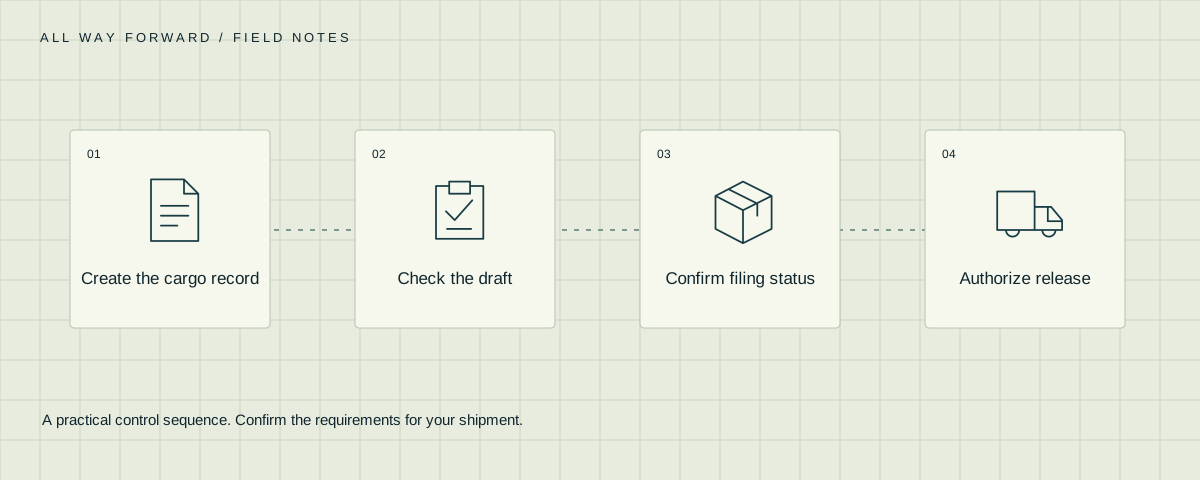
Keep a versioned shipment register containing the parties, purchase orders, package identifiers, quantities, packed measurements, routing and document references. Assign one coordinator to circulate approved changes. Do not silently edit a carrier document or copy a previous shipment without checking it. When a bank is involved, obtain its documentary requirements before booking; general shipping checklists cannot substitute for the actual credit terms.
Documents & release
Check a bill of lading draft against the actual shipment: parties, route, packages, cargo weight, container numbers and release instructions.
Practical guide
Documents & release
Understand cargo release options and coordinate house and master documents, consignee identity, customs status and destination pickup.
Practical guide
Documents & release
Prepare a consistent broker handoff with product descriptions, invoice values, packing data, origin information and filing responsibilities.
Practical guideFrom definition to action
Use a glossary explanation for a term, then return to the guide to apply it to your shipment.
Primary references checked 21 October 2026. Carrier examples describe that provider’s process; confirm the requirements of your own booking and destination.
Editorial preparation: Allwayforward Editorial Team. The worksheets and worked examples are original planning aids, not carrier forms or a substitute for shipment-specific instructions.