 Skip to content
CBM (Cubic Meter)
CBM measures the space occupied by cargo. For a rectangular package, multiply its outer length, width and height in meters; one cubic meter is 1 m × 1 m × 1 m.
Understand it in practiceWhere it fits in the journey
Highlighted stages are commonly relevant- 01Agree — commonly relevant
- 02Prepare — commonly relevant
- 03Transport
- 04Clear
- 05Deliver
CBM (Cubic Meter) at a glance
- 1.20 m length
- 0.80 m width
- 1.00 m height
Should I measure the product or the finished package?
Measure the finished carton or crate, not the unpacked product. Pallets, protruding parts and non-stackable space can affect freight calculations.
One crate, then the whole order
A finished chair crate measures 1.20 m × 0.80 m × 1.00 m. It occupies 0.96 CBM. Five identical crates total 4.80 CBM before any separate pallets or additional packing are added.
Three numbers that should not be mixed
| Measure | What it describes | Use it for |
|---|---|---|
| CBM | Space occupied by packed cargo | Volume and loading planning |
| Gross weight | Goods plus their packaging | Handling and weight assessment |
| Chargeable weight | Agreed freight billing basis | Rate calculation |
Scroll sideways to compare
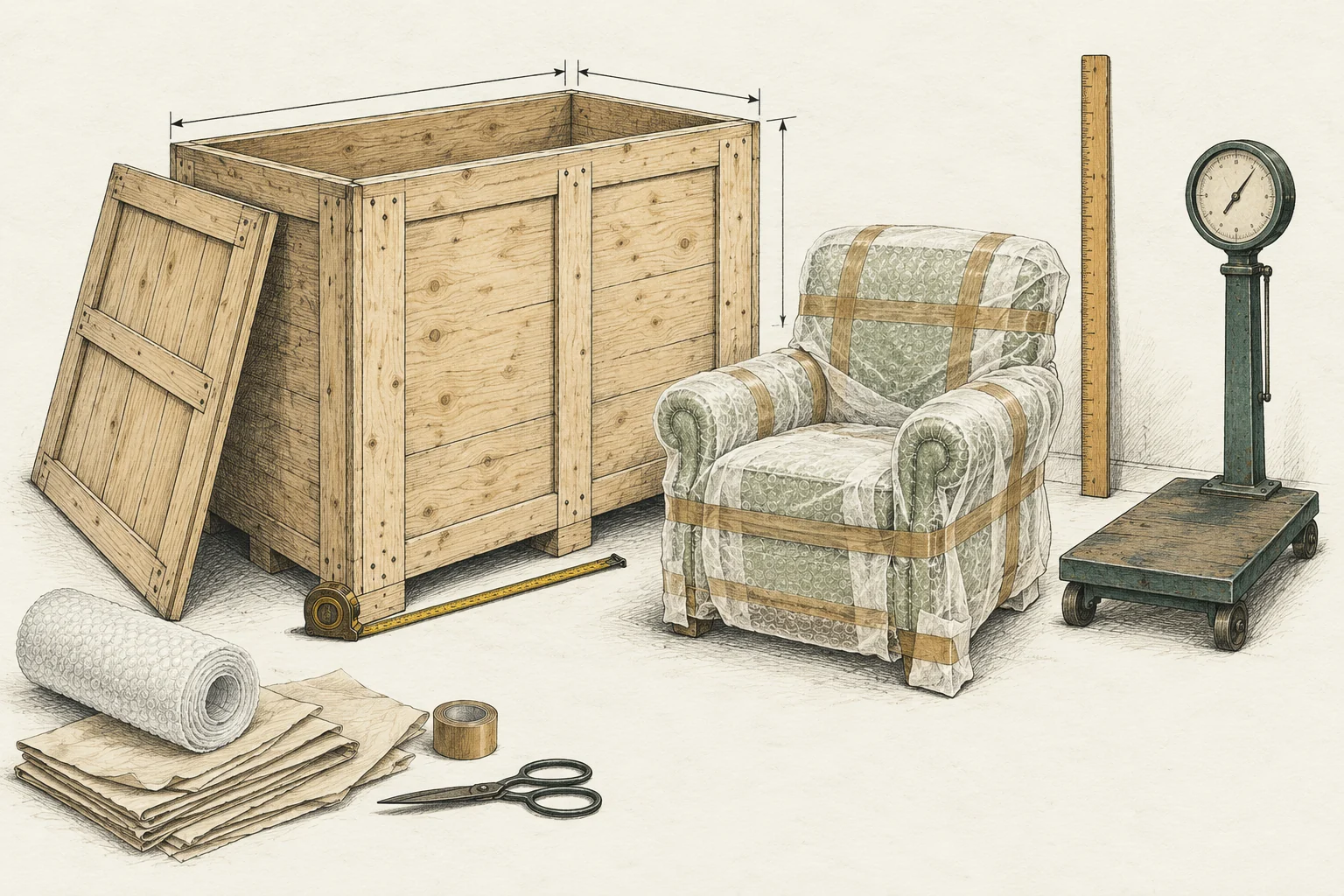
From dimensions to a number you can use.
Enter the outer size of identical finished packages. Add different-sized pieces separately.
Before you book
For size & weight, have these details ready:
- Outer dimensions after final packing
- Gross weight including pallets and crates
- Carrier divisor, minimums and rounding
Sources & further reading
Plain-language educational guidance. The applicable contract, carrier tariff, official rules or insurance policy takes precedence. Illustrations show concepts, not a specific shipment or facility.
Published by Allwayforward as a plain-language freight reference. Examples are illustrative, not customer case studies. For a correction, send the term and supporting source.
 Chargeable Weight
 Gross Weight
 Net Weight