 Skip to content
Chargeable Weight
Chargeable Weight is the weight used to calculate a freight charge. For many air services it is the higher of actual gross weight and volumetric weight, subject to the service's rules.
Understand it in practiceWhere it fits in the journey
Highlighted stages are commonly relevant- 01Agree — commonly relevant
- 02Prepare — commonly relevant
- 03Transport
- 04Clear
- 05Deliver
Chargeable Weight at a glance
- Actual gross weight
- Volumetric weight
- Applicable billing rules
Is chargeable weight always the scale weight?
Use the quoted divisor, rounding and minimums. Air freight, express and ocean LCL do not all use the same conversion.
A light but bulky shipment
Suppose two cartons each measure 100 × 80 × 60 cm and weigh 45 kg. Total volume is 0.96 CBM and actual weight is 90 kg. With an agreed air-freight divisor of 6,000, volumetric weight is 160 kg, so the comparison starts at 160 kg before carrier rounding and minimums.
Three numbers that should not be mixed
| Measure | What it describes | Use it for |
|---|---|---|
| CBM | Space occupied by packed cargo | Volume and loading planning |
| Gross weight | Goods plus their packaging | Handling and weight assessment |
| Chargeable weight | Agreed freight billing basis | Rate calculation |
Scroll sideways to compare
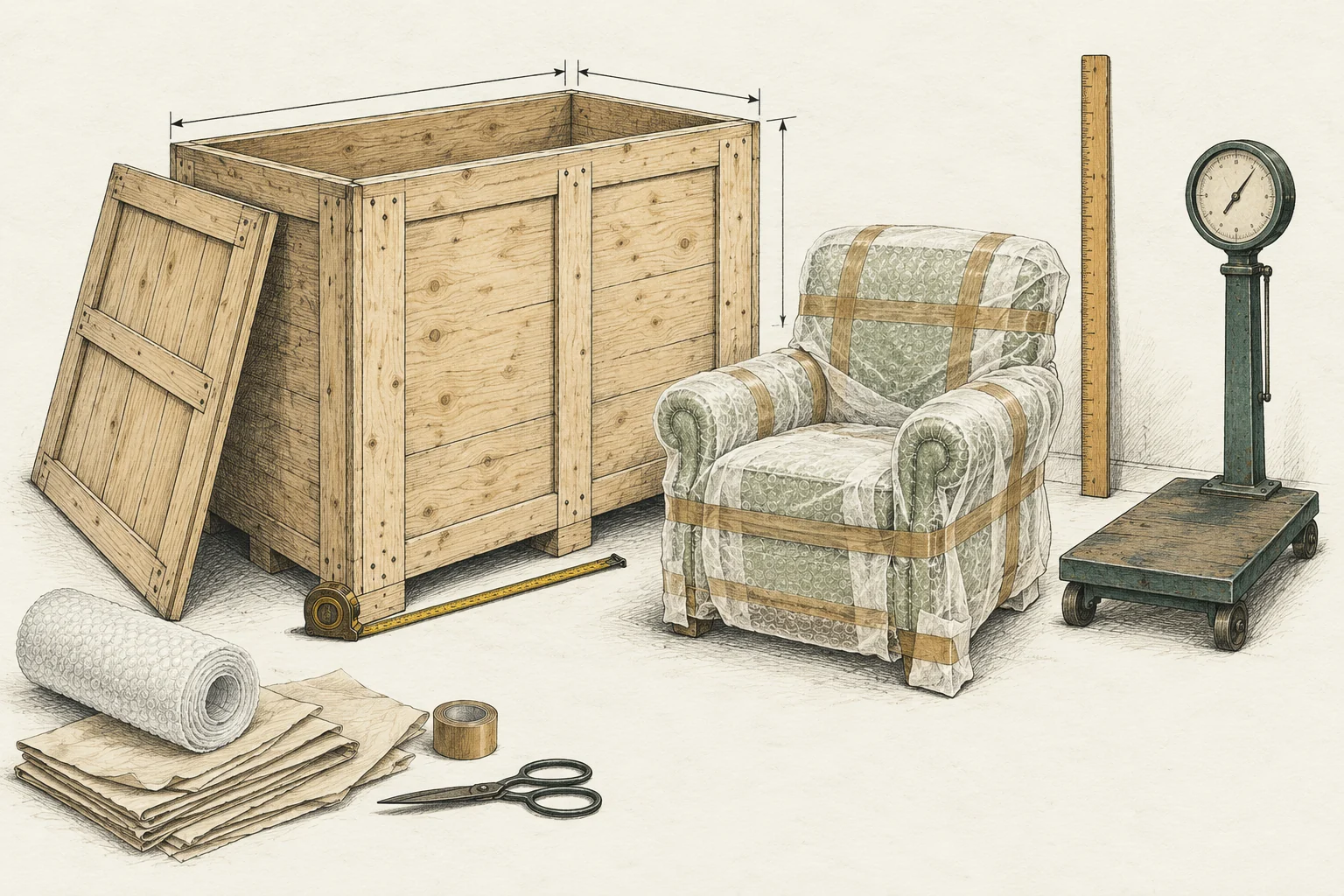
From dimensions to a number you can use.
Enter the outer size of identical finished packages. Add different-sized pieces separately.
Before you book
For size & weight, have these details ready:
- Outer dimensions after final packing
- Gross weight including pallets and crates
- Carrier divisor, minimums and rounding
Sources & further reading
Plain-language educational guidance. The applicable contract, carrier tariff, official rules or insurance policy takes precedence. Illustrations show concepts, not a specific shipment or facility.
Published by Allwayforward as a plain-language freight reference. Examples are illustrative, not customer case studies. For a correction, send the term and supporting source.
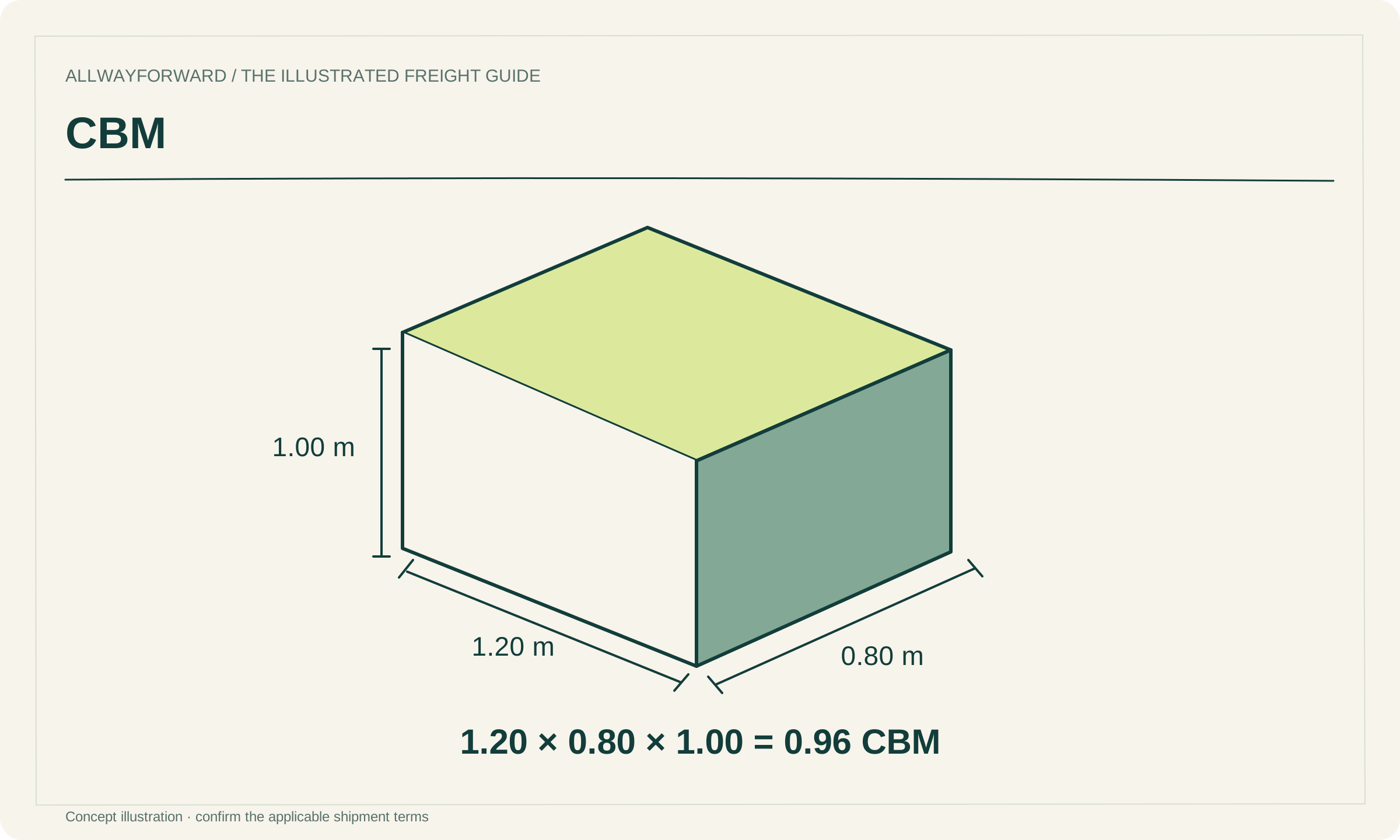 CBM (Cubic Meter)
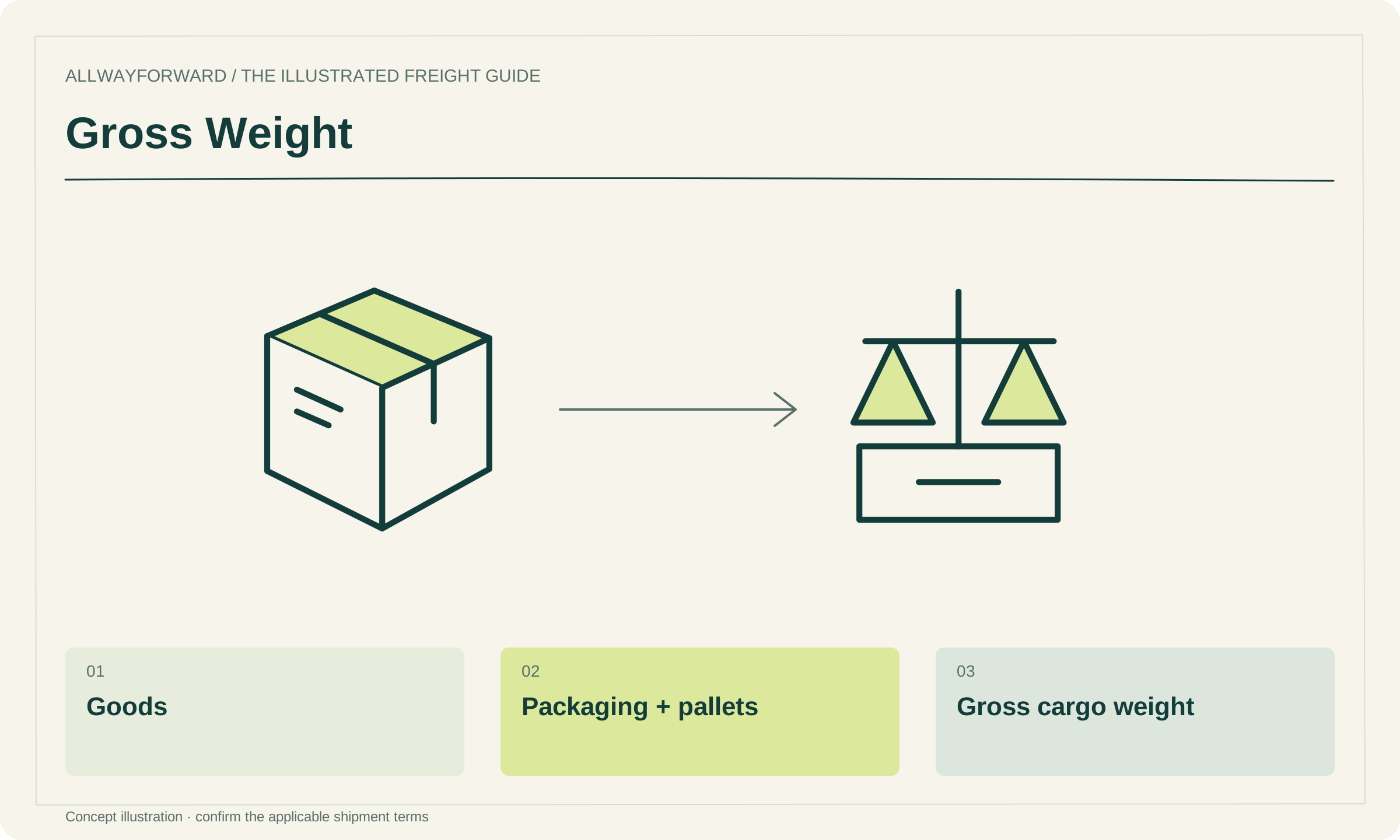 Gross Weight
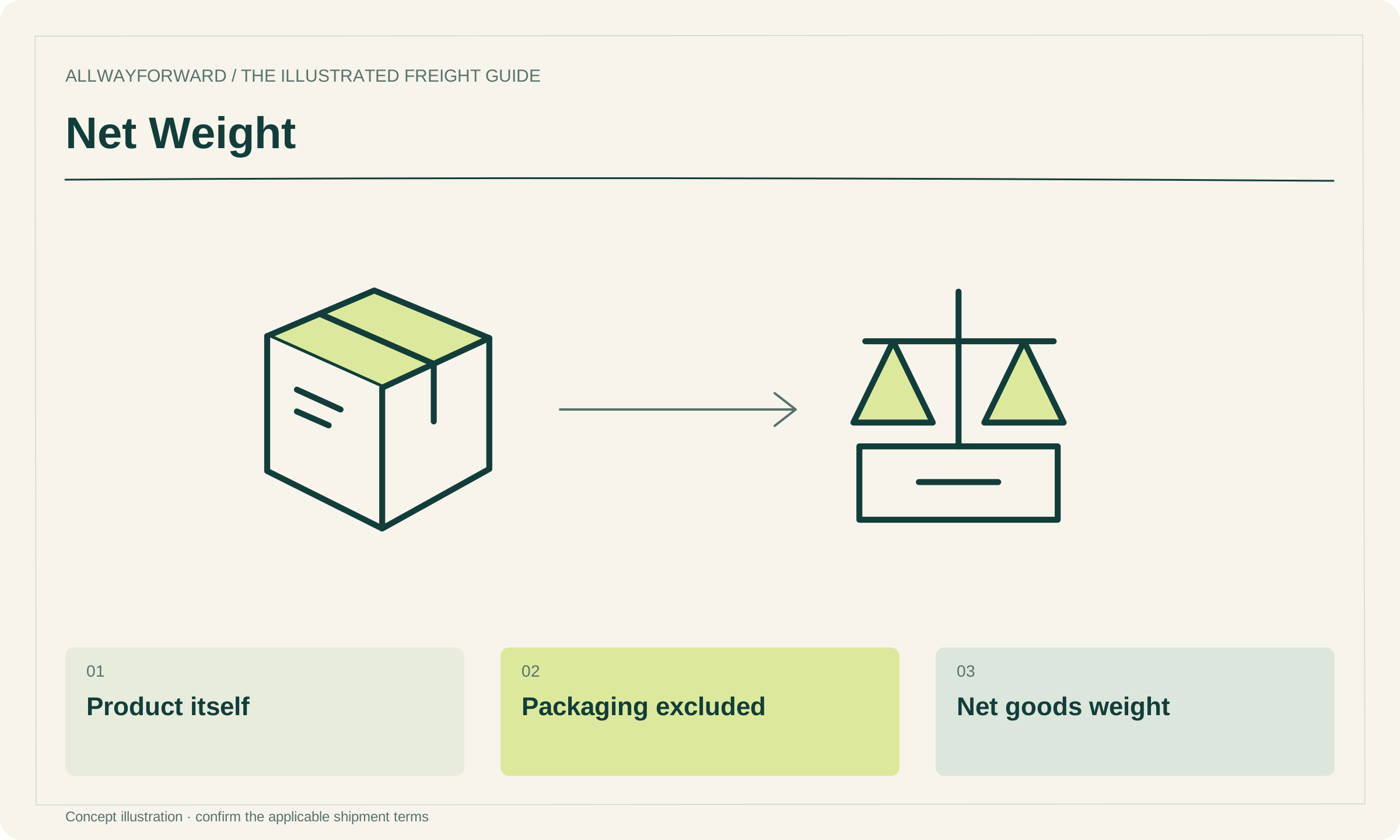 Net Weight