 Skip to content
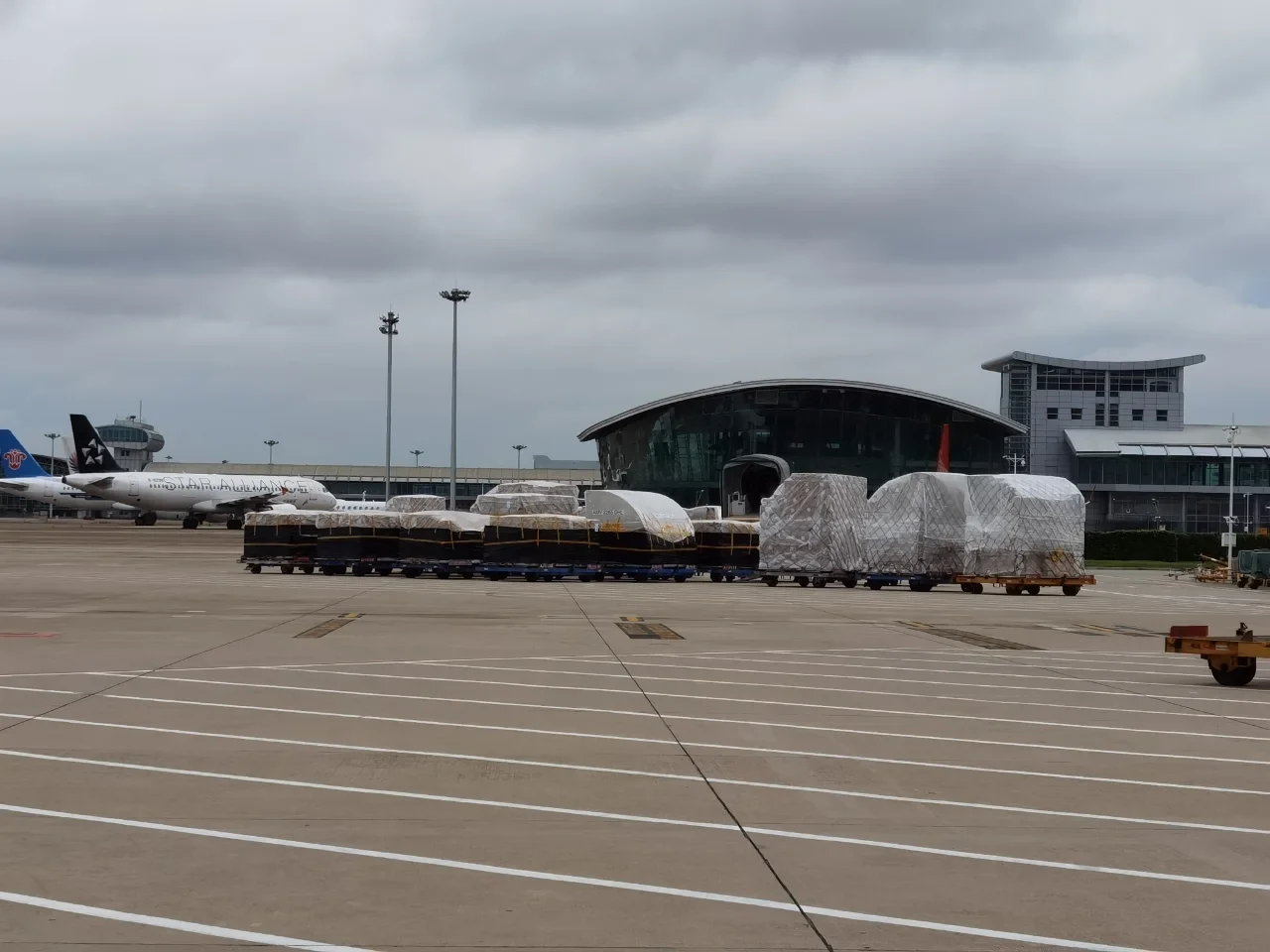
For shenzhen air freight, plan factory pickup around verified product data, final packed dimensions, export paperwork and a clearly defined delivery scope. Compare SZX with alternative gateways using written, like-for-like quotes. Confirm cargo acceptance before dispatch, and assign responsibility for customs and destination delivery rather than assuming everything is included. [1][2]
Start with electronics data, not a pickup date
Cargo acceptance checks whether a shipment is ready for carriage under applicable operator requirements and export, transit and import rules. Packaging, clear identification and correct labels matter. For a Shenzhen factory shipment, the practical planning implication is to resolve product and packing questions before releasing the vehicle for collection. This is a recommendation, not a prescribed booking sequence. [1]
Build a product sheet showing the exact model, function, quantity and materials relevant to handling. For electronics, ask the factory to identify batteries, any separately packed cells, liquids or other components that could affect acceptance. Request supporting technical information where relevant. Treat this as an information-gathering step: the available guidance does not establish that every electronic product is dangerous goods or determine any particular product’s classification. Ask the proposed operator or forwarder what evidence it needs. [1]
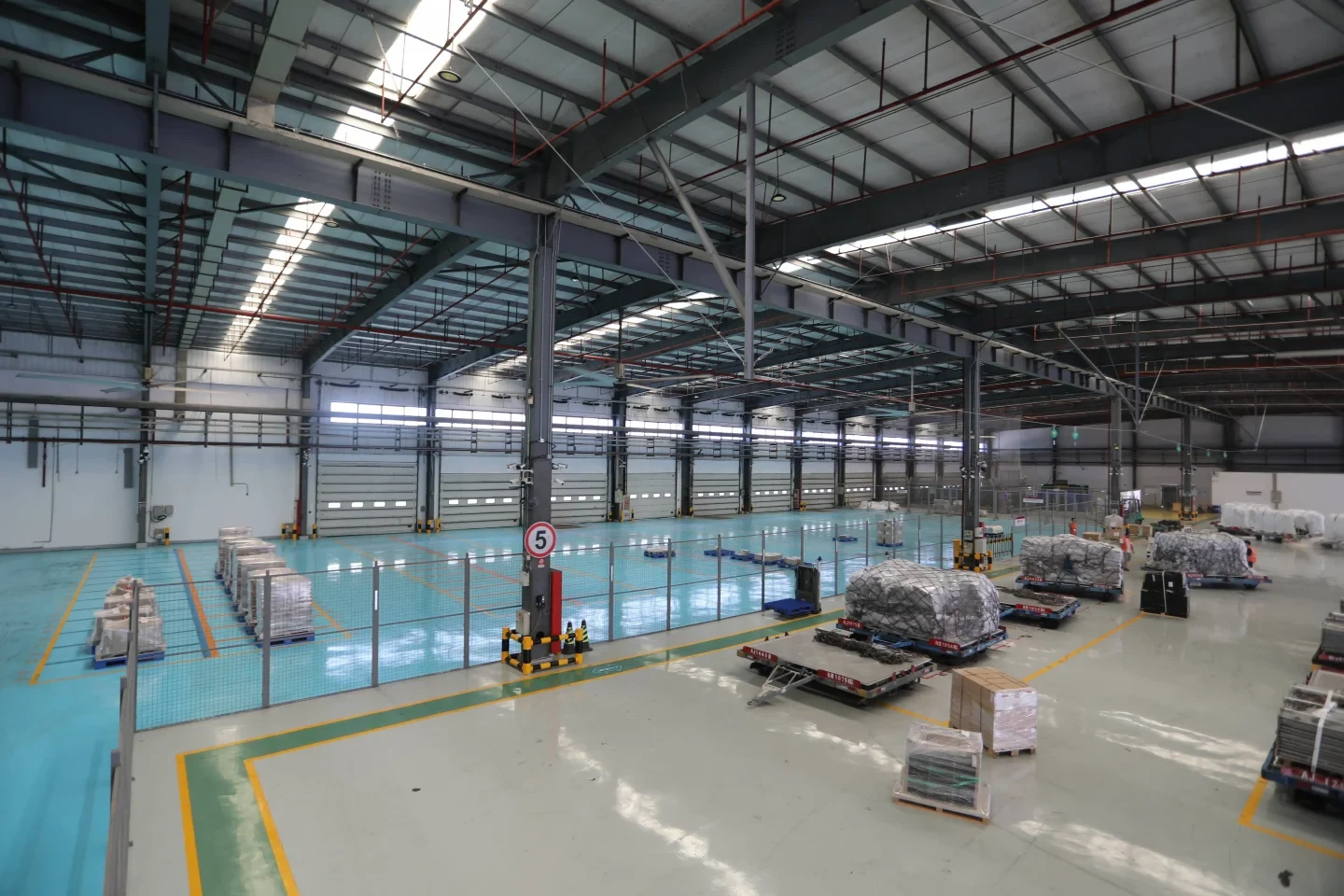
Do not rely on a description such as “electronic accessories” when the actual contents are more specific. As a recommended control, make the product description consistent across the booking request, invoice and package identification. If the factory changes the model, battery configuration or packing after review, ask whether acceptance needs to be checked again. [1][2]
Measure the packed shipment and define factory pickup
Record the final number of cartons or pallets, each unit’s outside dimensions and gross weight. Distinguish a product’s retail-box size from its transport packaging. These are recommended quote inputs: packaging must protect the contents, while export transaction information includes goods descriptions, quantities and weight. Ask how the provider will verify measurements and handle discrepancies. [1][2]
For planning, request both actual weight and the provider’s contractual chargeable-weight calculation. If a quote uses length × width × height in centimetres divided by 6000 or 5000, treat that divisor as an agreed example, not a universal rule. Confirm rounding, whether calculations are per package, and how palletisation affects the result. This is a proposed quote-review method; the cited references do not specify charging formulas. [1][2]

Define pickup in writing: collection address, factory contact, cargo-ready time, loading responsibility, access constraints and whether the driver receives cartons or completed pallets. Ask what happens if goods are not ready or packing differs from the booking. This recommendation turns the handling requirement for ready, properly packed cargo into a usable handover check; it does not promise collection or departure timing. [1]
Build an export file and name each responsible party
Start the document review with the overseas customer/importer or freight forwarder. The supplied export-document guidance recommends those contacts and notes that some products or shipments need special documents. A pro forma invoice supports negotiation; the commercial invoice is used for import customs clearance. Do not assume a quotation alone provides a complete clearance file. [2]
As a working file, assemble the commercial invoice, packing details, product information, party contact details and any additional documents requested after review. Cross-check quantities, descriptions and weights against the actual shipment. Mark unresolved fields rather than filling them with guesses. This proposed workflow follows the source’s emphasis on correct information; it is not a universal document list for every China export or destination. [1][2]
Use a responsibility sheet naming who arranges pickup, export formalities, carriage, import clearance and final delivery. A forwarder arranges movement on behalf of businesses, but that description alone does not establish the scope of a particular booking. Ask separately who will act as importer of record and obtain confirmation rather than inferring that role from a courier or brokerage service label. This is a recommended contractual check. [2][3]
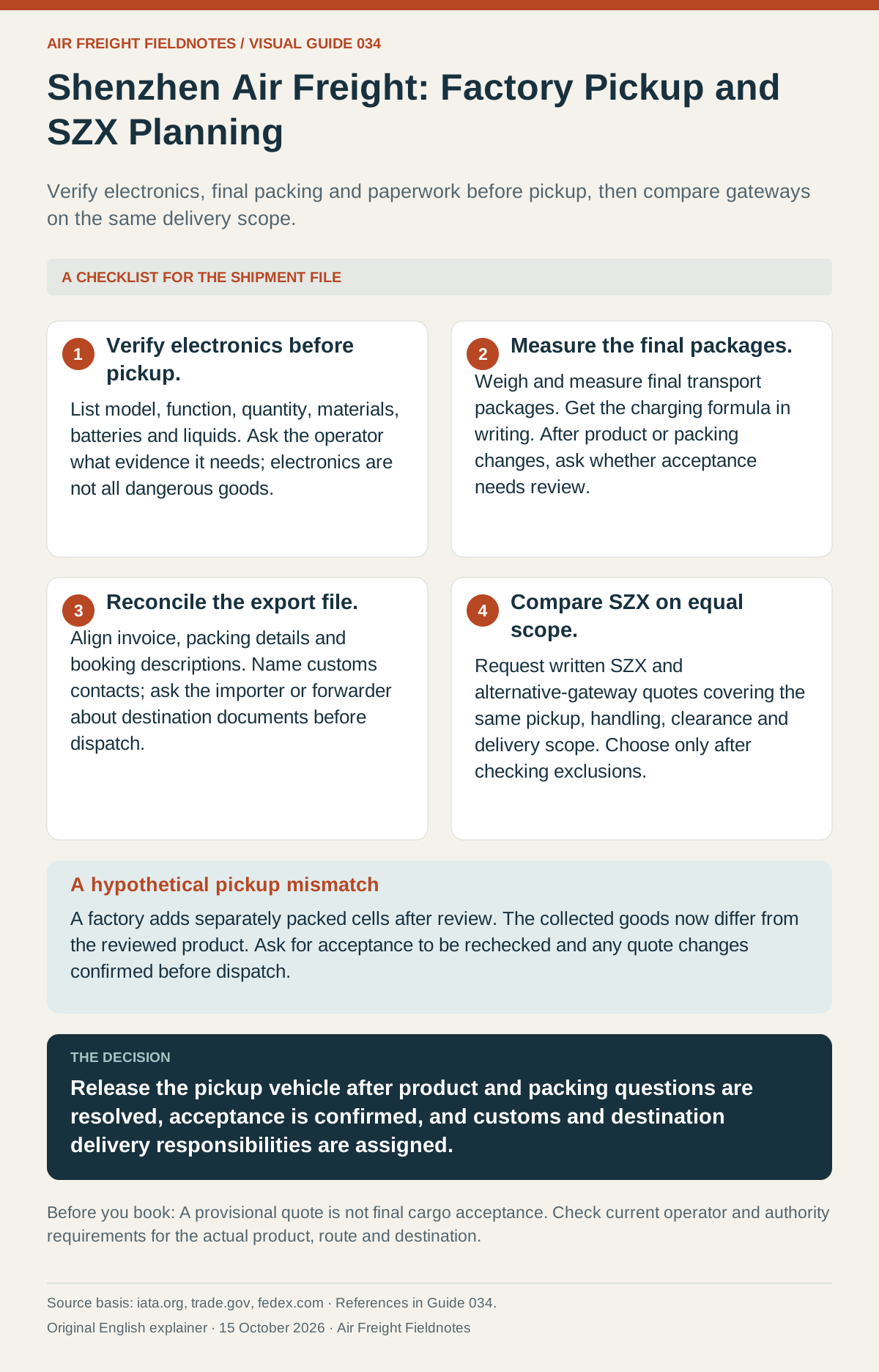
Read the infographic as text
Verify electronics, final packing and paperwork before pickup, then compare gateways on the same delivery scope.
- Verify electronics before pickup. List model, function, quantity, materials, batteries and liquids. Ask the operator what evidence it needs; electronics are not all dangerous goods.
- Measure the final packages. Weigh and measure final transport packages. Get the charging formula in writing. After product or packing changes, ask whether acceptance needs review.
- Reconcile the export file. Align invoice, packing details and booking descriptions. Name customs contacts; ask the importer or forwarder about destination documents before dispatch.
- Compare SZX on equal scope. Request written SZX and alternative-gateway quotes covering the same pickup, handling, clearance and delivery scope. Choose only after checking exclusions.
A hypothetical pickup mismatch A factory adds separately packed cells after review. The collected goods now differ from the reviewed product. Ask for acceptance to be rechecked and any quote changes confirmed before dispatch.
Decision: Release the pickup vehicle after product and packing questions are resolved, acceptance is confirmed, and customs and destination delivery responsibilities are assigned.
A provisional quote is not final cargo acceptance. Check current operator and authority requirements for the actual product, route and destination.
Compare SZX with alternative gateways on the same scope
Use SZX as the requested origin gateway, then ask whether a Guangzhou or Hong Kong gateway proposal offers a better fit for this particular shipment. The comparison below is a planning framework, not evidence of current routes, capacity, prices or faster service. No supplied source establishes which gateway is best. Request shipment-specific acceptance and documentary requirements for every proposal. [1][2]
| Planning point | SZX proposal | Guangzhou gateway proposal | Hong Kong gateway proposal |
|---|---|---|---|
| Factory handover | Price collection from the exact factory. | Identify the collection and transfer scope. | Identify collection, transfer and any additional handovers. |
| Acceptance | Confirm review of the exact electronics and packing. | Request a separate acceptance confirmation. | Request a separate acceptance confirmation. |
| Document responsibility | Name the export-file owner. | Confirm whether the proposed process changes the file. | Ask what export or transit steps the proposal requires. |
| Cost comparison | Request itemised origin, carriage and destination charges. | Include transfer charges and stated exclusions. | Include transfer, handling and stated exclusions. |
| Timing evidence | Separate readiness, acceptance and estimated delivery. | Include transfer assumptions. | Include transfer and clearance assumptions. |
Hypothetical worked decision: Assume 12 cartons of electronic controllers, each 50 × 40 × 40 cm and 15 kg, with final specifications already reviewed. Total actual weight is 180 kg. Under a hypothetical contract using divisor 6000, calculated volume weight is 160 kg; using 5000, it is 192 kg. If the contract charges the higher of actual and volume weight, the respective bases are 180 kg and 192 kg. These are illustrative terms, not sourced tariffs. [1][2]
Suppose the SZX proposal has a higher carriage charge but includes collection, while an alternative excludes transfer. The recommended decision is to compare complete scope before choosing, then check acceptance and document readiness. The calculation fails as a decision tool if dimensions change, charges are missing or the reviewed product differs from the goods collected. This is a hypothetical planning inference, not a gateway performance claim. [1][2]
Pre-pickup checklist: Use these recommended controls to close the gap between a quote and cargo ready for acceptance. [1][2]
- Confirm the model, contents and any acceptance-sensitive components.
- Measure and weigh the final transport packages.
- Obtain the charging formula and exclusions in writing.
- Reconcile invoice, packing details and booking information.
- Name the export, import and delivery contacts.
- Confirm cargo readiness and the factory handover arrangement.
- Recheck acceptance after any product or packing change.
Frequently asked questions
Can I book before all product information is available?
Ask for a provisional proposal, clearly listing missing information. Do not treat it as final acceptance: cargo must meet applicable handling and regulatory requirements. The practical risk is a revised quote or an acceptance problem once the actual contents become clear. [1]
Is the lowest airport-to-airport quote the cheapest option?
Not necessarily. As a planning inference, an incomplete scope cannot establish the lowest complete shipment cost. Compare the same collection, handling, clearance and delivery responsibilities, and ask each provider to identify exclusions. A forwarder’s general role does not define what its individual quote includes. [3]
Who should confirm destination document requirements?
Start with the overseas customer/importer or freight forwarder, then resolve shipment-specific requirements before dispatch. The supplied guidance identifies these as useful starting contacts and warns that special documents may be needed. Do not assume one shipment’s file will suit another product or destination. [2]
Sources and further reading
- IATA - What to Know About Air Cargo HandlingPrimary source · Retrieved 15 October 2026
- Common Export DocumentsPrimary source · Retrieved 15 October 2026
- Air Freight 101: A Simple Guide For SMEs | FedEx Hong Kong SAR, ChinaPrimary source · Retrieved 15 October 2026
Field research
- Reddit field research 1Topic discovery and anecdotal context; not evidence of a general rule.
- Reddit field research 2Topic discovery and anecdotal context; not evidence of a general rule.
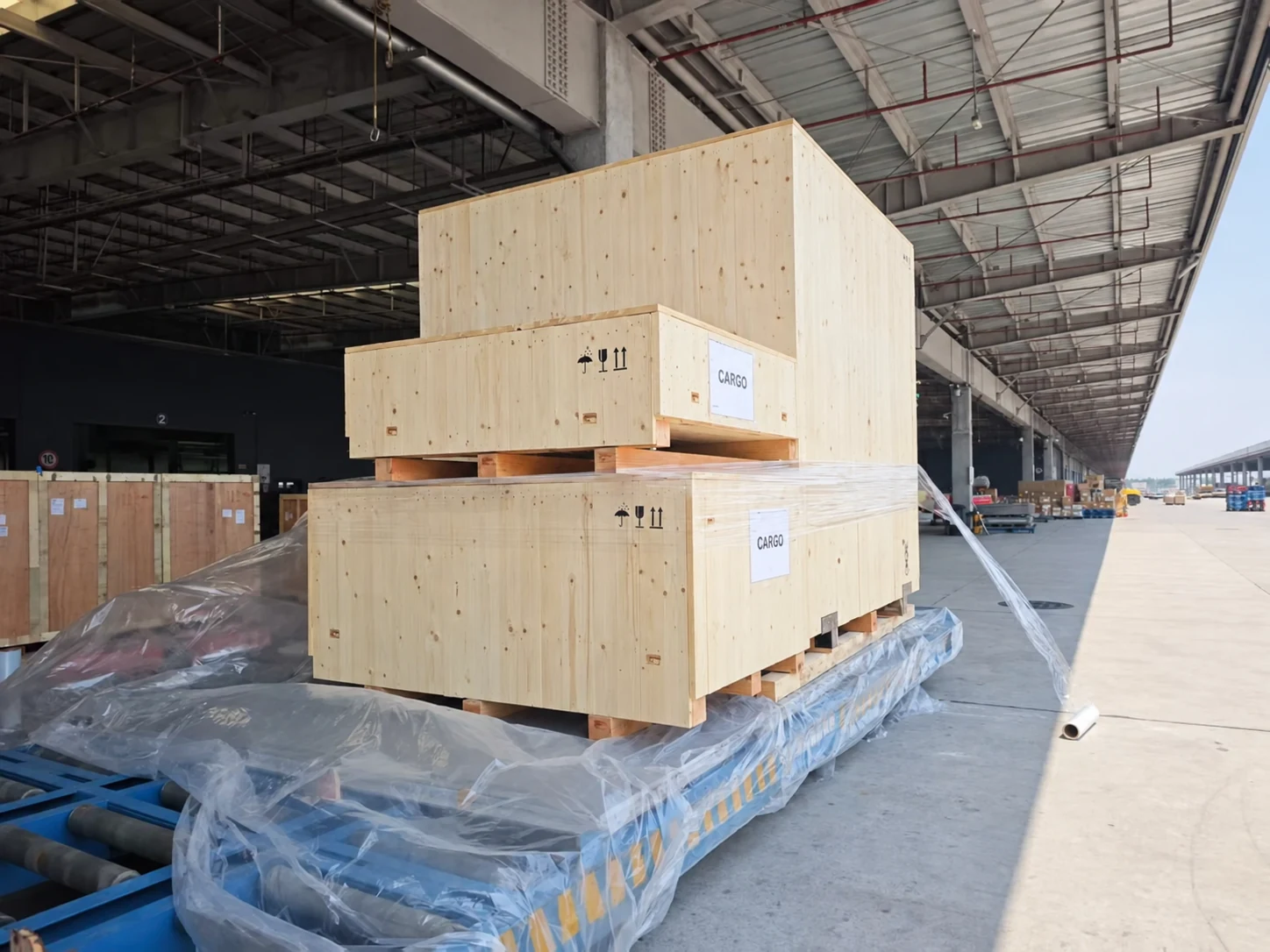
Prepared from the linked primary references and public field research. Field photographs illustrate general handling; worked examples use separate hypothetical figures. Acceptance, charges and destination requirements should be checked against the specific shipment and current operator or authority instructions.