 Skip to content
Closed Area
Closed Area is a terminal area temporarily unavailable for container pickup or other operations, often because of congestion or operational restrictions.
Understand it in practiceWhere it fits in the journey
Highlighted stages are commonly relevant- 01Agree
- 02Prepare
- 03Transport — commonly relevant
- 04Clear
- 05Deliver
Closed Area at a glance
- Affected terminal area
- Access restriction
- Updated terminal instruction
Can a truck collect a container from a closed area?
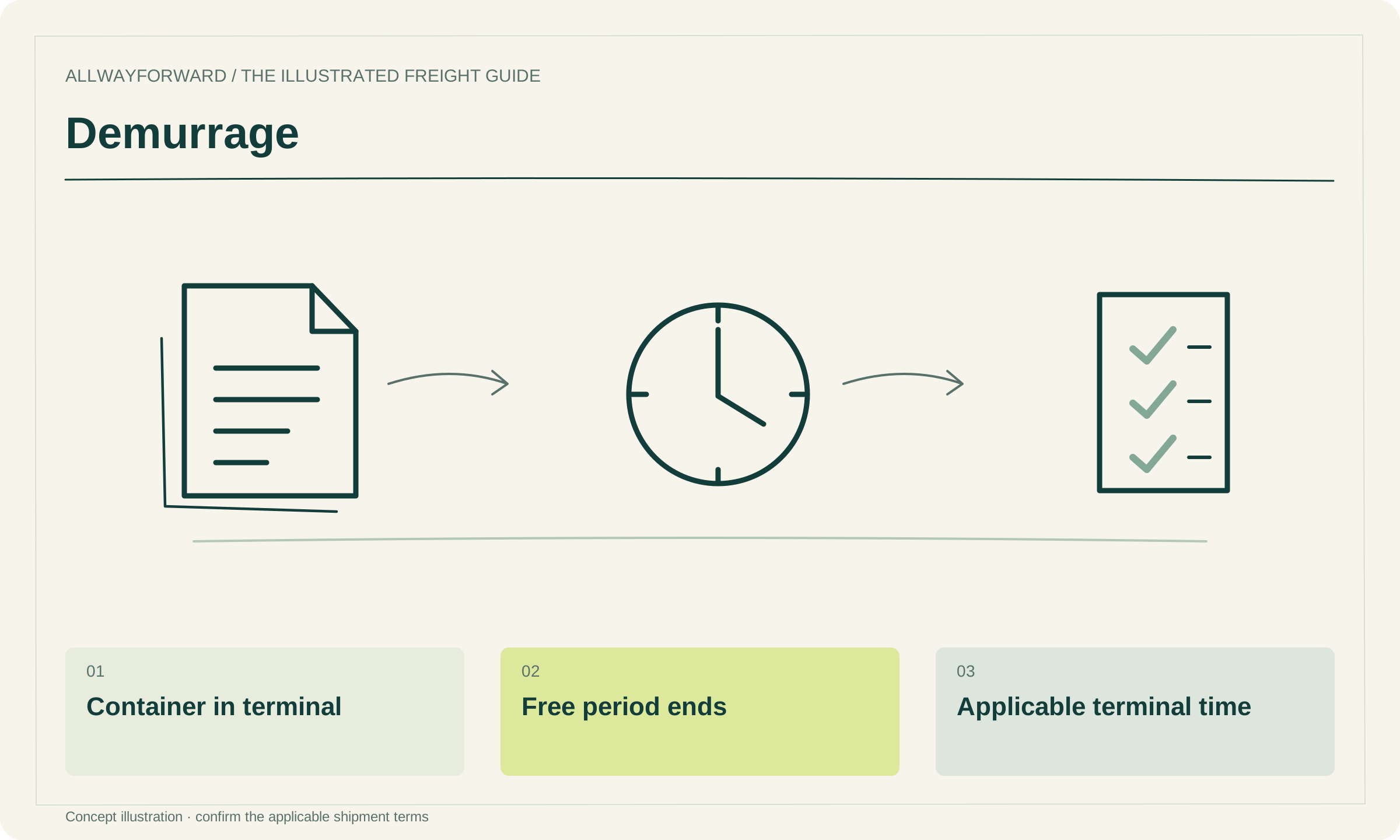
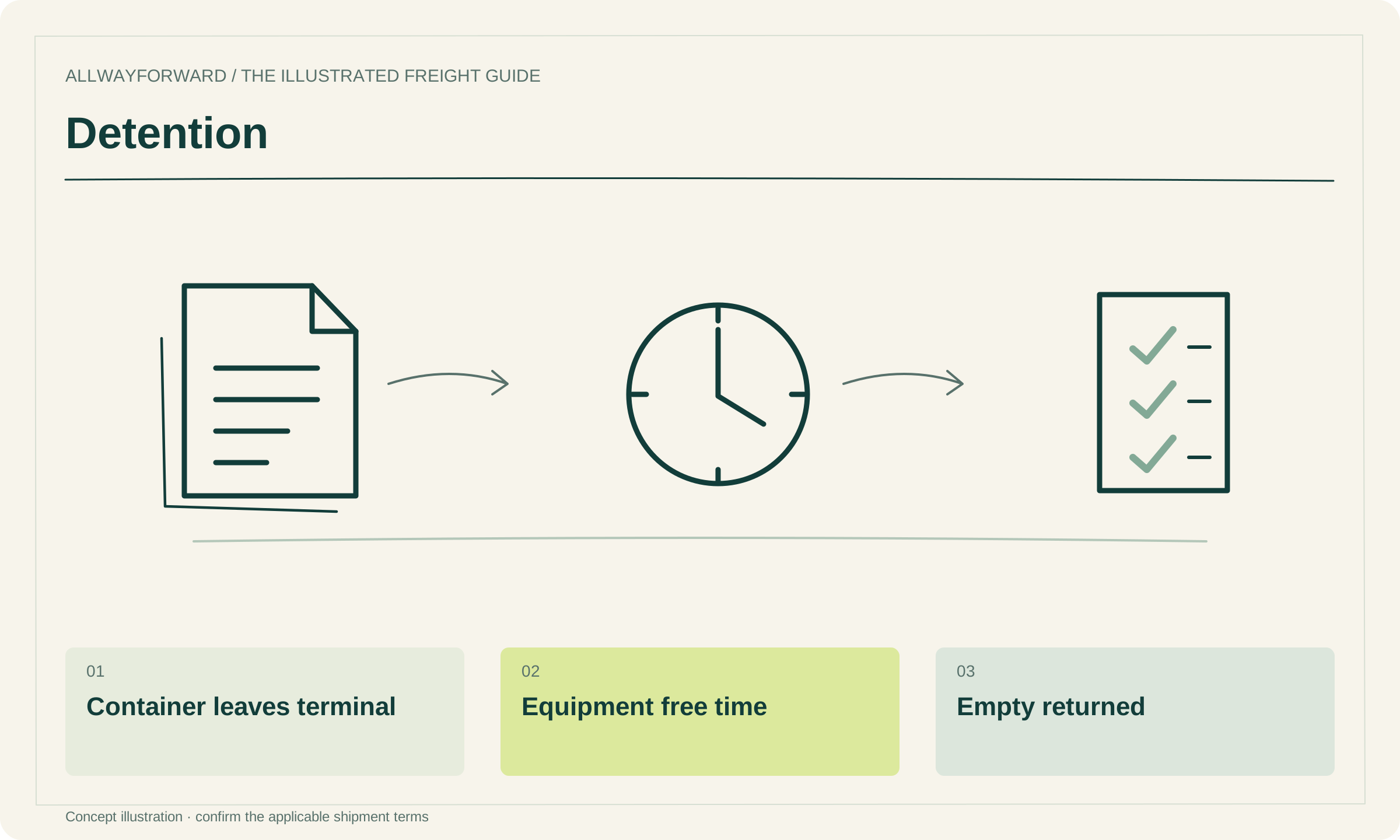
Ask the terminal or trucker about availability, appointments and any relevant free-time treatment. Do not assume a closure automatically pauses every charge.
Choose the right container arrangement
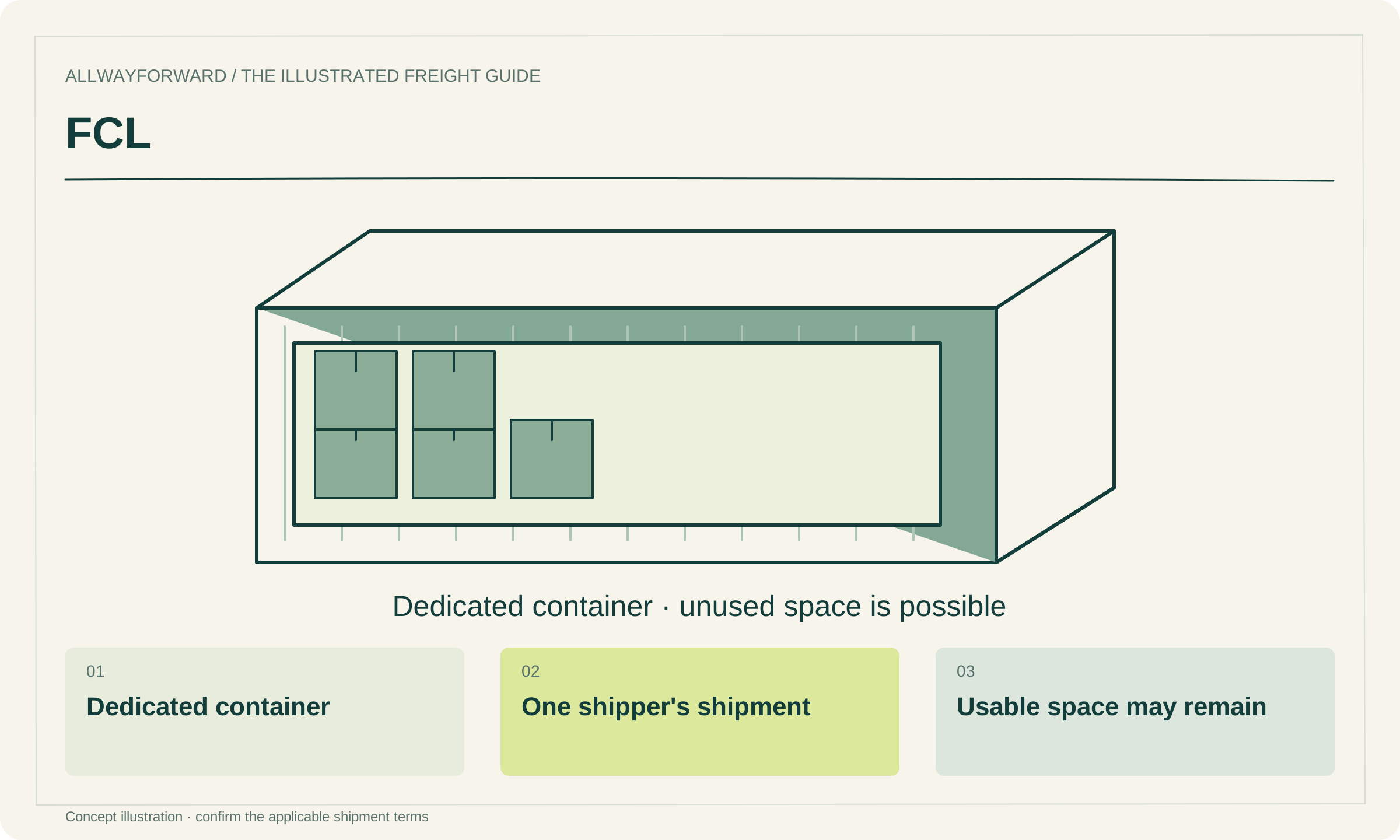
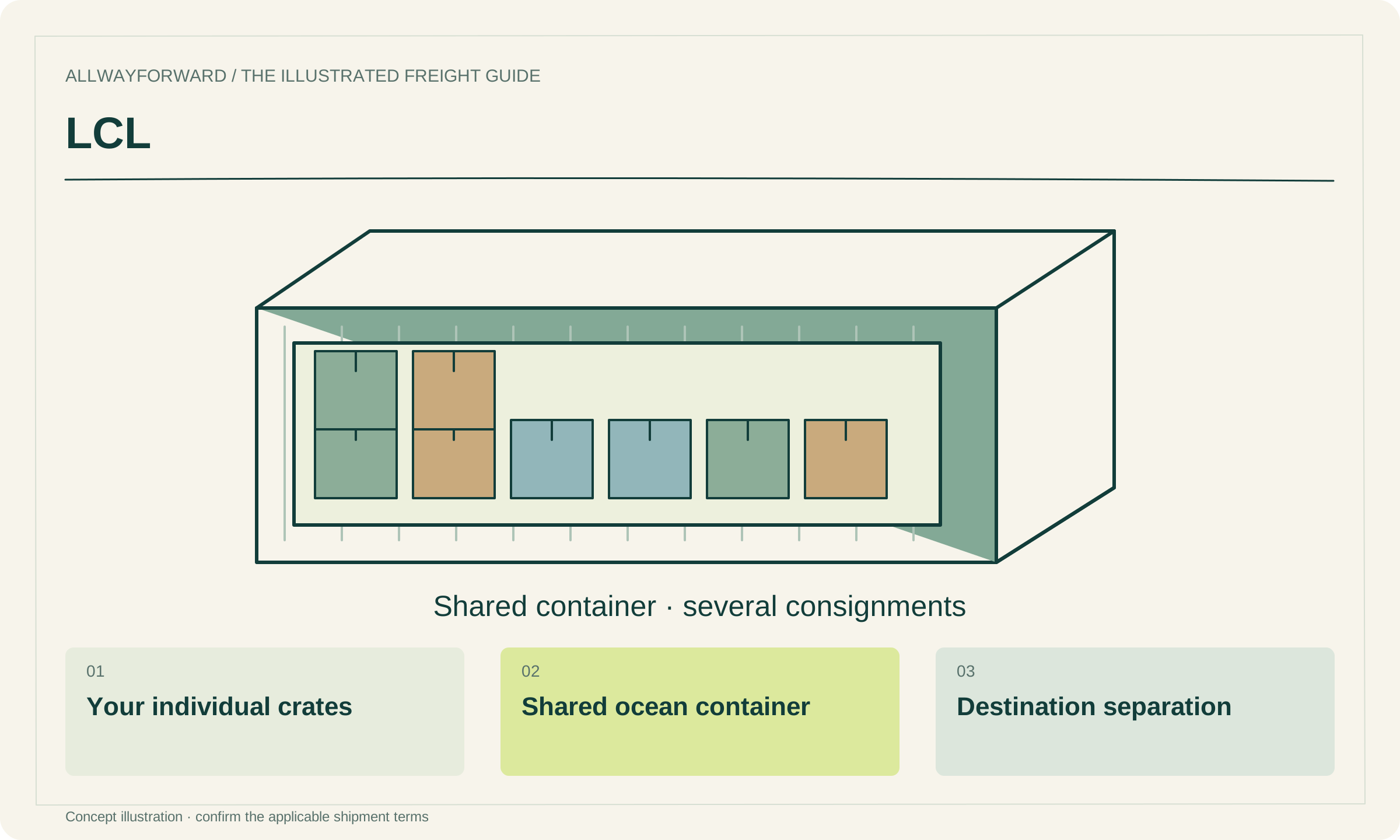
| Question | FCL | LCL |
|---|---|---|
| Container use | Dedicated to your shipment | Shared with other shipments |
| Typical pricing basis | Per container plus local charges | Weight or measure plus local charges |
| Handling | Loaded as a dedicated unit | Consolidated and separated |
| Best comparison | Total delivered cost and handling needs | Total delivered cost and handling needs |
Scroll sideways to compare

Before you book
For ocean freight, have these details ready:
- Cargo volume and packed weight
- Origin and destination charge breakdown
- Sailing, cut-offs and equipment free time
Sources & further reading
Plain-language educational guidance. The applicable contract, carrier tariff, official rules or insurance policy takes precedence. Illustrations show concepts, not a specific shipment or facility.
Published by Allwayforward as a plain-language freight reference. Examples are illustrative, not customer case studies. For a correction, send the term and supporting source.
 FCL (Full Container Load)
 LCL (Less than Container Load)
 Demurrage
 Detention