 Skip to content
Cargo protection
Cargo Owners Liability Coverage
Cargo Owners Liability Coverage is insurance addressing specified third-party liabilities arising from an owner's cargo, as described in the policy.
Understand it in practiceWhere it fits in the journey
Highlighted stages are commonly relevant- 01Agree — commonly relevant
- 02Prepare — commonly relevant
- 03Transport — commonly relevant
- 04Clear — commonly relevant
- 05Deliver — commonly relevant
Cargo Owners Liability Coverage at a glance
- Owner's cargo
- Specified third-party liability
- Policy wording
Is cargo owners liability the same as cargo damage insurance?
This is different from insurance for damage to your own goods. Ask which liabilities, limits and exclusions apply.
Do not confuse these protections
| Term | Meaning |
|---|---|
| Carrier liability | Responsibility under transport terms and law |
| Declared value | A declaration that may affect contractual liability |
| Cargo insurance | Cover under a separate policy with its own conditions |
Scroll sideways to compare

Before you book
For cargo protection, have these details ready:
- Insured goods, journey and value
- Exclusions, limits and deductible
- Condition photos, records and claims procedure
Sources & further reading
Plain-language educational guidance. The applicable contract, carrier tariff, official rules or insurance policy takes precedence. Illustrations show concepts, not a specific shipment or facility.
Published by Allwayforward as a plain-language freight reference. Examples are illustrative, not customer case studies. For a correction, send the term and supporting source.
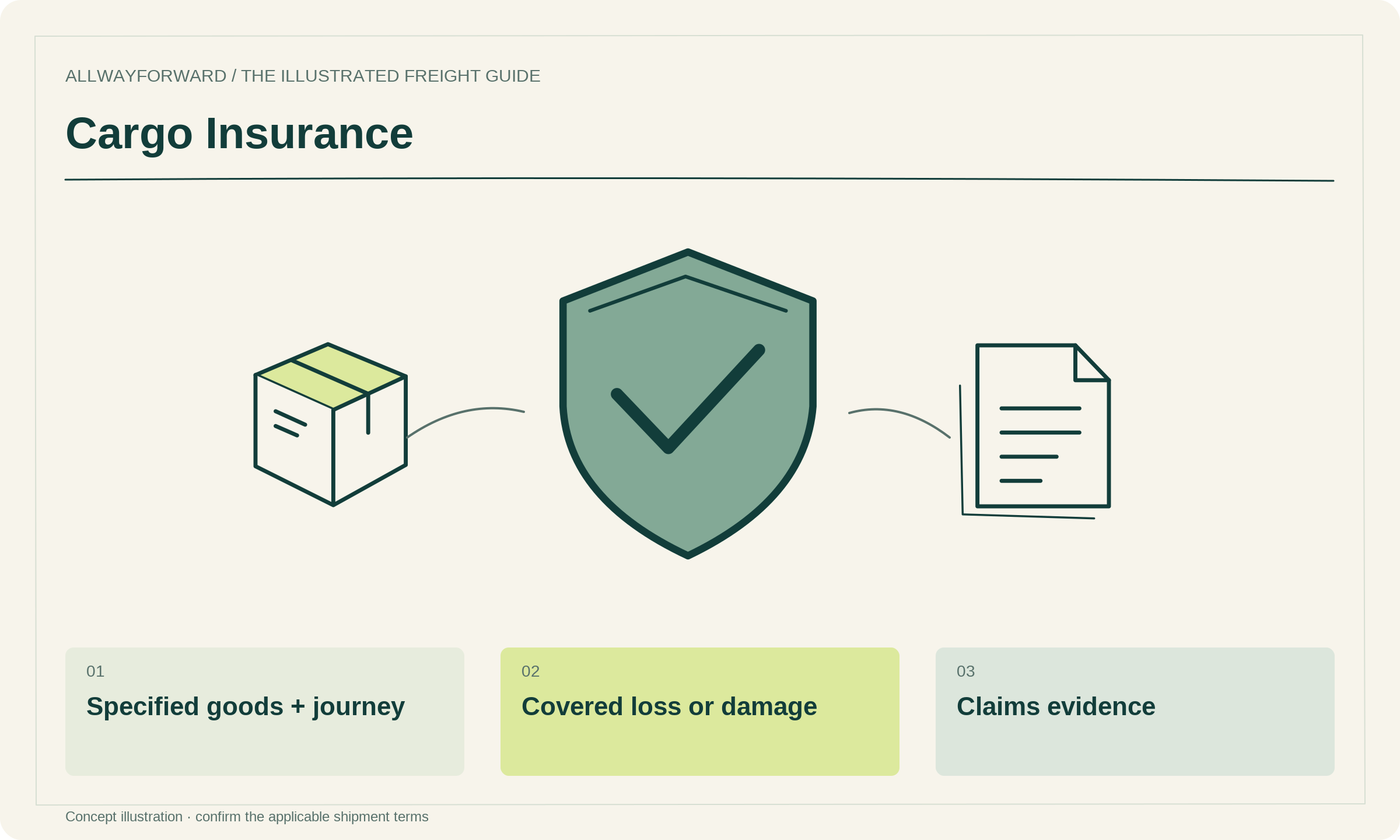 Cargo Insurance
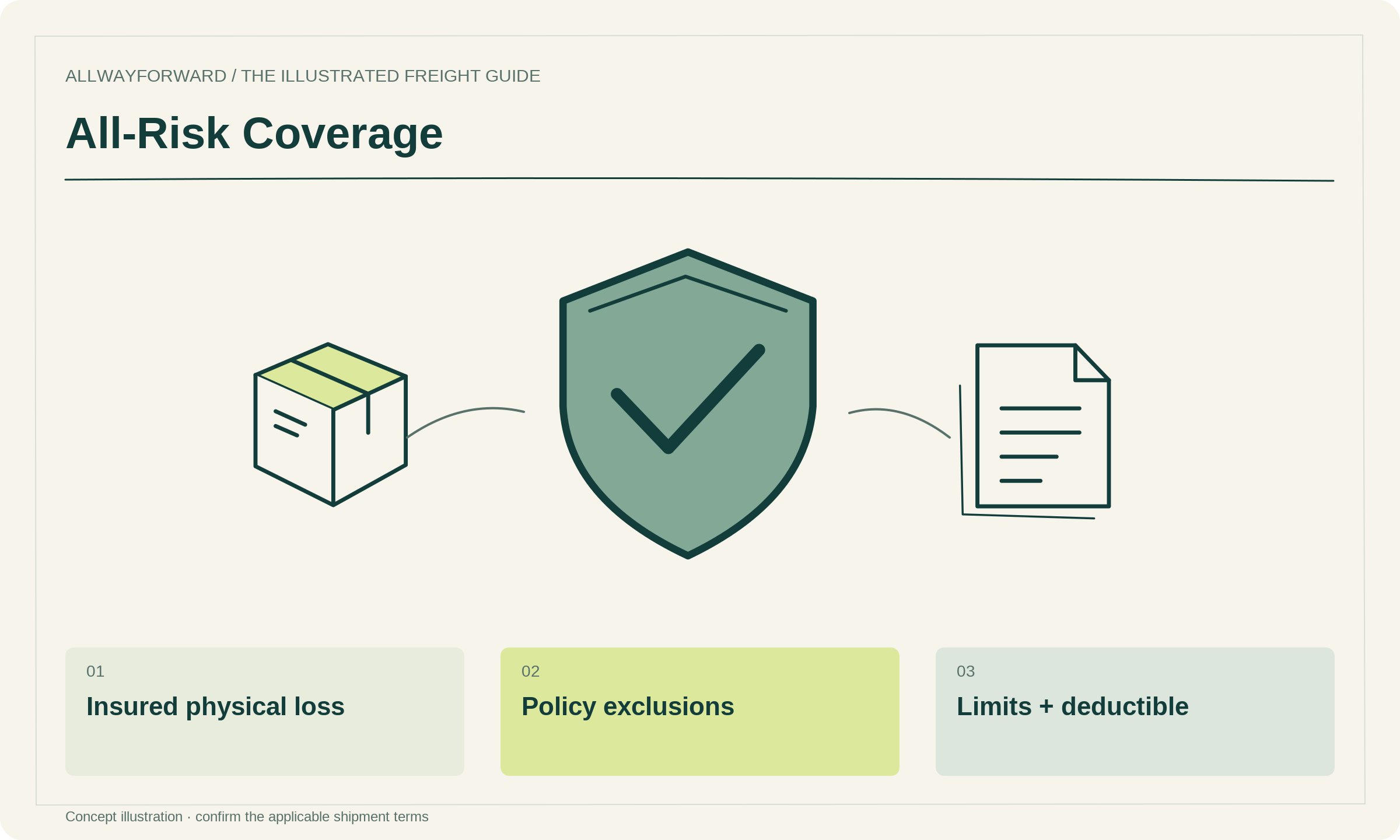 All-Risk Coverage
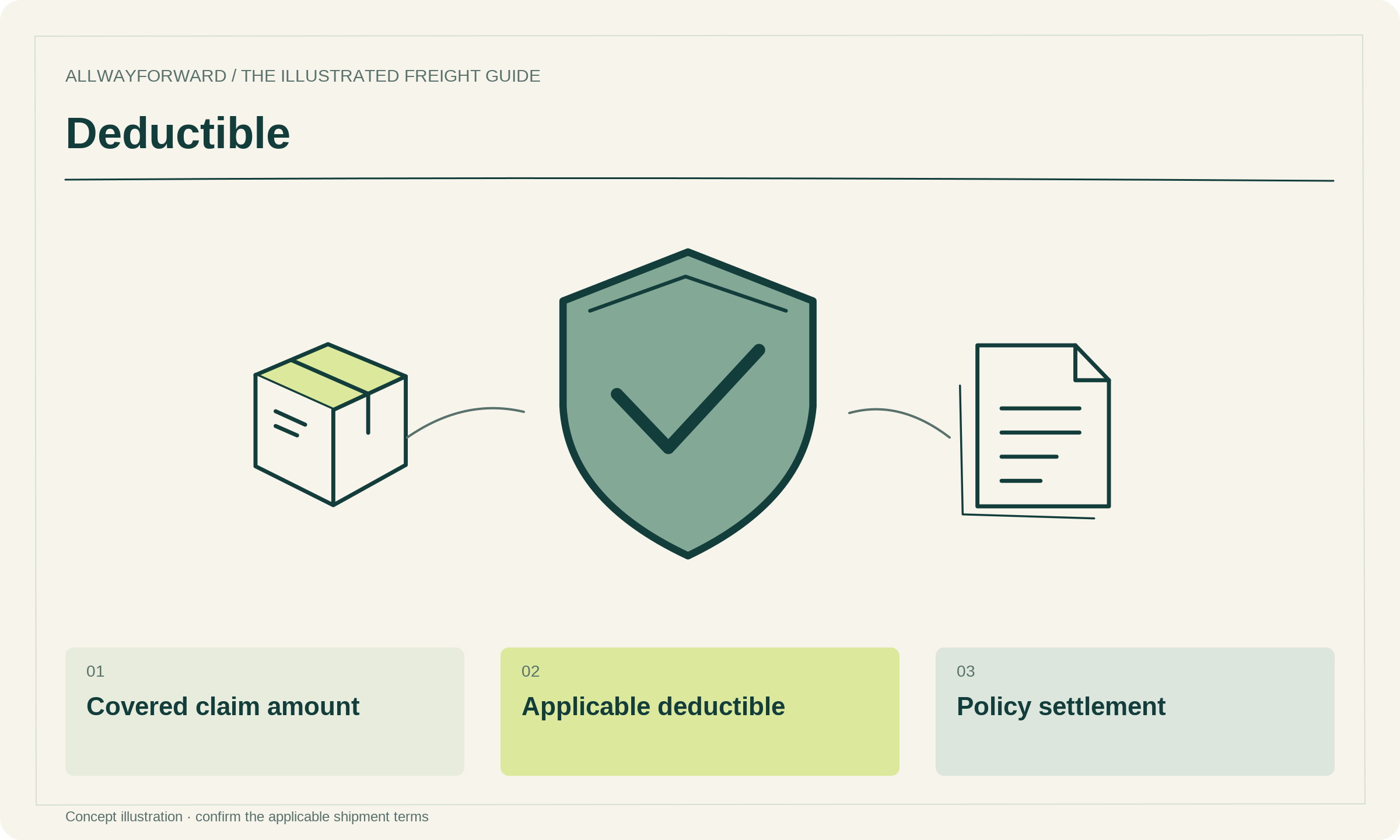 Deductible
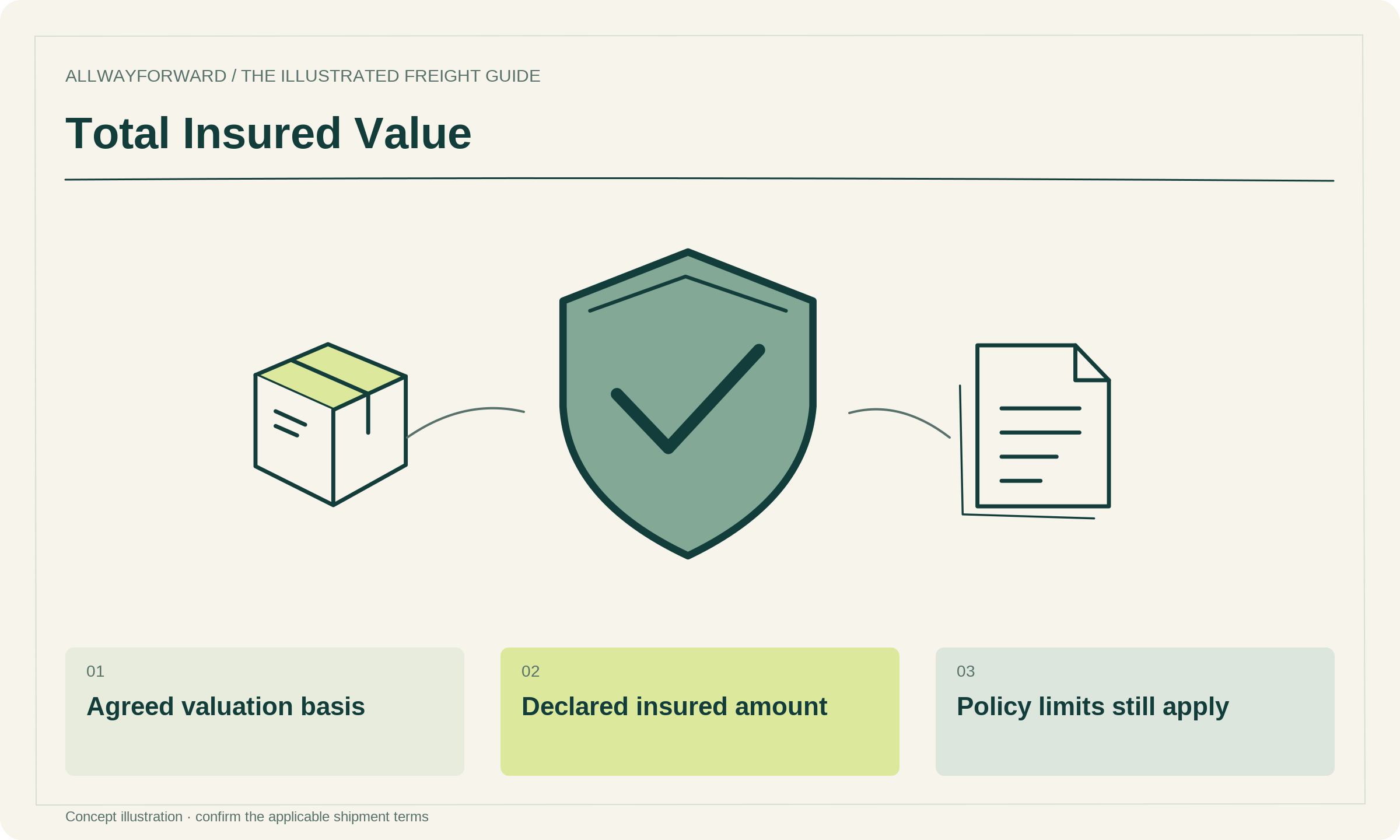 Total Insured Value