 Skip to content
Cargo Insurance
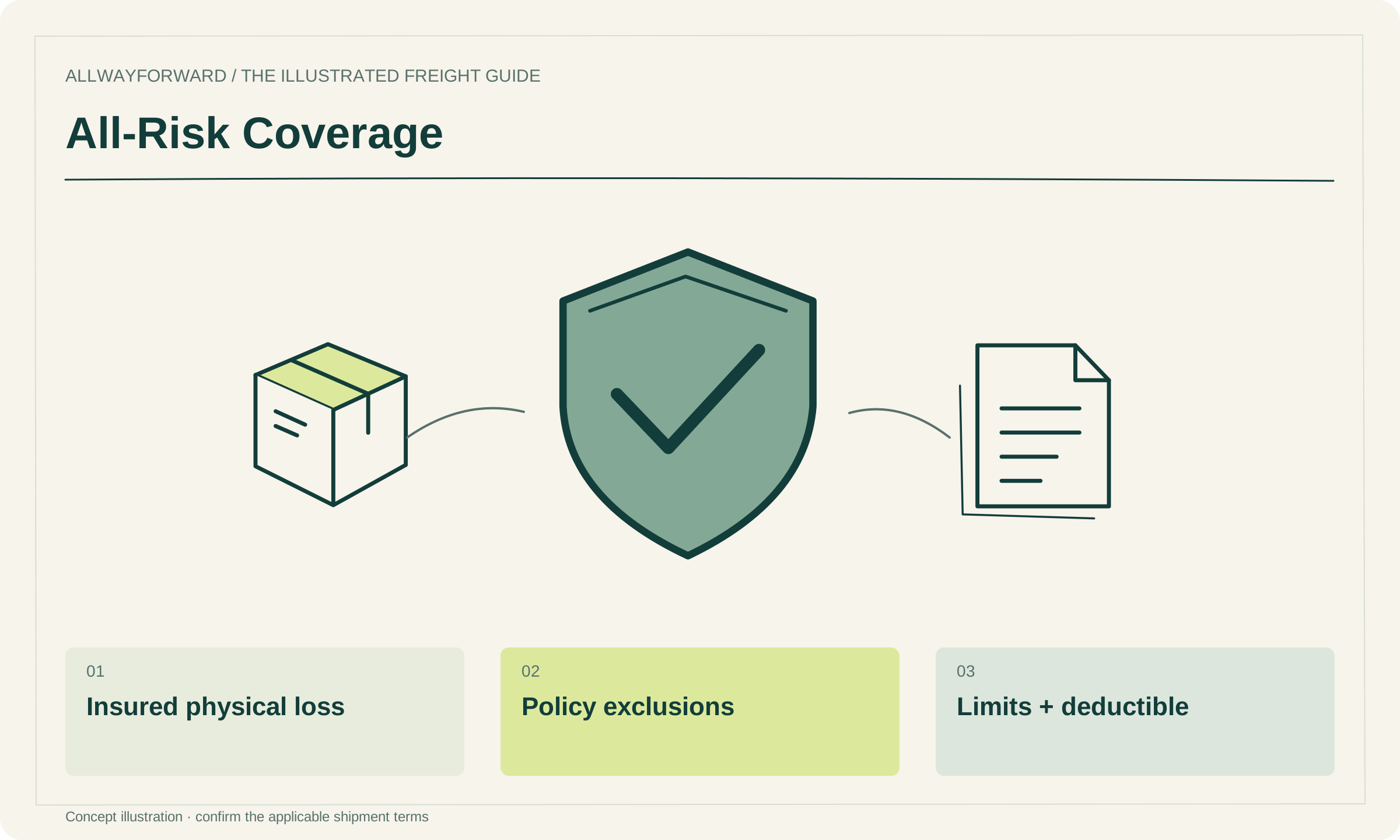
Cargo Insurance is insurance against specified physical loss or damage to goods in transit. Coverage depends on the insured journey, goods, limits and policy terms.
Understand it in practiceWhere it fits in the journey
Highlighted stages are commonly relevant- 01Agree — commonly relevant
- 02Prepare — commonly relevant
- 03Transport — commonly relevant
- 04Clear — commonly relevant
- 05Deliver — commonly relevant
Cargo Insurance at a glance
- Specified goods + journey
- Covered loss or damage
- Claims evidence
How does cargo insurance differ from carrier liability?
Carrier liability is usually limited and is not the same as cargo insurance. Confirm packing requirements and claims evidence before shipping.
Document the condition at both ends
Keep packing photos before dispatch and note visible damage at receipt. If you discover damage, preserve the packaging and follow the policy’s notification process instead of disposing of evidence immediately.
Do not confuse these protections
| Term | Meaning |
|---|---|
| Carrier liability | Responsibility under transport terms and law |
| Declared value | A declaration that may affect contractual liability |
| Cargo insurance | Cover under a separate policy with its own conditions |
Scroll sideways to compare

Before you book
For cargo protection, have these details ready:
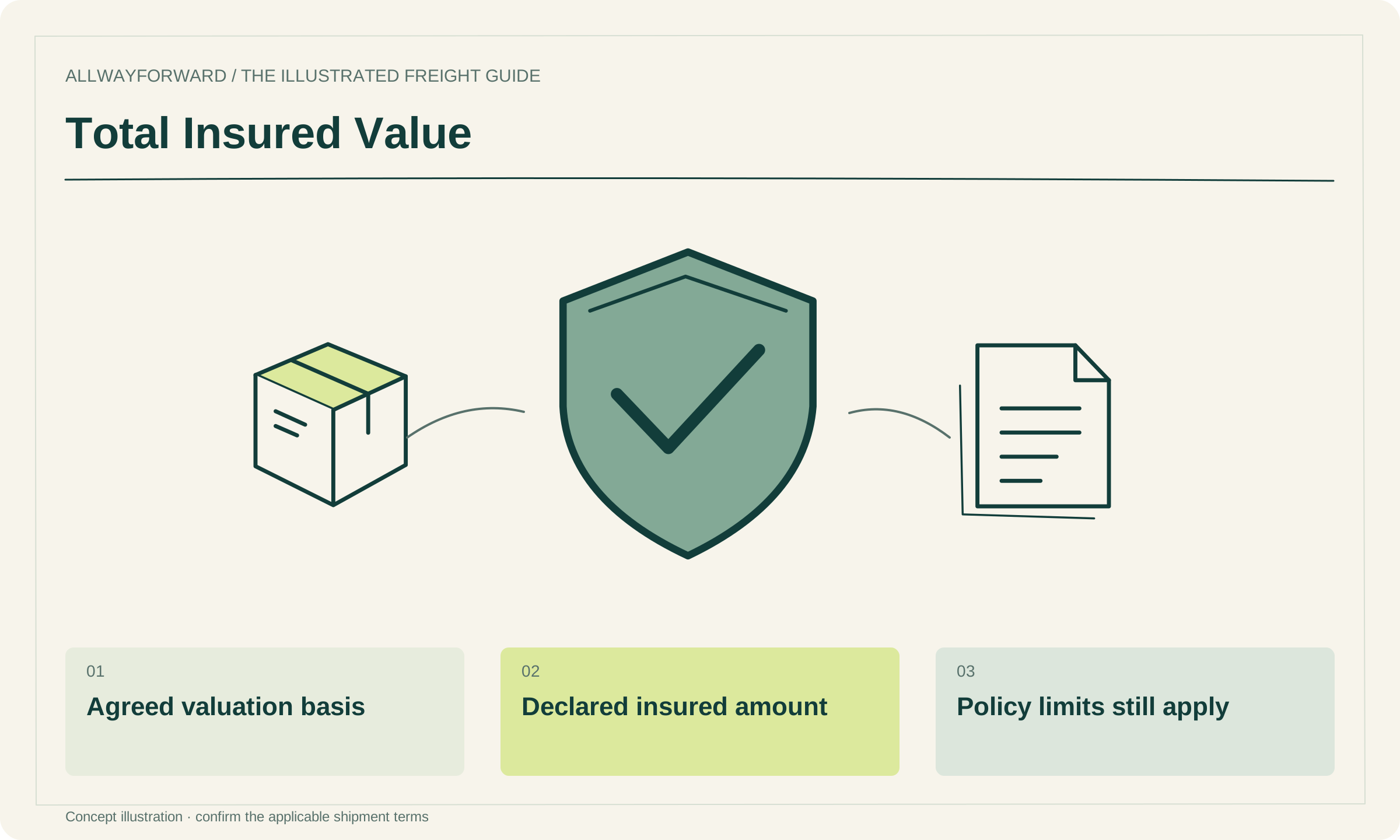
- Insured goods, journey and value
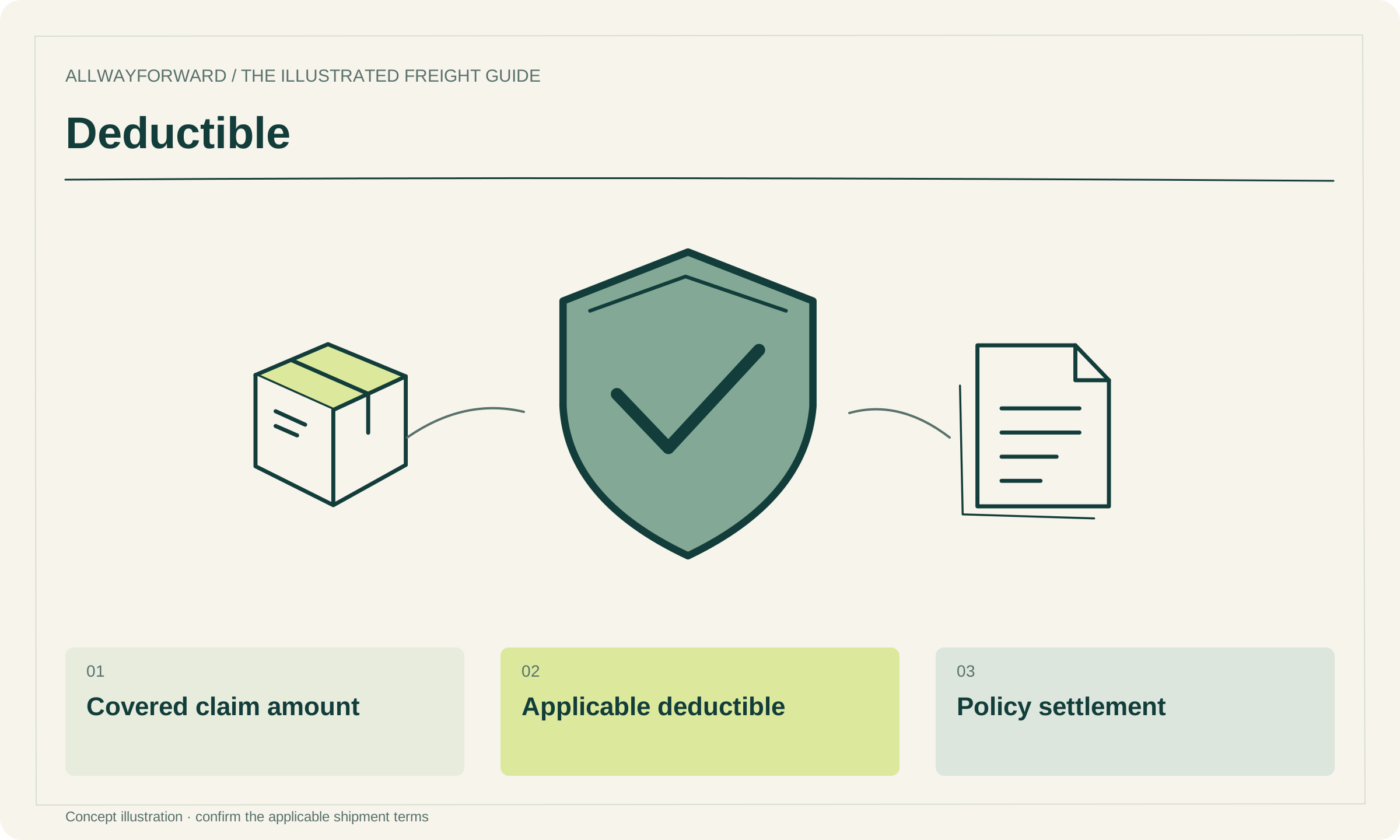
- Exclusions, limits and deductible
- Condition photos, records and claims procedure
Sources & further reading
Plain-language educational guidance. The applicable contract, carrier tariff, official rules or insurance policy takes precedence. Illustrations show concepts, not a specific shipment or facility.
Published by Allwayforward as a plain-language freight reference. Examples are illustrative, not customer case studies. For a correction, send the term and supporting source.
 All-Risk Coverage
 Deductible
 Total Insured Value