 Skip to content
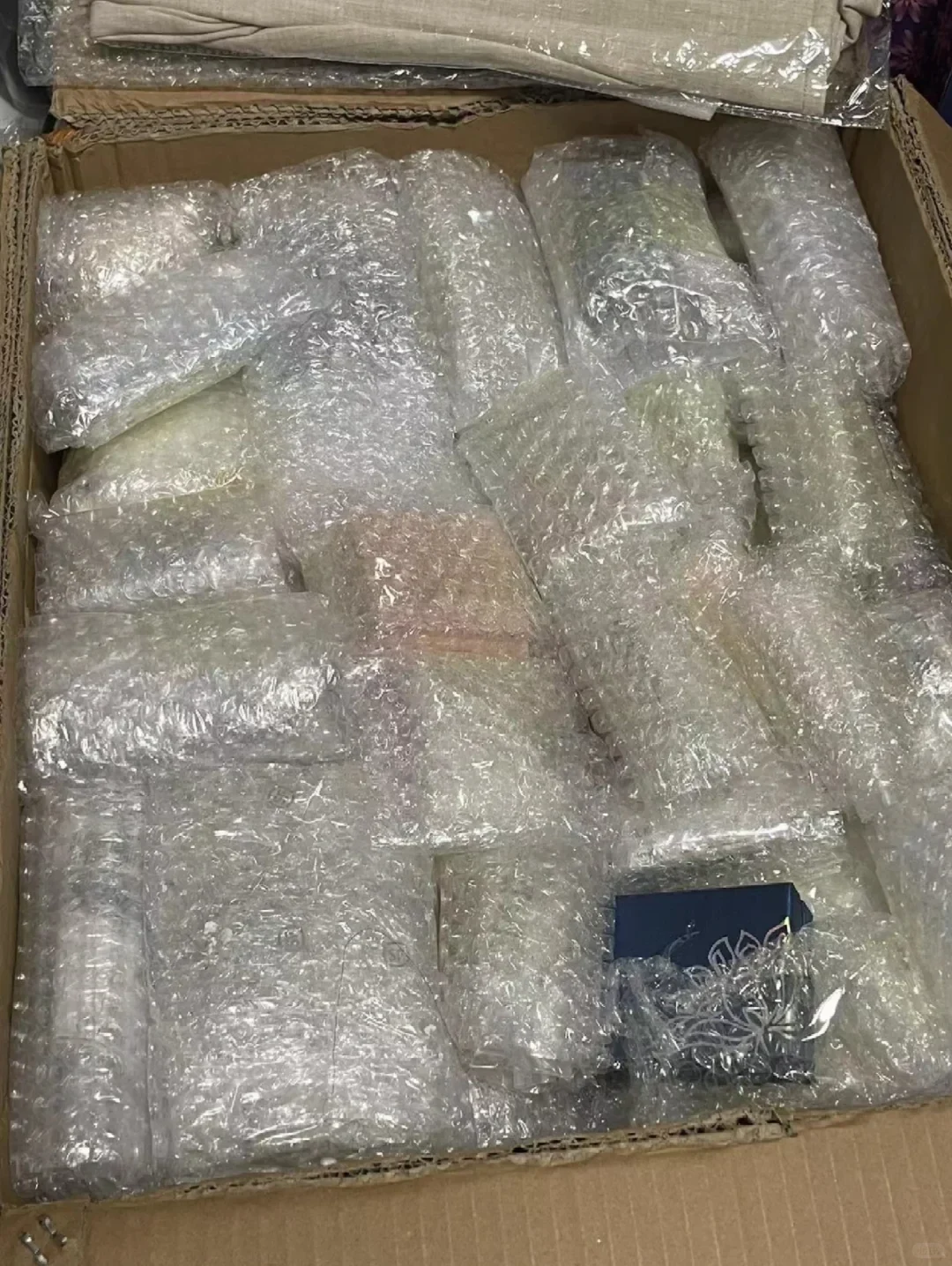
Air freight cargo insurance should be assessed separately from carrier liability. Before shipping, ask who is insured, which goods and journey stages are covered, how value is calculated, what exclusions and deductibles apply, and whom to contact after loss. Check the policy wording; neither booking nor an AWB confirms coverage.
Cargo Insurance for Air Freight: Questions Before Shipping
1. Separate the carriage contract from the insurance decision
The Air Waybill (AWB) constitutes the contract of carriage between the shipper and the airline. IATA also describes air cargo rates and charges as covering transport between airports. These sources establish the carriage context; they do not establish insurance cover for your shipment. [1][2]
Evidence boundary: the supplied material contains no cargo policy, insurance quotation, or applicable carrier liability terms. The questions below are practical recommendations inferred from that gap, not statements that a particular insurer must pay. Exact coverage, liability, and recovery amounts cannot be determined from these sources. [1][2]
Ask the forwarder to identify two separate routes for a loss: a claim under the applicable carriage terms and a claim under any cargo insurance policy. Request the documents governing each route. Do not assume a transport price, booking confirmation, or AWB answers the insurance questions: the cited IATA material describes carriage documentation and charges, not an insurance purchase. [1][2]
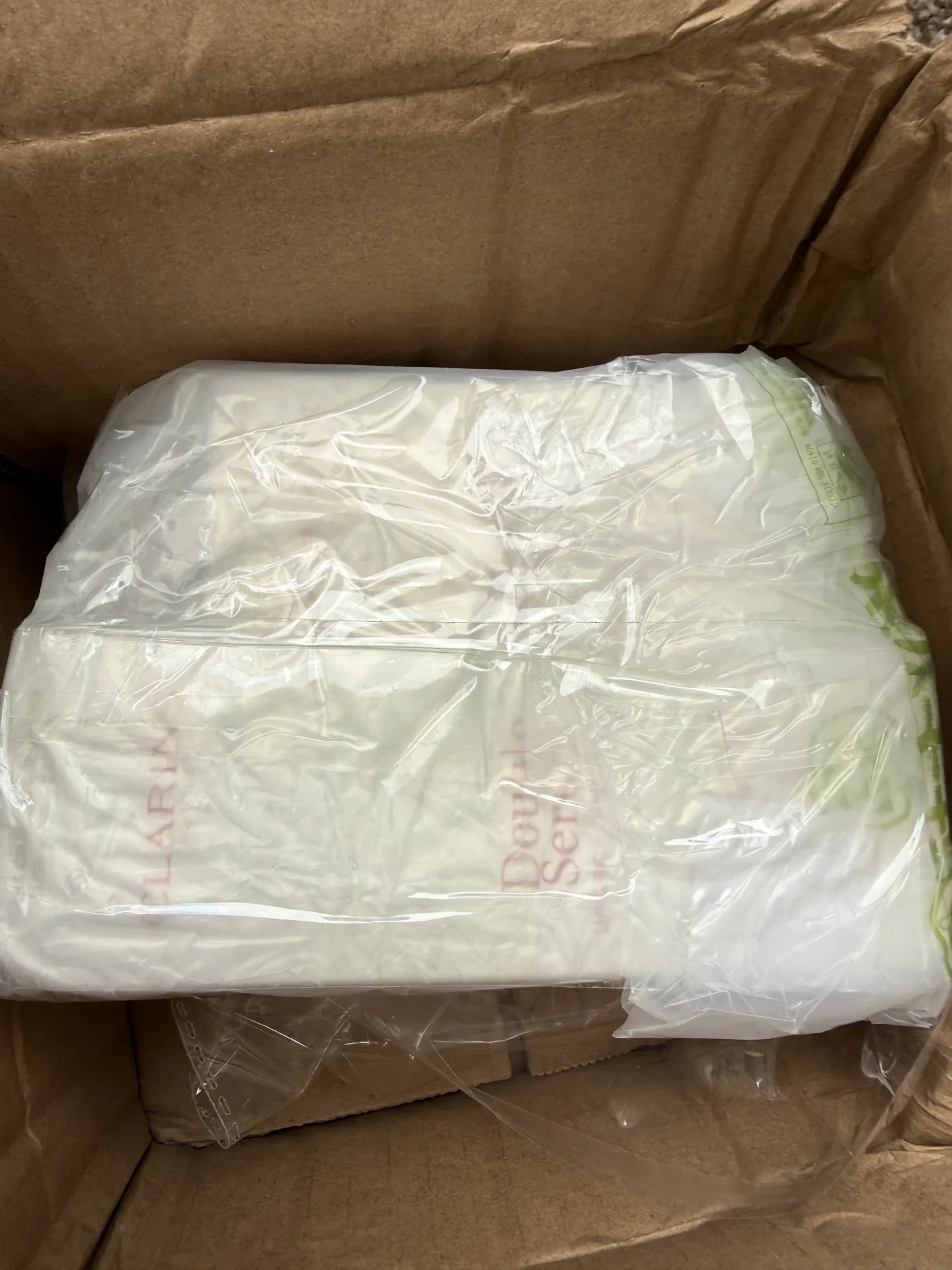
| Question | Carrier-liability review | Cargo-insurance review |
|---|---|---|
| What document should you request? | AWB and applicable carriage terms. | Policy wording, schedule, and shipment-specific confirmation. |
| What needs checking? | Basis of liability, applicable limits, defenses, and claim procedure. | Insured party, goods, journey, value, exclusions, and deductible. |
| Who should receive notice? | Ask the contracting transport party to identify the correct recipient. | Ask for the insurer’s or appointed claims handler’s contact. |
| What should not be assumed? | That an AWB establishes full invoice-value recovery. | That purchasing cover makes every loss payable. |
This table is a document-request framework, not a summary of verified policy benefits or legal entitlements. Only the AWB’s carriage-contract function is established by the supplied insurance-adjacent evidence. [2]
2. Define the insured party, value, and shipment
For a China exporter and an overseas buyer, start with names rather than labels. Ask whose interest the proposed insurance protects, who may submit a claim, and who would receive payment. Identify the seller, buyer, forwarder, carrier, and proposed insurer separately, even where one business performs several functions. This is a recommended verification step, not a role allocation established by the supplied carriage sources. [1][2]
Ask for the insured-value calculation in writing. Does the proposal use invoice value, include freight, or add another agreed amount? Which currency applies? How are partial damage, repair costs, and a total loss assessed? The cited references provide no insurance valuation formula, so neither a particular percentage uplift nor invoice-value reimbursement can be assumed. [1][2]
Describe the actual goods: product type, quantity, condition, packaging, and any handling sensitivity. Ask whether the insurer’s description matches the invoice and packing list. IATA notes that cargo rules can include carrier, city, country, and readiness-for-carriage requirements; meeting transport requirements should not be treated as proof of insurance acceptance. [1]
3. Check the journey, exclusions, and deductible
Map the proposed movement from collection in China to final receipt. Ask whether cover includes origin trucking, storage, airport handling, the flight, transfers, destination storage, and final delivery. This journey review is a practical recommendation from IATA’s distinction that air cargo transport rates cover movement between airports; that description alone does not establish door-to-door insurance. [1]
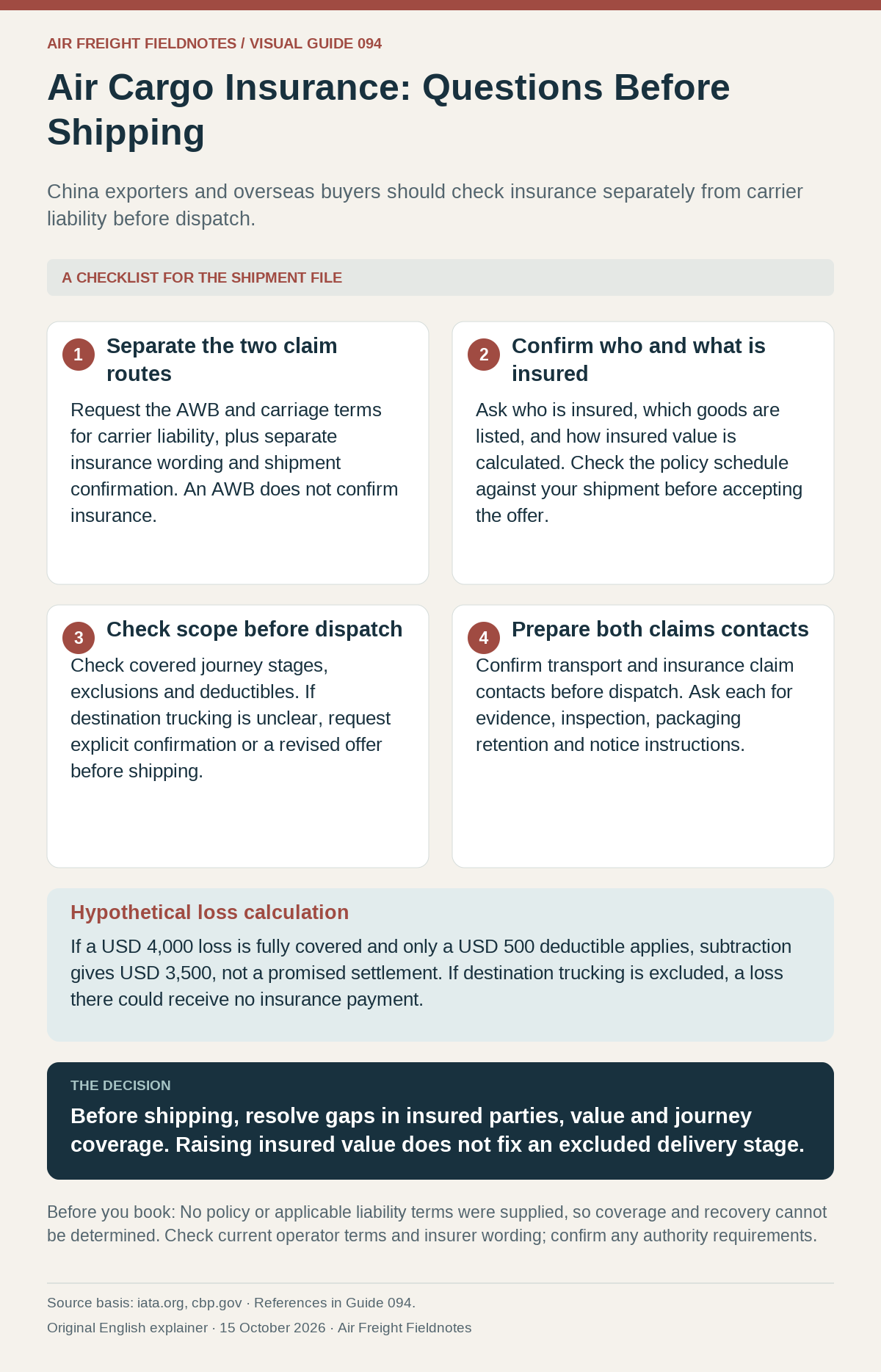
Read the infographic as text
China exporters and overseas buyers should check insurance separately from carrier liability before dispatch.
- Separate the two claim routes Request the AWB and carriage terms for carrier liability, plus separate insurance wording and shipment confirmation. An AWB does not confirm insurance.
- Confirm who and what is insured Ask who is insured, which goods are listed, and how insured value is calculated. Check the policy schedule against your shipment before accepting the offer.
- Check scope before dispatch Check covered journey stages, exclusions and deductibles. If destination trucking is unclear, request explicit confirmation or a revised offer before shipping.
- Prepare both claims contacts Confirm transport and insurance claim contacts before dispatch. Ask each for evidence, inspection, packaging retention and notice instructions.
Hypothetical loss calculation If a USD 4,000 loss is fully covered and only a USD 500 deductible applies, subtraction gives USD 3,500, not a promised settlement. If destination trucking is excluded, a loss there could receive no insurance payment.
Decision: Before shipping, resolve gaps in insured parties, value and journey coverage. Raising insured value does not fix an excluded delivery stage.
No policy or applicable liability terms were supplied, so coverage and recovery cannot be determined. Check current operator terms and insurer wording; confirm any authority requirements.
Request written answers for the following loss scenarios. These are questions to test against the proposed policy, not a list of verified inclusions or exclusions: [1][2]
- Would physical damage caused during handling be covered?
- How would theft, missing packages, or unexplained shortage be assessed?
- What wording addresses inadequate packing or the goods’ own characteristics?
- How are moisture, temperature variation, and contamination treated?
- Would delay-related expense or lost sales be outside the proposed cover?
- What changes if the route, storage period, or carrier changes?
Ask whether the deductible is a fixed amount, a percentage, or another calculation, and whether it applies per shipment, event, or claim. Also ask about sublimits and any uninsured share. These are recommended contract checks: the supplied IATA material does not specify insurance deductibles or exclusions. [1][2]
A key failure case is an unresolved mismatch: the quote names airport-to-airport movement while the buyer expects protection through final delivery. Another is a value agreed without reviewing the deductible. Treat both as reasons to obtain clarification before dispatch, rather than interpreting silence as acceptance. These are inferred decision risks, not findings about a particular policy. [1][2]
4. Use a pre-shipment checklist and a decision example
Use this checklist to turn the unanswered questions into a release decision. It is a recommended workflow built around the separation between carriage documentation and unverified insurance arrangements. [1][2]
- Obtain the complete proposed wording, not just a premium amount.
- Confirm the insured party, goods, currency, and valuation method.
- Match the covered journey to the planned collection and delivery points.
- Resolve exclusions, deductibles, sublimits, and special conditions.
- Ask how booking or routing changes must be reported.
- Save the insurer’s claims contact and the transport claim contact separately.
- Request notice requirements, evidence instructions, and applicable deadlines in writing.
- Retain invoices, packing records, condition photographs, and transport documents.
Hypothetical worked decision example: a China exporter sells instruments for USD 30,000. Assume one proposed policy accepts USD 31,500 as the insured value, with a USD 500 deductible. These invented figures illustrate a review method; they are not market terms or a coverage offer.
Suppose a handling incident produces an assessed USD 4,000 loss. Under the hypothetical assumption that the entire loss is covered and only the stated deductible applies, the arithmetic would be USD 4,000 minus USD 500, or USD 3,500. That is not a predicted settlement.
The buyer also wants final-delivery protection, but the proposal leaves destination trucking unclear. The actionable decision is to request explicit confirmation or a revised offer before shipping. If that stage is excluded, the example’s assumed payment could fail entirely; increasing insured value would not resolve the scope gap.
5. Frequently asked questions
Does an AWB prove that cargo insurance was purchased?
No insurance conclusion follows from the supplied AWB evidence. IATA identifies the AWB as the carriage contract, including its electronic form. Request separate insurance documents and shipment-specific confirmation rather than relying on the AWB. [2]
Does the air freight charge include cargo insurance?
Do not assume so. IATA describes air cargo rates and charges as covering transport between airports, but the supplied excerpt does not establish what a forwarder’s bundled quote includes. Ask for insurance to be identified separately, with the governing wording. [1]
Who should I contact when damage is discovered?
Use the contacts confirmed before dispatch: ask the transport party for its claim procedure and the insurer or appointed handler for insurance instructions. Request guidance on evidence, inspection, packaging retention, and notice timing. No universal deadline or claims recipient is established by the cited references. [1][2]
Sources and further reading
- IATA - Air Cargo Tariffs and Rules: What You Need to KnowPrimary source · Retrieved 15 October 2026
- IATA - efreight / eAWBPrimary source · Retrieved 15 October 2026
Field research
- Reddit field research 1Topic discovery and anecdotal context; not evidence of a general rule.
- Reddit field research 2Topic discovery and anecdotal context; not evidence of a general rule.
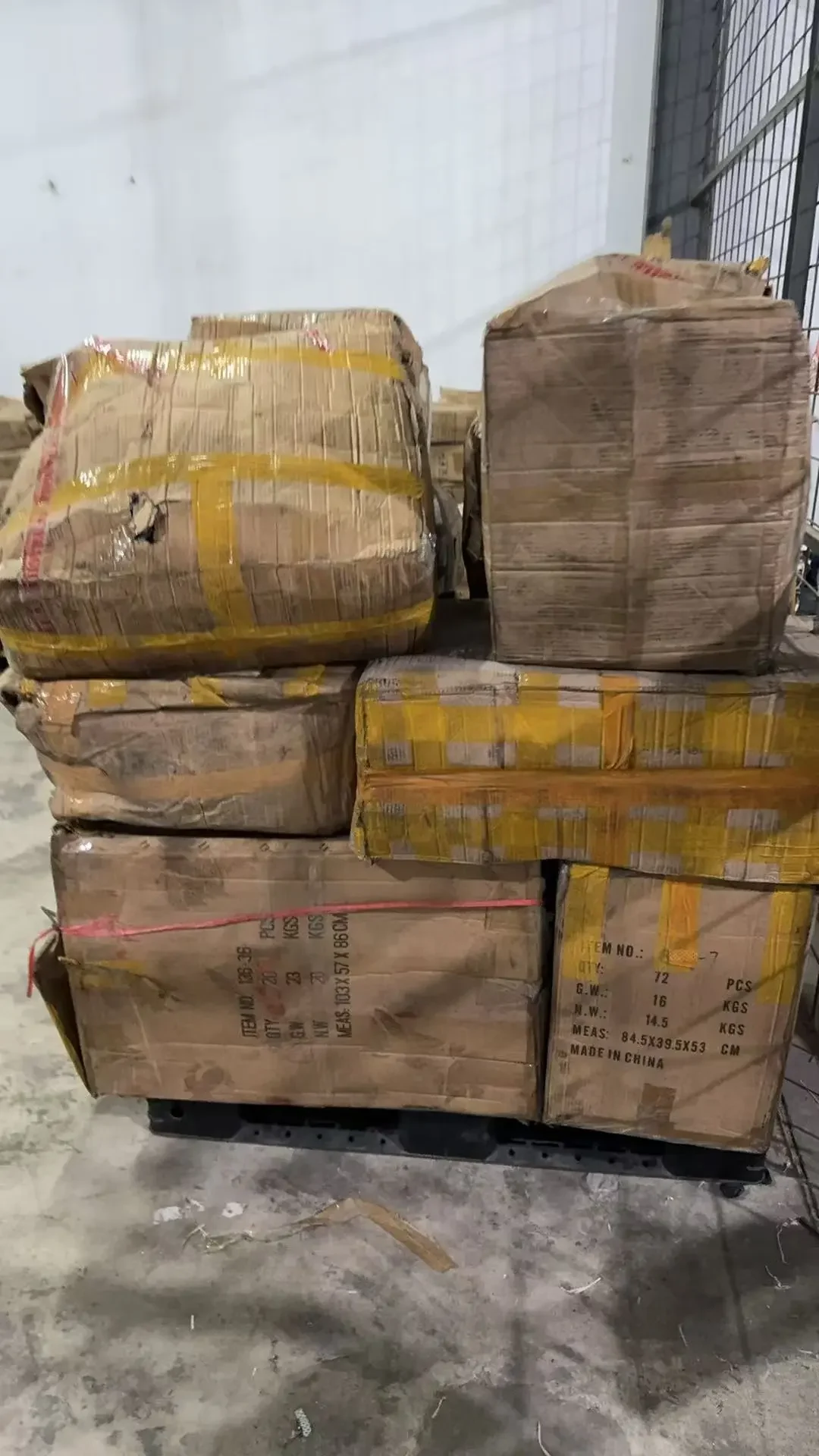
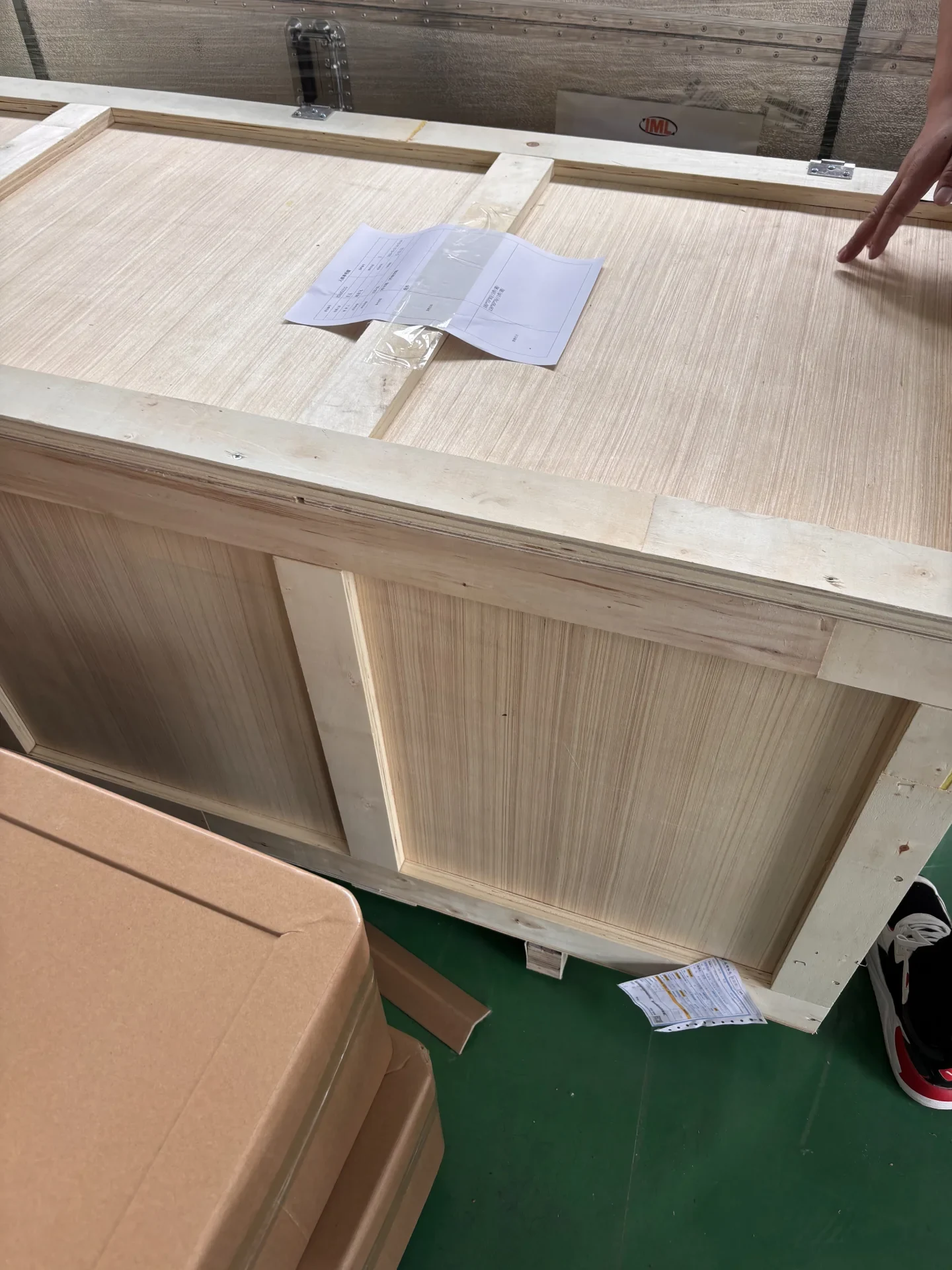
Prepared from the linked primary references and public field research. Field photographs illustrate general handling; worked examples use separate hypothetical figures. Acceptance, charges and destination requirements should be checked against the specific shipment and current operator or authority instructions.