 Skip to content

Pack & load
Furniture export packing: a brief your supplier can act on
Prepare an export packing brief for sofas, cabinets, stone, glass and lighting, including handling, labels, moisture and inspection evidence.
Practical guideField guide / 03
Protect the goods. Prove the condition.
A useful starting point
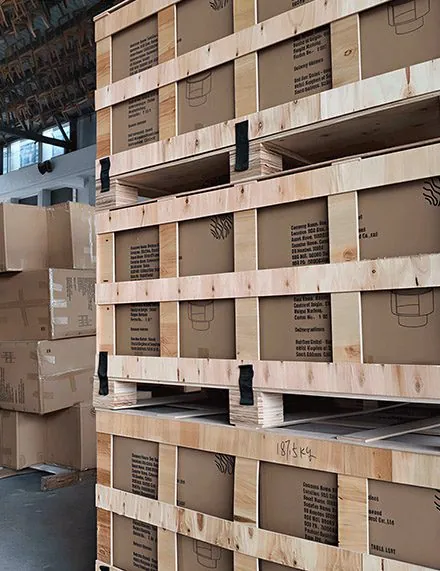
Good export packing is designed around the product and the journey. It must account for handling, compression, movement and the destination’s unpacking method. A photograph of a finished crate is useful; a record showing what is inside, how it is supported and how it is identified is much more useful.
Separate product-quality inspection from packing inspection. Confirm what each service checks, what evidence it supplies and who can approve rework. A packaging plan for a stone tabletop will differ from one for a sofa, a light fitting or loose metal fittings. The CTU Code provides a framework for safe packing and securing across transport modes; apply it through a competent packing team rather than treating a generic sketch as a load-securing calculation.
Pack & load
Prepare an export packing brief for sofas, cabinets, stone, glass and lighting, including handling, labels, moisture and inspection evidence.
Practical guide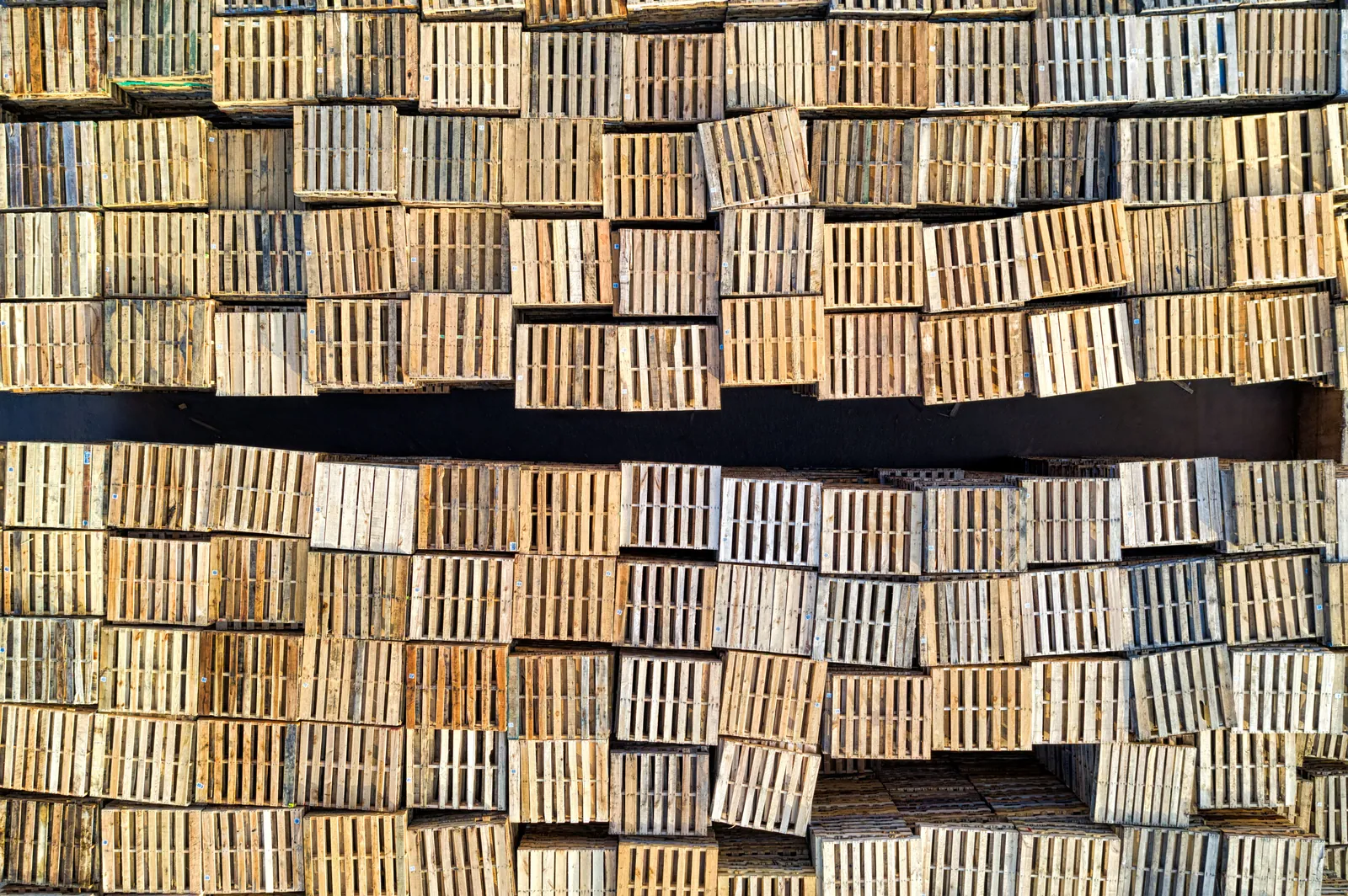
Pack & load
Check solid-wood crates, pallets and dunnage for ISPM 15 requirements, appropriate marks and destination rules before shipment.
Practical guide
Pack & load
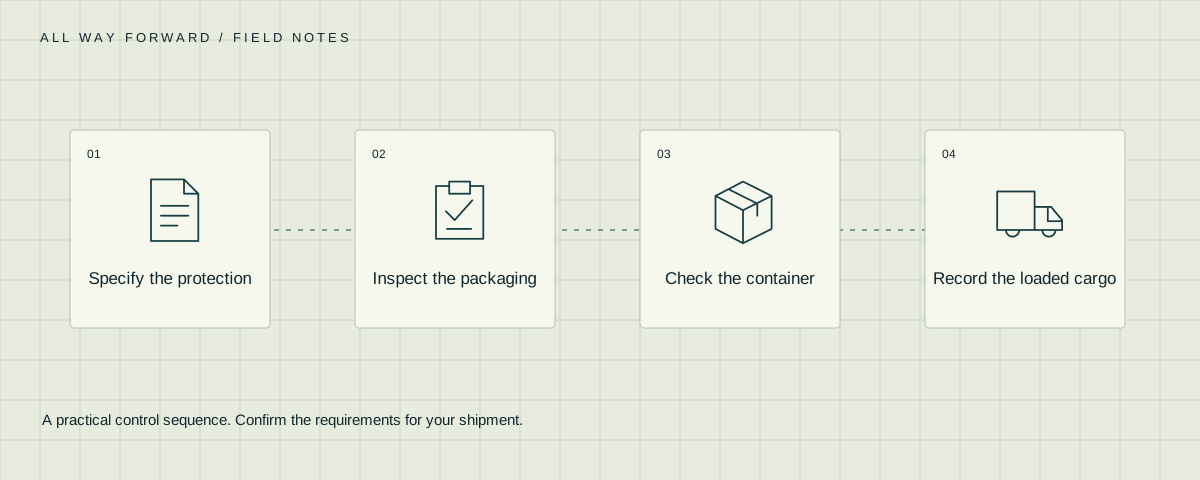
Check container condition, identity, usable capacity, cargo distribution, seal evidence and verified gross mass before loading.
Practical guideFrom definition to action
Use a glossary explanation for a term, then return to the guide to apply it to your shipment.
Primary references checked 21 October 2026. Carrier examples describe that provider’s process; confirm the requirements of your own booking and destination.
Editorial preparation: Allwayforward Editorial Team. The worksheets and worked examples are original planning aids, not carrier forms or a substitute for shipment-specific instructions.