 Skip to content
Final delivery
Double Blind Shipment
Double Blind Shipment is a commercial arrangement limiting the supplier's and recipient's visibility of each other's identity in the shipment documents they receive.
Understand it in practiceWhere it fits in the journey
Highlighted stages are commonly relevant- 01Agree
- 02Prepare
- 03Transport
- 04Clear
- 05Deliver — commonly relevant
Double Blind Shipment at a glance
- Actual origin party
- Agreed information handling
- Actual receiving party
Can double-blind shipping change mandatory customs disclosures?
It must not conceal required facts from customs or authorized transport parties. Agree document handling in advance.
Name the service you actually need
| Service | What to agree |
|---|---|
| Curbside / standard | Exact unloading point and who unloads |
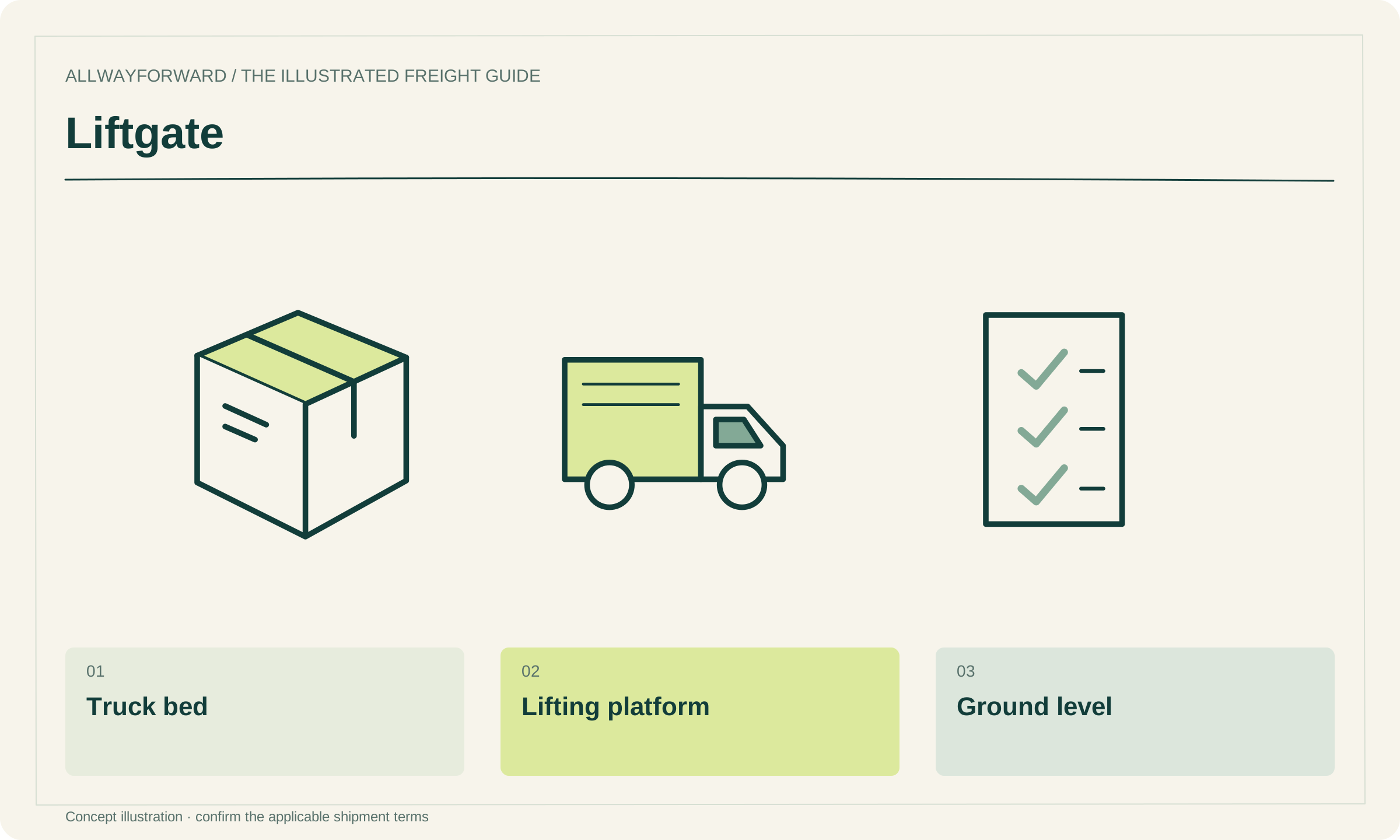
| Liftgate | Platform dimensions and load capacity |
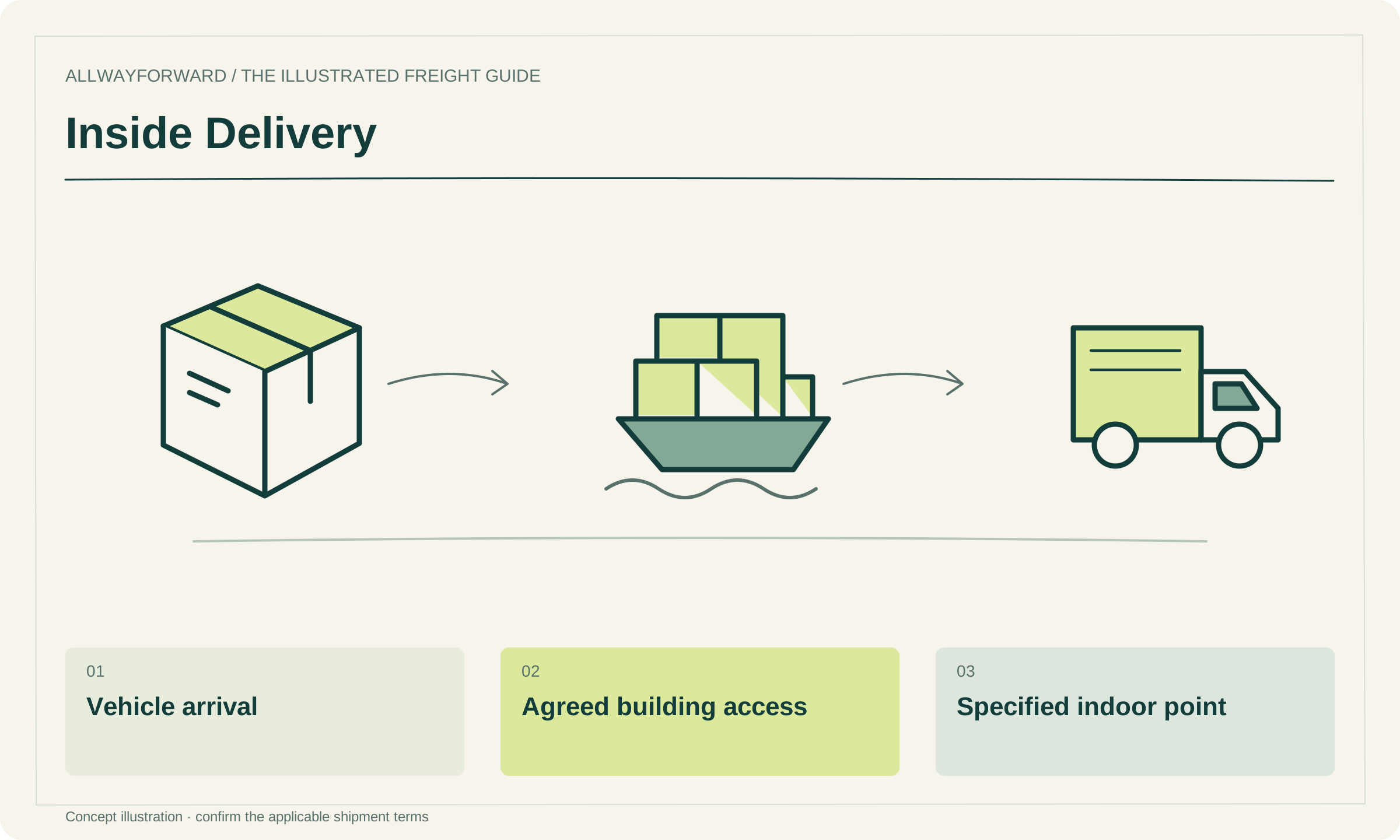
| Inside delivery | Agreed interior location and access |
| Assembly / installation | Separate work scope and responsible team |
Scroll sideways to compare

Before you book
For final delivery, have these details ready:
- Address, access restrictions and appointment
- Largest piece size and available unloading equipment
- Included unloading point and extra services
Sources & further reading
Plain-language educational guidance. The applicable contract, carrier tariff, official rules or insurance policy takes precedence. Illustrations show concepts, not a specific shipment or facility.
Published by Allwayforward as a plain-language freight reference. Examples are illustrative, not customer case studies. For a correction, send the term and supporting source.
 Drayage
 Residential Delivery
 Liftgate
 Inside Delivery