 Skip to content
Air freight
Dangerous Goods (Hazmat)
Substances or articles that pose regulated transport hazards, including some batteries, chemicals and aerosols.
Understand it in practiceWhere it fits in the journey
Highlighted stages are commonly relevant- 01Agree
- 02Prepare — commonly relevant
- 03Transport — commonly relevant
- 04Clear
- 05Deliver
Dangerous Goods (Hazmat) at a glance
- Hazard classification
- Required packing + labels
- Carrier acceptance
Does ordinary-looking cargo rule out dangerous-goods restrictions?
Ordinary-looking products can be regulated. Confirm classification, packing, labels and mode-specific documents with a qualified specialist.
Air freight has more than one weight
| Measure | Meaning |
|---|---|
| Actual gross weight | The packed shipment’s measured weight |
| Volumetric weight | Space converted using the agreed divisor |
| Chargeable weight | Billing weight after the applicable rules |
Scroll sideways to compare

Before you book
For air freight, have these details ready:
- Actual weight and final packed dimensions
- Commodity restrictions and required documents
- Airport-to-airport versus door delivery scope
Sources & further reading
Plain-language educational guidance. The applicable contract, carrier tariff, official rules or insurance policy takes precedence. Illustrations show concepts, not a specific shipment or facility.
Published by Allwayforward as a plain-language freight reference. Examples are illustrative, not customer case studies. For a correction, send the term and supporting source.
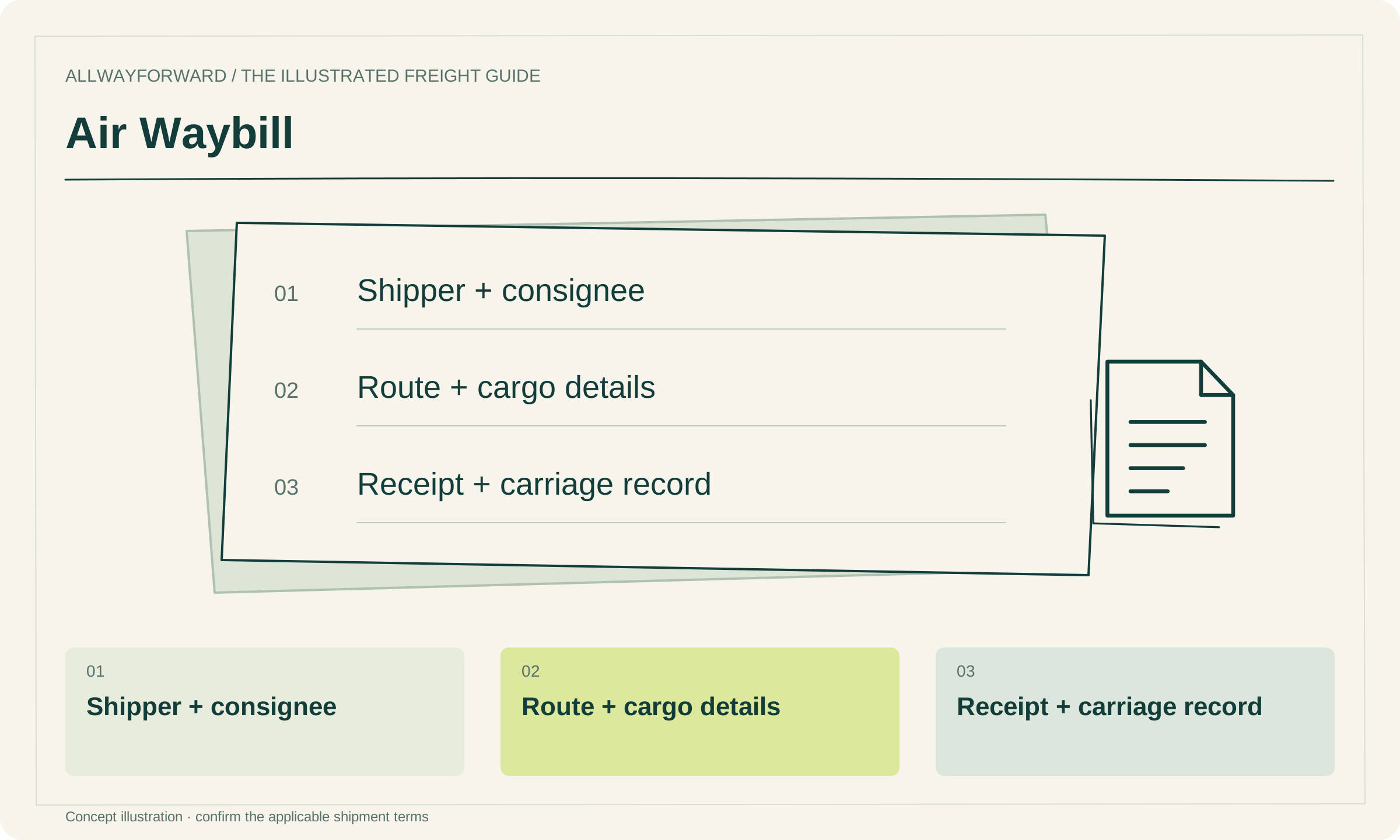 Air Waybill (AWB)
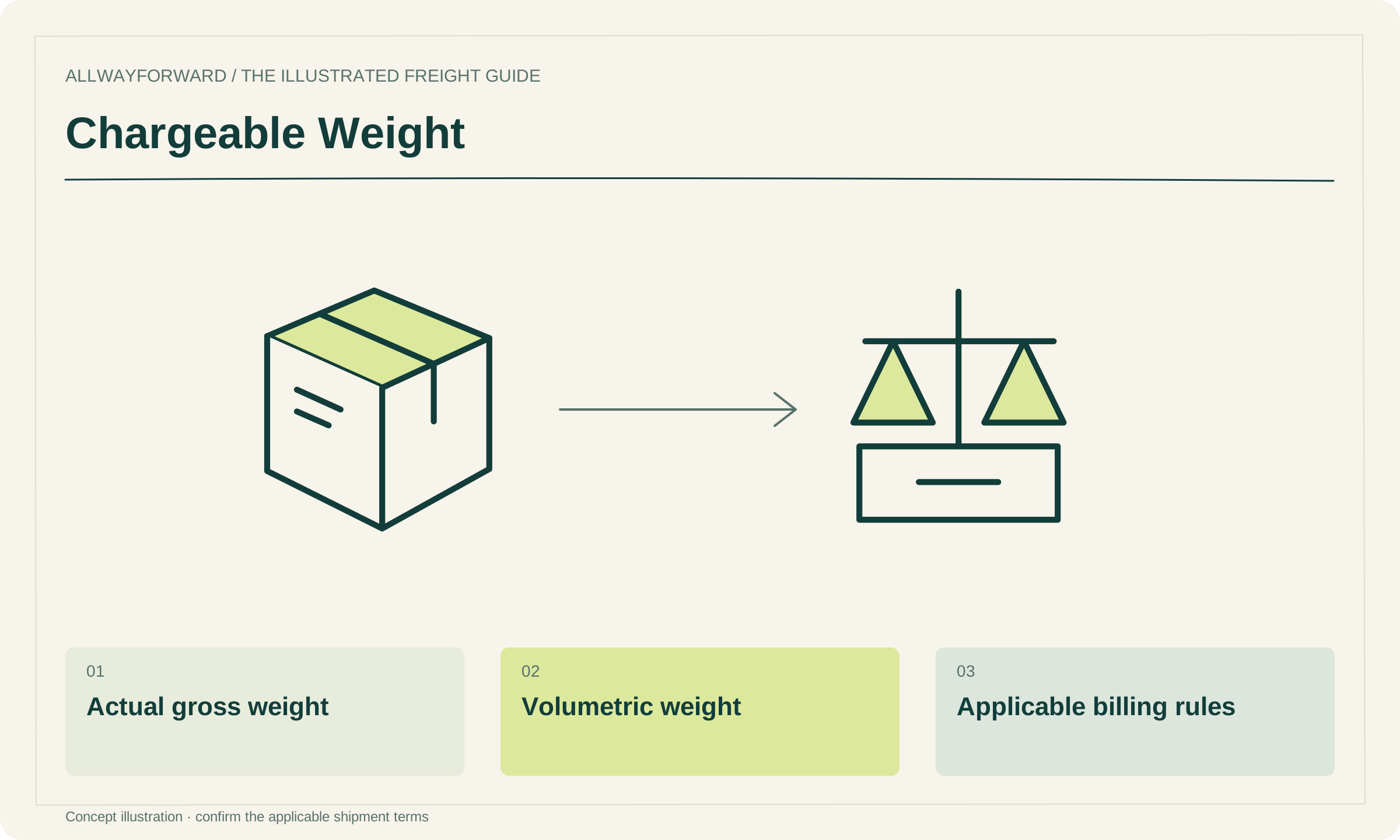 Chargeable Weight
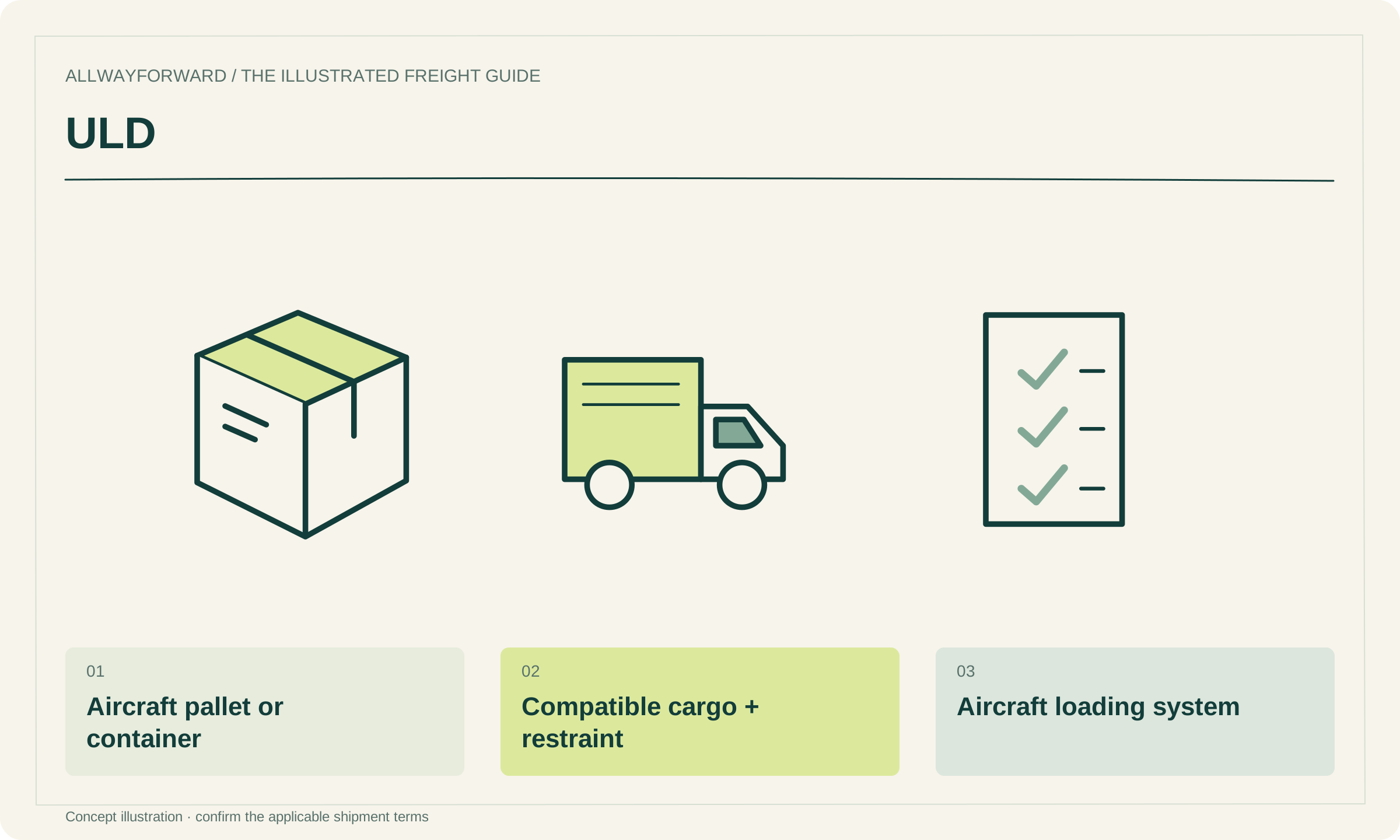 ULD (Unit Load Device)