 Skip to content

Air freight delays are easier to resolve when you identify the last confirmed milestone, request evidence, and assign the next action to a named owner. First distinguish cargo not received, offloaded, in transit, held by customs, or awaiting delivery. Then investigate that stage rather than relying on a broad update. [1][2]
Start with evidence, not “the shipment is delayed”
The decision tree below is a recommended troubleshooting method, inferred from IATA’s emphasis on booking, planning and cargo acceptance, and CBP’s requirements for timely, acceptable cargo information. It is not an official carrier status system. Use it for China exports while checking the requirements of the actual route and destination. [1][2]
Begin with one question: What is the last event supported by evidence? Request the event time, location, shipment reference, piece count and reporting party. Separate a planned event from a completed event. Cargo acceptance is a distinct process, so a booking alone should not be treated as evidence that cargo has passed acceptance. [1]
Build a short event record shared by exporter, forwarder and buyer. Keep physical movement and document processing separate: one person should check where the cargo is, while another confirms whether required data has been submitted and accepted. This is a recommended workflow based on the separate handling and information requirements described in the sources. [1][2][3]

Follow the decision tree to the blocked milestone
1. No receipt evidence? Treat the case as “not received” until the handover is reconciled. Ask the China pickup provider for its collection record and the receiving party for its receipt record. Compare addresses, references and piece counts. The suggested next owner is the party responsible for completing or proving that handover. This diagnostic step reflects the need to verify readiness and acceptance rather than assume them. [1]
2. Received, but departure is not confirmed? Ask the forwarder to distinguish pending acceptance, pending uplift and a reported offload. If someone says “offloaded,” request the carrier or handler’s event confirmation, stated reason and proposed recovery action. Do not infer the cause from the label. Assign the forwarder to obtain the operating party’s response; treat this as a recommended escalation path, not a universal allocation of responsibility. [1]
3. Departure confirmed, but the next location is unclear? Investigate the transit handover. Request the last confirmed arrival or departure event and identify who must confirm the next movement. Avoid assuming that departure from China proves arrival at the destination. This evidence-first approach is an inference from the planning and multi-party coordination described by IATA. [1][3]

4. A customs issue is reported? Request the actual notice or filing response, the affected reference and the specific missing or unacceptable information. For U.S.-bound cargo, CBP describes holds related to unacceptable cargo descriptions or shipper and consignee information, as well as consequences for late air waybill records. That evidence does not establish the rules for other destinations. [2]
5. Customs release reported, but delivery is missing? Ask for release evidence and then investigate the delivery handover separately. Request confirmation that the delivery provider has received the cargo, plus any outstanding appointment or receiving instructions. This is a proposed troubleshooting branch: a document-processing event should not be substituted for proof of physical custody. [2][3]
Compare the evidence and next action owner
Use this table as a working allocation tool, not as a statement of legal liability. Confirm the actual service scope and name a person for each action. IATA’s e-freight description involves several participants with different roles, making explicit coordination more useful than a general request to “check status.” [3]

Read the infographic as text
For China exports, verify the last completed event, follow the blocked stage, and name the next action owner.
- 1. Is receipt confirmed? If not, ask the pickup provider for collection proof and the receiver for receipt proof. Compare addresses, references and piece counts; name a handover owner.
- 2. Offloaded or still in transit? Ask the forwarder to verify acceptance and movement events. If offloaded, request the next movement plan; if in transit, confirm location and the next action owner.
- 3. Is customs release confirmed? If not, ask the filing contact for the customs status, filing response and unresolved requirement. Name who will supply missing details and who will respond.
- 4. Released but not delivered? Ask the delivery provider for receipt evidence and its next action owner. If arrival covers fewer pieces than shipped, resolve that gap before pursuing delivery.
Hypothetical: Arrival is not release. An arrival record covers all cartons, but no release evidence exists. Ask the filing contact to verify customs status, not the driver to deliver. If clearer product details are requested, the exporter supplies them.
Decision: Share an event log with time, location, reference, piece count and reporting party. Track physical movement and filing acceptance separately; assign each next action to a named owner.
This is a troubleshooting guide, not an official status system. A booking is not acceptance proof. Check current operator and authority requirements for the route and destination.
| Delay branch | Evidence to request | Suggested action owner | Next action |
|---|---|---|---|
| Not received | Collection and receiving records; piece counts | Pickup coordinator and receiving contact | Reconcile the handover |
| Reported offload | Carrier or handler confirmation; stated reason | Forwarder’s operations contact | Obtain recovery options and their conditions |
| Transit uncertainty | Last confirmed movement and location | Contact managing the next transport leg | Verify the next handover |
| Customs issue | Notice, filing response and requested correction | Filing contact, supported by the data owner | Resolve the identified information gap |
| Last-mile delay | Release record and delivery-provider receipt | Delivery coordinator | Confirm custody and delivery arrangements |
The table assumes that shipment references can be matched across parties. It can fail when references differ, only part of a shipment is accounted for, or an update describes a plan rather than an event. If records conflict, return to the last mutually supported milestone instead of advancing the case on an unsupported assumption. This is an operational inference from acceptance and data-quality requirements. [1][3]
Use a checklist, then test the decision
The following checklist turns the source principles—planned handling, compliant acceptance and high-quality information—into a practical escalation routine. It is a recommended method rather than a prescribed regulatory procedure. [1][2][3]
- Collect the shipment references, route and expected piece count.
- Record the last confirmed event, including its location and time zone.
- Request the underlying receipt, movement confirmation or filing response.
- Select the blocked milestone; investigate conflicting evidence first.
- Name one person responsible for obtaining the next answer.
- State the exact missing record, correction or handover required.
- Agree on the next update time, without promising a delivery outcome.
- Close the issue only when evidence confirms the missing milestone.
Hypothetical worked decision example: A China exporter’s forwarder reports that eight cartons are “at destination,” but the overseas buyer has received nothing. Assume the forwarder supplies an arrival record covering all eight cartons, while no customs release evidence is available. The recommended branch is customs-status verification, not immediate escalation to the delivery driver. [1][2]
In this hypothetical case, the filing contact then provides a request for a clearer product description. The exporter supplies accurate product details, and the filing contact handles the response through the applicable process. If this were U.S.-bound cargo, the information issue would be consistent with a hold category described by CBP; it would not prove that every destination follows the same procedure. [2]

The decision changes if release evidence already exists. Then request the delivery provider’s receipt and next action. It also changes if the arrival record covers only six cartons: first resolve the missing pieces. These hypothetical failure cases show why a broad status must be checked against both the event and its scope. [1][3]
FAQs about air freight delays
Does “booked” mean the airline has accepted the cargo?
No. IATA describes booking and planning alongside an acceptance process that consignments must pass. Ask for acceptance evidence rather than treating a booking confirmation as proof that the shipment is ready for carriage. [1]
Does electronic documentation prevent customs delays?
No. IATA’s e-freight initiative emphasizes high data quality, not simply replacing paper. CBP also identifies problems with missing or unacceptable information. Check the content and filing response, not just whether a message was sent. [2][3]
Who should give the next update?
As a recommended practice, choose the person able to obtain evidence for the blocked milestone. Ask for an event, unresolved requirement and next action—not another broad estimate. This follows the sources’ emphasis on coordinated handling and role-based information sharing. [1][3]
Sources and further reading
- IATA - What to Know About Air Cargo HandlingPrimary source · Retrieved 15 October 2026
- 1Primary source · Retrieved 15 October 2026
- IATA - efreight / eAWBPrimary source · Retrieved 15 October 2026
Field research
- Reddit field research 1Topic discovery and anecdotal context; not evidence of a general rule.
- Reddit field research 2Topic discovery and anecdotal context; not evidence of a general rule.
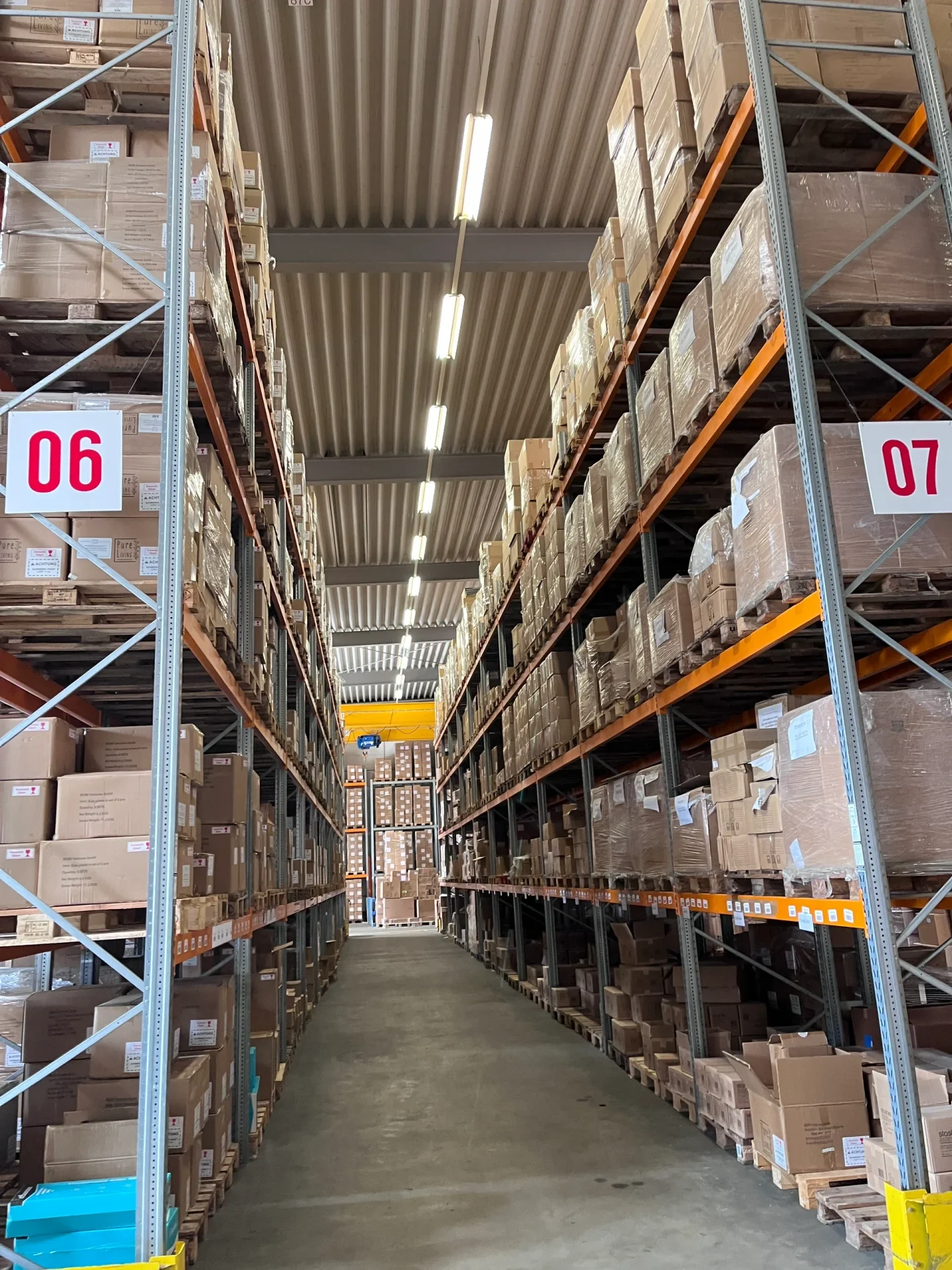
Prepared from the linked primary references and public field research. Field photographs illustrate general handling; worked examples use separate hypothetical figures. Acceptance, charges and destination requirements should be checked against the specific shipment and current operator or authority instructions.