 Skip to content

When shipping samples from China, prepare clear product descriptions, explain whether the buyer pays for the goods, and support the declared value with records. Compare courier and forwarder offers using the same shipment details. Before dispatch, confirm document and valuation requirements with the intended importer and chosen service provider. [3]
Prepare commercial data before choosing transport
A useful starting point is the overseas customer or importer, together with a freight forwarder. The supplied export-document guidance recommends these contacts for identifying required paperwork and notes that some products or shipments need special documents. It is general guidance, not a complete China-to-destination compliance checklist. [3]
For trial shipments, the practical recommendation is to build one shipment data sheet before requesting quotes. This gives the exporter, buyer, and transport providers the same starting information. Treat the following as a preparation checklist, then ask the intended importer what must appear on the final documents. [3]
- Seller, buyer, consignee, and intended importer contact details.
- Product name, model, material, function, and intended sample use.
- Quantity, unit of measure, and item-by-item weights.
- Packed carton count, dimensions, and gross weight.
- Whether the samples are sold, supplied free, loaned, or intended for return.
- Proposed values, currency, supporting records, and separately identified freight charges.
- Any product features that need review, such as batteries, liquids, or unusual materials.

This checklist is a recommended working file, not a statement that every field is legally required everywhere. Its purpose is to expose missing information before booking. If a product feature raises questions, obtain shipment-specific acceptance and documentation advice rather than assuming that small quantities remove the issue. [3]
Describe the product, not just its sample status
The supplied guidance identifies descriptions, quantity, price, weight, and other specifications as commercial information used in export documentation. A practical recommendation is that “sample” should explain the transaction or intended use, not replace the description of the goods themselves. [3]
For example, a hypothetical description such as “Five empty polypropylene cosmetic jars, model J30, 30 ml capacity, supplied for packaging evaluation; no cosmetic contents” gives a reviewer more information than “plastic samples.” The exporter should use that wording only if it accurately describes the actual goods. [3]
Use descriptions that answer three questions: What is the object? What is it made from? What will the recipient do with it? Add model numbers or specifications where they distinguish the item. This is a drafting recommendation derived from the source’s emphasis on descriptive commercial information, not a guarantee of customs acceptance. [3]

A common preparation failure is inconsistent information: the quote request calls an item a container, the invoice calls it a component, and the packing information lists a different quantity. As a preventive check, compare the documents line by line and resolve differences before release. Ask the importer or forwarder which descriptions require more detail. [3]
Support the value even when the samples are free
The source distinguishes a pro forma invoice used in negotiation from the final commercial invoice used for import clearance. It does not provide destination-specific valuation rules for free samples. Therefore, do not infer a customs value solely from the fact that the recipient pays nothing; ask the importer or its adviser how the proposed value must be established and documented. [3]
As a preparation recommendation, separate payment status from valuation support. Record that the goods are supplied without charge if that is true, while retaining evidence that explains the proposed declared amount. Possible records to discuss with the importer include a normal selling-price quotation, a comparable paid order, or an itemized production-cost explanation. These are candidate evidence, not universally accepted valuation methods. [3]
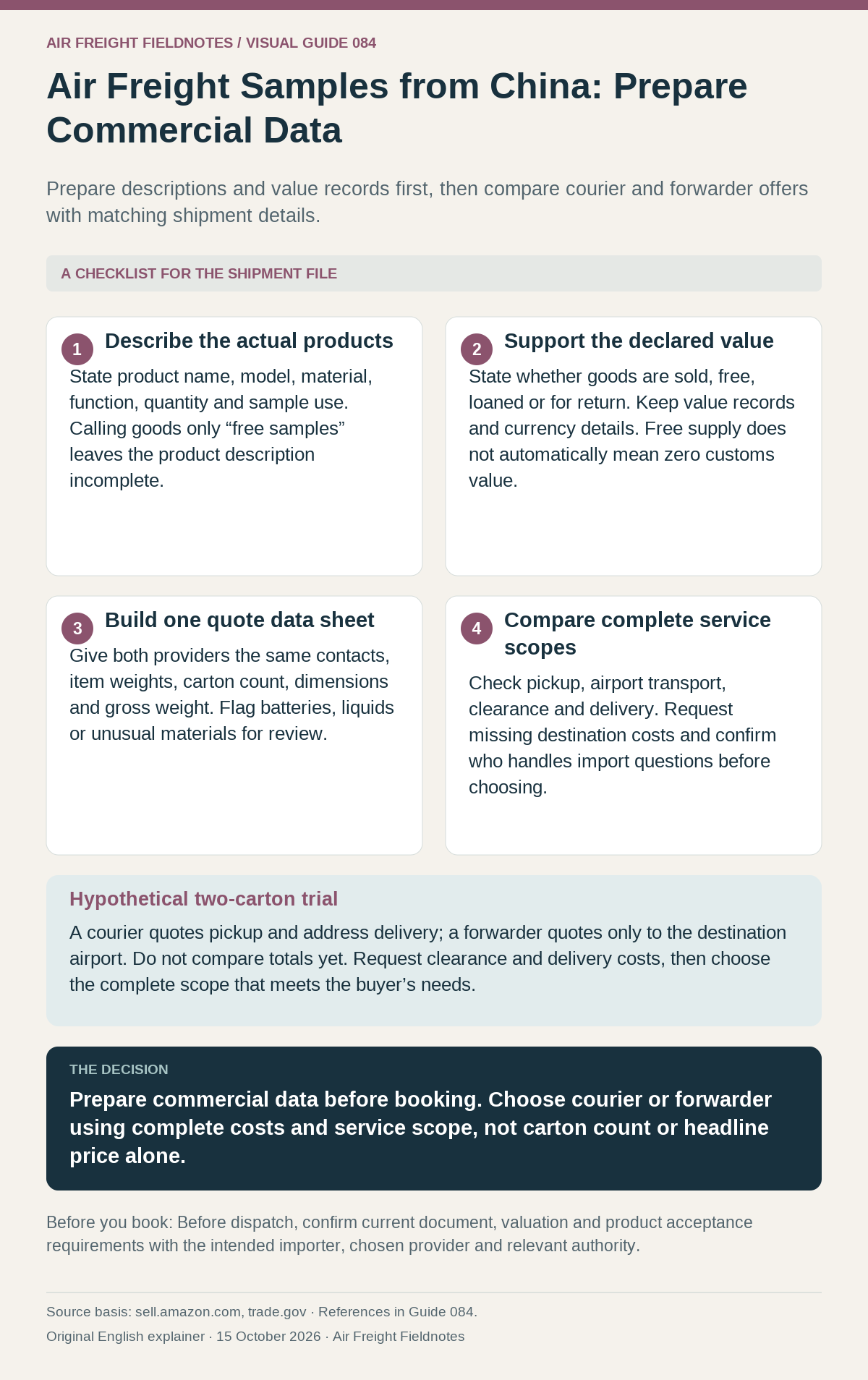
Read the infographic as text
Prepare descriptions and value records first, then compare courier and forwarder offers with matching shipment details.
- Describe the actual products State product name, model, material, function, quantity and sample use. Calling goods only “free samples” leaves the product description incomplete.
- Support the declared value State whether goods are sold, free, loaned or for return. Keep value records and currency details. Free supply does not automatically mean zero customs value.
- Build one quote data sheet Give both providers the same contacts, item weights, carton count, dimensions and gross weight. Flag batteries, liquids or unusual materials for review.
- Compare complete service scopes Check pickup, airport transport, clearance and delivery. Request missing destination costs and confirm who handles import questions before choosing.
Hypothetical two-carton trial A courier quotes pickup and address delivery; a forwarder quotes only to the destination airport. Do not compare totals yet. Request clearance and delivery costs, then choose the complete scope that meets the buyer’s needs.
Decision: Prepare commercial data before booking. Choose courier or forwarder using complete costs and service scope, not carton count or headline price alone.
Before dispatch, confirm current document, valuation and product acceptance requirements with the intended importer, chosen provider and relevant authority.
A hypothetical supplier might give a buyer five prototype housings without charging for them. Instead of entering an unexplained zero, the supplier could provide its cost breakdown and any comparable quotation, then request confirmation of the appropriate declaration approach. If there is no comparable sale, disclose that gap rather than inventing one. [3]
This approach assumes the exporter can substantiate its figures and the importer can obtain destination-specific advice. It can fail when the declared amount has no supporting basis, different documents show conflicting amounts, or prototype costs are presented without explanation. Resolve those gaps before dispatch rather than expecting the transport booking to settle them. [3]
Compare courier and forwarder offers on the same scope
The available guidance does not establish courier prices, air-freight schedules, or a universal size threshold for choosing a forwarder. The comparison below is therefore a procurement framework inferred from the need for accurate shipment information, not a claim that either service type is always cheaper or faster. Ask each provider to confirm its actual scope. [3]
| Decision point | Courier offer: ask | Forwarder offer: ask |
|---|---|---|
| Service coverage | Does the quote cover pickup through the buyer’s address? | Which origin, airport, clearance, and delivery legs are included? |
| Commercial-data review | Who reviews descriptions and invoice information before pickup? | Who coordinates document questions with the intended importer? |
| Charge basis | What packed measurements and charging formula were used? | What weight basis, minimums, and handling charges apply? |
| Import responsibilities | Who is intended to act as importer, and what is excluded? | Which party arranges import clearance and destination services? |
| Delivery planning | What address restrictions or receiving conditions need confirmation? | Does the destination quote match the buyer’s unloading facilities? |
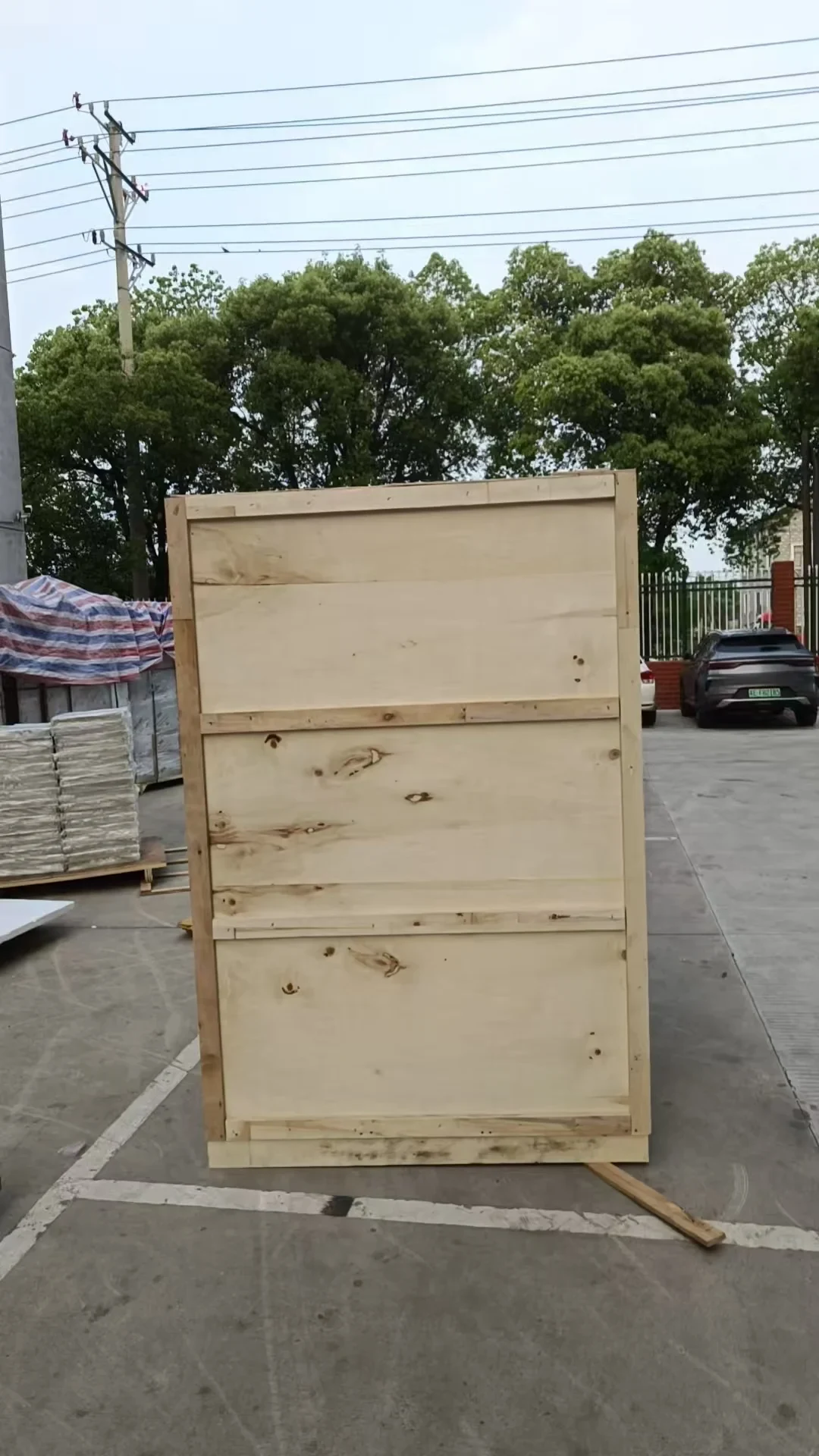
For a palletized destination leg, receiving equipment deserves a separate check. The supplied Amazon LTL material highlights forklift availability, lift-gate arrangements, vehicle access, and loading space. That supports checking receiving facilities; it does not establish requirements for every sample parcel or air-freight delivery. [1]
Hypothetical worked decision: A China exporter has two cartons of evaluation parts for an overseas buyer. Assume both providers accept the goods and neither quote is yet final. The courier offer identifies pickup and address delivery; the forwarder offer covers transport to the destination airport but leaves clearance and local delivery unpriced. [3]
The recommended decision is not to compare those headline totals directly. Request the missing destination costs and confirm who handles import questions. If the courier’s completed scope meets the buyer’s needs, it may be the simpler choice for this hypothetical trial. If the forwarder supplies a better complete arrangement, reconsider. Missing scope—not carton count alone—is the decision failure to fix. [3]
Frequently asked questions
Can I describe the shipment only as “free samples”?
Use “free samples” to explain the transaction, then describe the actual products, quantities, and relevant specifications. This recommendation follows the source’s emphasis on meaningful commercial information; confirm the required wording with the importer or forwarder. [3]
Does a free sample automatically have zero customs value?
The available guidance does not establish that conclusion. Explain the no-charge arrangement, retain supporting records, and obtain destination-specific valuation guidance before finalizing the declaration. Do not substitute an unsupported amount for that review. [3]
Should I book transport before preparing the invoice data?
Prepare the core information first, then ask the importer and provider which documents are needed. A booking does not resolve missing descriptions or unsupported values. The source recommends starting document questions with the customer/importer or a freight forwarder. [3]
Sources and further reading
- Pay less to stock more with Amazon LTL carriers - Sell on AmazonPrimary source · Retrieved 15 October 2026
- Common Export DocumentsPrimary source · Retrieved 15 October 2026
Field research
- Reddit field research 1Topic discovery and anecdotal context; not evidence of a general rule.
- Reddit field research 2Topic discovery and anecdotal context; not evidence of a general rule.
Prepared from the linked primary references and public field research. Field photographs illustrate general handling; worked examples use separate hypothetical figures. Acceptance, charges and destination requirements should be checked against the specific shipment and current operator or authority instructions.