 Skip to content
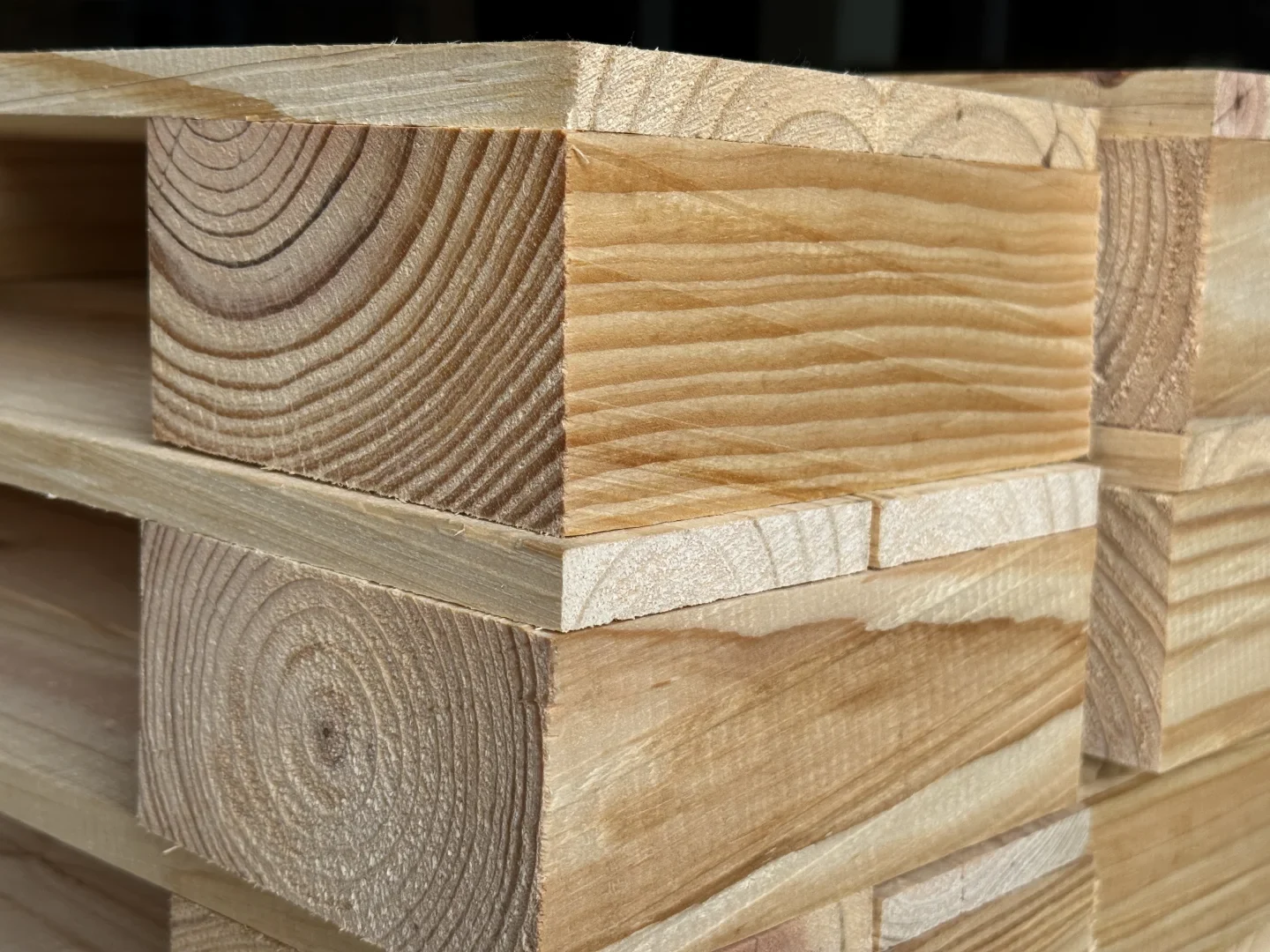
For air freight using wood packaging, check wood packaging against the destination’s current requirements before dispatch. Do not assume flying creates an exemption. Identify solid-wood components, verify any required official IPPC marks, and distinguish processed wood carefully. Resolve uncertain materials or markings before booking, while checking packaging size and protection. [1][2][3]
Start with the wood packaging and the destination
ISPM 15 concerns wood packaging material in international trade. The IPPC’s guidance directs users to check whether a country has implemented the standard, which version it uses, whether its rules differ, and where national legislation and responsible contacts can be found. Those are the starting points for a China exporter and its overseas buyer. [1][2]
Do not use the transport mode as your compliance test. The supplied material provides no basis for assuming that air transport removes wood-packaging obligations. The practical recommendation is to verify the destination’s requirements for the actual packaging rather than accepting “it travels by air” as an answer. [1][2]
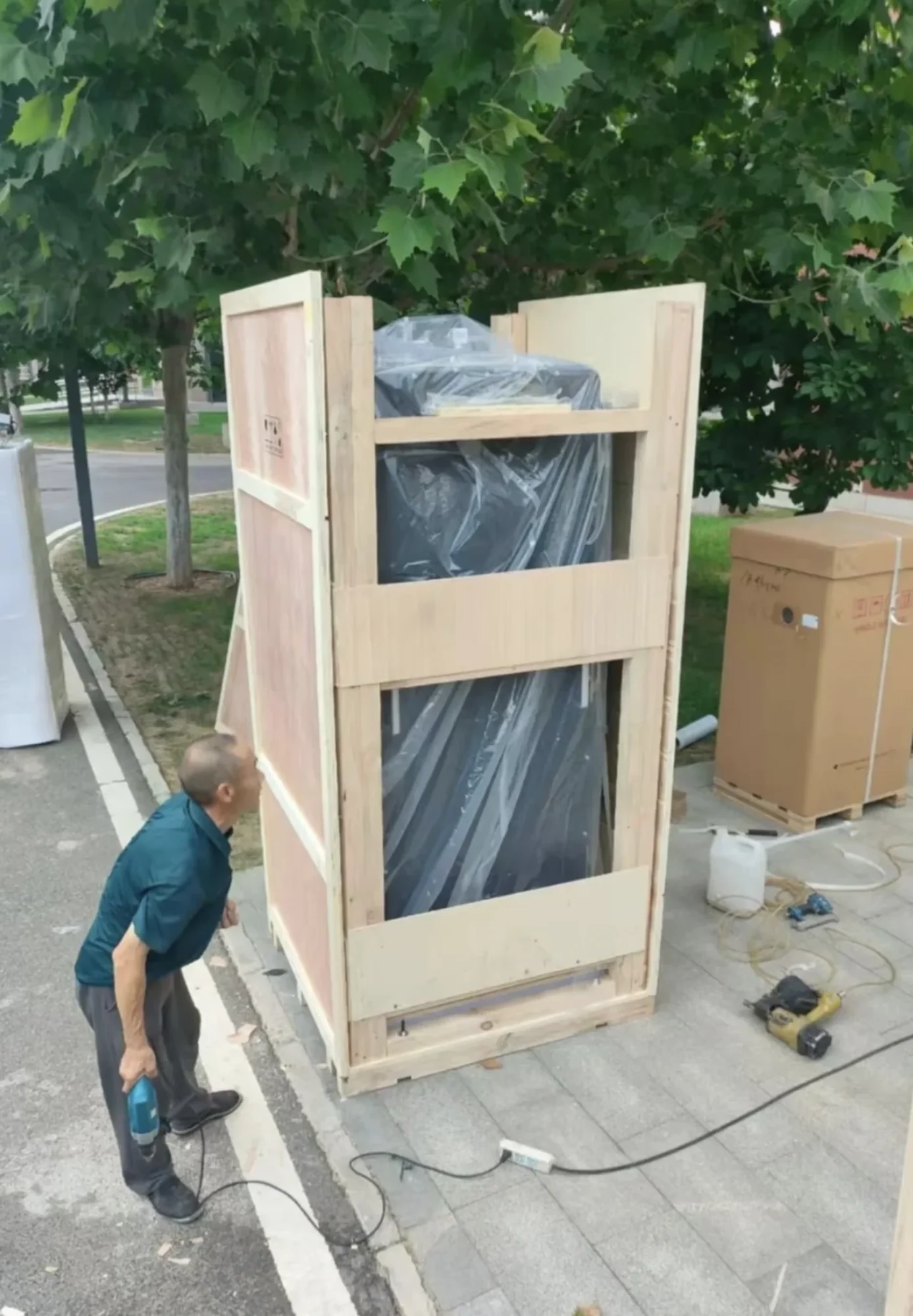
Begin with a packaging inventory: pallet, crate, internal supports, blocks, braces and loose packing pieces. Record what each component is made from. This is a suggested checking method, not a claim that every listed component is regulated in every destination. Its purpose is to prevent an overlooked piece of wood from escaping review. [1][2]
Ask the buyer or its appointed destination contact for the relevant official requirements. Request a source or written explanation, not simply “wood is accepted.” The IPPC FAQ specifically identifies national legislation and relevant authorities as information to locate. [2]
Distinguish solid wood, processed wood and official marks
For regulated solid-wood packaging, the key question is whether the packaging meets the applicable destination requirements, including any required official IPPC marking. The IPPC material connects management of wood packaging with preventing the introduction and spread of pests harmful to plant resources. [1][2]
Processed wood needs a separate assessment. Do not treat “wooden,” “engineered” or “export grade” as a sufficient material description. The cited guidance do not reproduce the standard’s definitions or exclusions, so they cannot establish a blanket exemption for a particular board product. Obtain the material specification and check its status against the applicable official text. [1][2]
A useful supplier question is: “What is each component made from, and what official requirement supports its treatment or exemption?” This proposed check is especially important for mixed construction: a processed-board crate description alone does not establish the status of separate solid-wood supports. That is a checking inference, not a destination-specific ruling. [1][2]
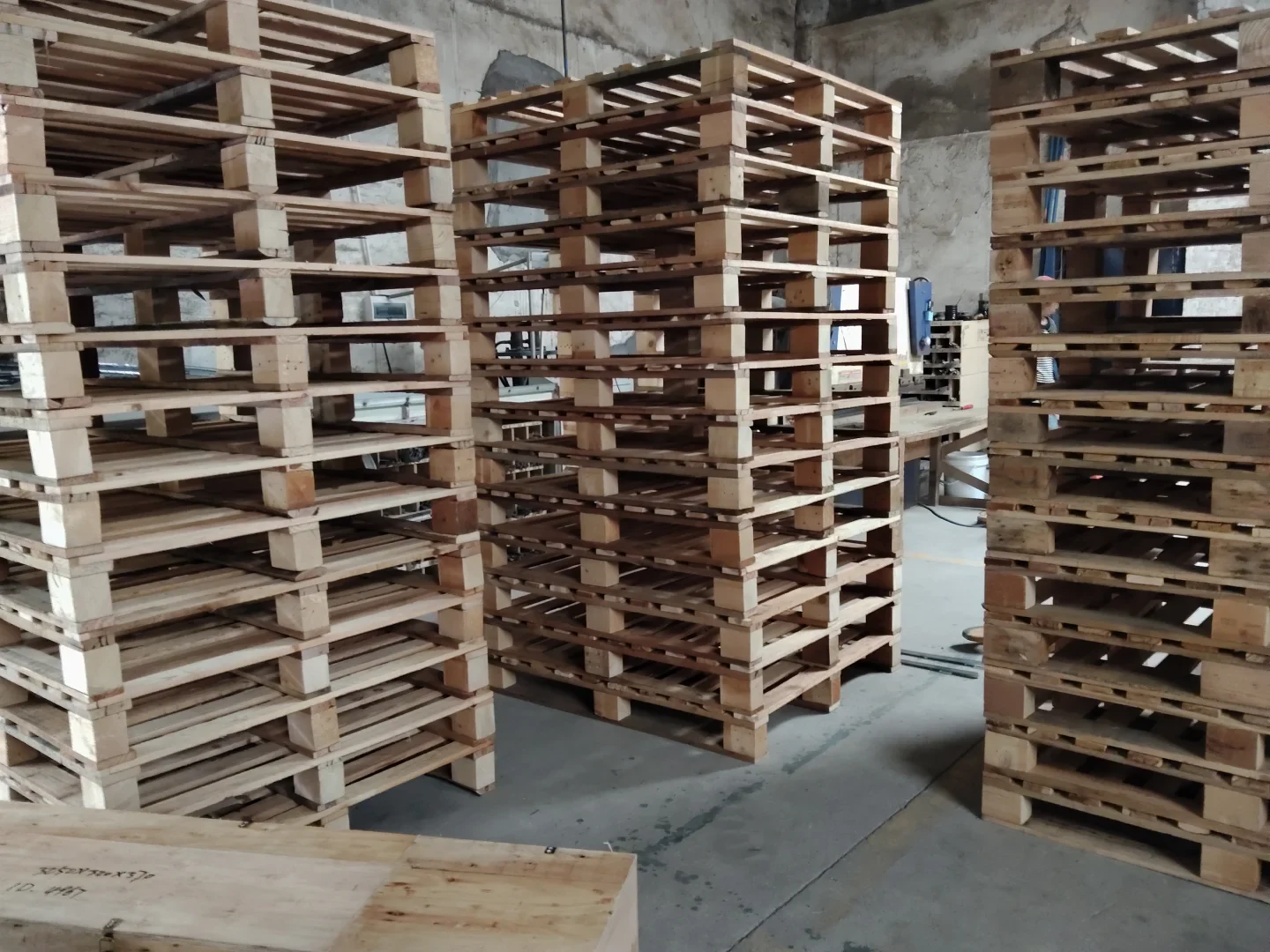
For an official IPPC mark, request clear photographs on the actual packaging and have its content checked against the applicable requirements. The IPPC FAQ discusses registration and protection of the symbol. However, the cited guidance do not provide a complete mark diagram, validation procedure or treatment-code list; this article therefore does not present a visual approval test. [2]
Do not turn a readable photograph into a compliance guarantee. As a practical recommendation, photographs help identify what was supplied, while official requirements remain necessary to assess it. If the mark is unclear, the material is uncertain or the supplier cannot explain its compliance basis, resolve that uncertainty before release. [1][2]
Compare packaging choices without overlooking freight volume
Packaging selection also affects transport efficiency. FedEx explains that oversized packaging takes up unnecessary space and that dimensional-weight pricing can reward right-sizing. It also advises matching packaging to the item’s size and fragility. Reducing external volume is therefore worth considering, but not at the expense of suitable protection. [3]
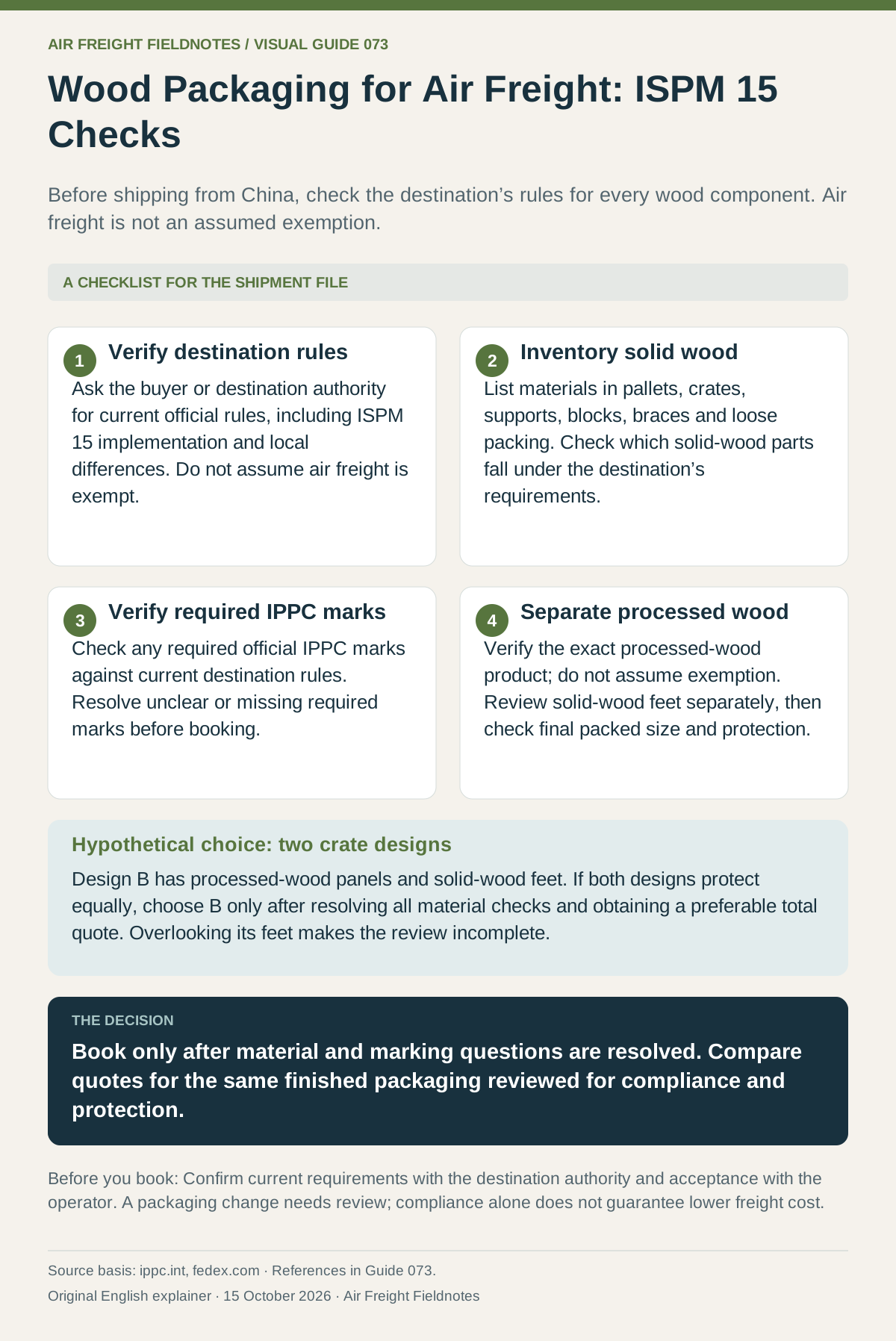
Read the infographic as text
Before shipping from China, check the destination’s rules for every wood component. Air freight is not an assumed exemption.
- 1. Verify destination rules Ask the buyer or destination authority for current official rules, including ISPM 15 implementation and local differences. Do not assume air freight is exempt.
- 2. Inventory solid wood List materials in pallets, crates, supports, blocks, braces and loose packing. Check which solid-wood parts fall under the destination’s requirements.
- 3. Verify required IPPC marks Check any required official IPPC marks against current destination rules. Resolve unclear or missing required marks before booking.
- 4. Separate processed wood Verify the exact processed-wood product; do not assume exemption. Review solid-wood feet separately, then check final packed size and protection.
Hypothetical choice: two crate designs Design B has processed-wood panels and solid-wood feet. If both designs protect equally, choose B only after resolving all material checks and obtaining a preferable total quote. Overlooking its feet makes the review incomplete.
Decision: Book only after material and marking questions are resolved. Compare quotes for the same finished packaging reviewed for compliance and protection.
Confirm current requirements with the destination authority and acceptance with the operator. A packaging change needs review; compliance alone does not guarantee lower freight cost.
The comparison below is a decision aid, not a list of automatic exemptions or approvals. Material status must still be checked against destination requirements. [1][2][3]
| Packaging option | ISPM 15 check | Air-freight decision point |
|---|---|---|
| Solid-wood pallet or crate | Establish whether regulated; verify applicable compliance and marking requirements. [1][2] | Compare necessary protection with the final packed dimensions. [3] |
| Processed-wood construction | Verify the actual material and the official basis for any claimed exclusion. [1][2] | Evaluate the completed package rather than relying on its material name. [3] |
| Mixed-material packaging | As a checking precaution, review separate wood components rather than only the outer panels. [1][2] | Compare complete designs with equivalent protection. [3] |
| Non-wood alternative | Confirm whether any wood remains in supports or other packing pieces. This is a suggested check. [1][2] | Check size and fragility requirements before choosing a smaller design. [3] |
Use a release checklist and a documented decision
The following is a proposed exporter–buyer workflow, inferred from the need to verify country requirements and choose appropriately sized packaging. It is not an official inspection procedure. Assign a named person to close each unresolved question before shipment. [2][3]
- List every packaging component and obtain its material specification.
- Confirm the destination and locate its current official wood-packaging requirements.
- Identify which components need further compliance review.
- Check required marks on the actual packaging, not just a supplier’s sample photograph.
- Obtain the official basis for any processed-wood exclusion being claimed.
- Measure the completed package and request pricing using the quoted measurement method.
- Retain the specifications, photographs and written answers together.
- Stop release if a material, mark or destination requirement remains unresolved.
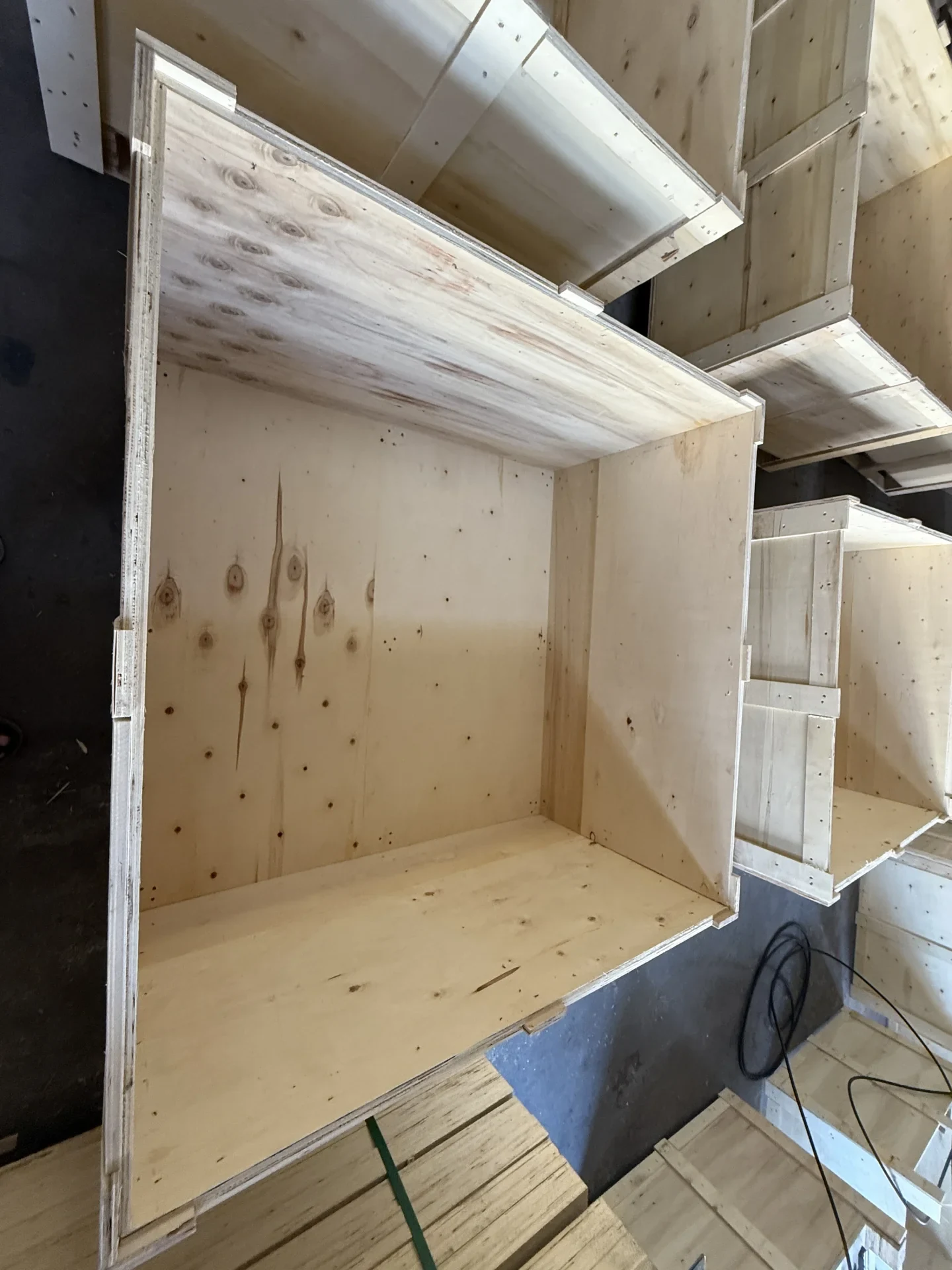
Hypothetical worked decision example: A China exporter is sending a fragile instrument to an overseas buyer. Design A uses a roomy solid-wood crate. Design B uses processed-board panels and separate solid-wood feet. Neither design has yet been accepted by the buyer’s destination contact.
In this hypothetical case, the exporter first requests specifications for the panels and feet. It does not assume Design B is outside the requirements merely because its panels are processed. The destination contact checks the applicable rules and identifies what evidence is needed for each component.
The exporter then compares protection and packed dimensions. Assume, solely for this hypothetical decision, that both designs provide suitable protection and Design B occupies less space. The exporter requests comparable quotes rather than assuming a saving. Design B is selected only after its material questions are resolved and its quoted total is preferable.
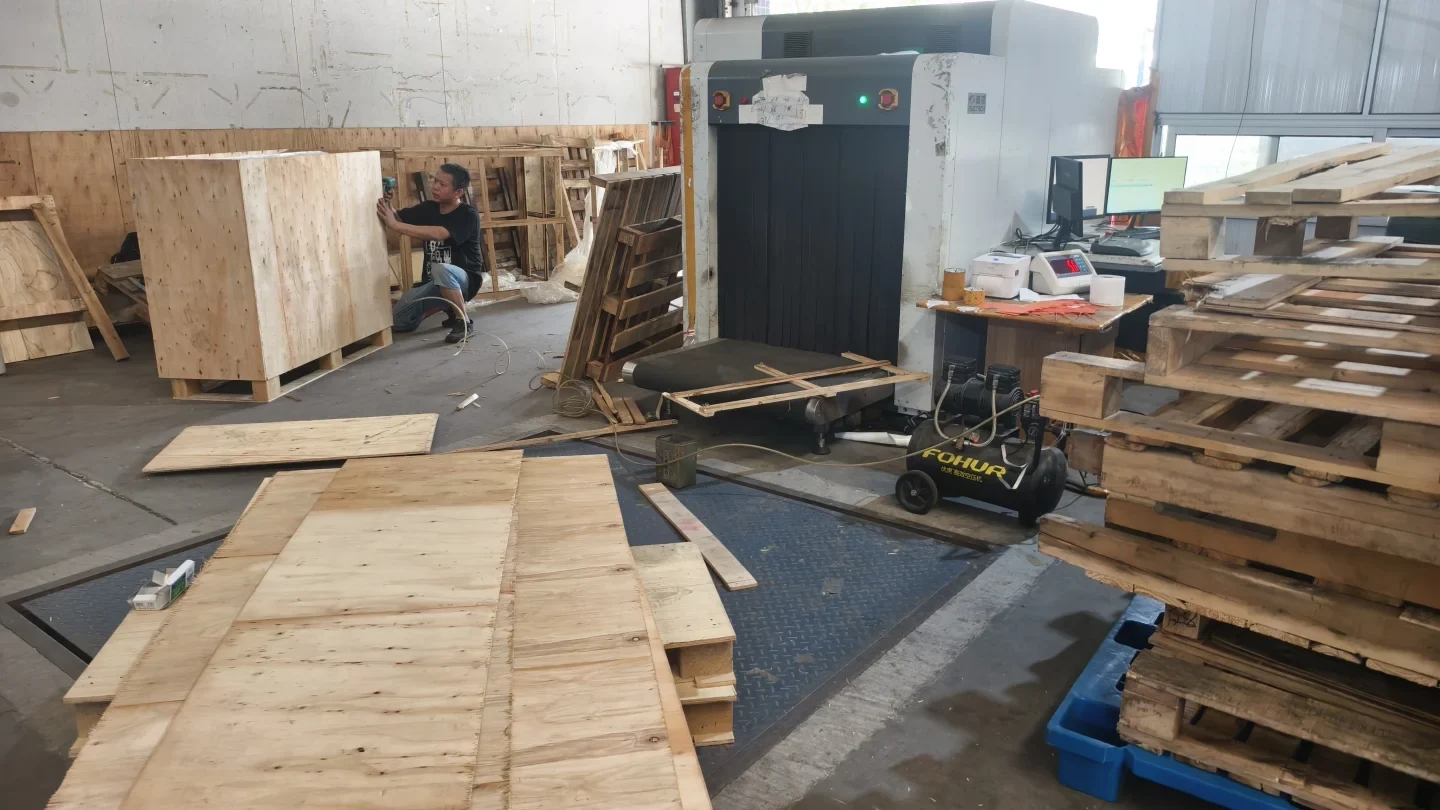
The decision fails if the feet are overlooked, the final packaging differs from the reviewed design, or reducing size weakens protection. These are hypothetical failure cases. They illustrate why the compliance review and dimensional comparison should concern the same finished package.
Frequently asked questions
Does air freight exempt wood packaging from ISPM 15 checks?
Do not assume so. The supplied IPPC guidance calls for checking country implementation and national requirements; it does not establish an air-freight exemption. Verify the destination’s position for your packaging. [1][2]
Is processed wood automatically exempt?
This cannot be established from the cited guidance. They do not reproduce the material definitions or exclusions. Verify the exact product against official requirements, and separately review other wood components in the package. [1][2]
Will compliant wood packaging make air freight cheaper?
Compliance alone does not establish a lower freight price. FedEx links dimensional-weight efficiency to packaging size and density. Compare suitable, compliant designs using actual packed dimensions and the provider’s quoted terms; do not assume one material always costs less. [3]
Sources and further reading
- ISPM 15 - Regulation of Wood Packaging Material in International TradePrimary source · Retrieved 15 October 2026
- Frequently Asked Questions - International Plant Protection ConventionPrimary source · Retrieved 15 October 2026
- What is Dimensional Weight? | FedExPrimary source · Retrieved 15 October 2026
Field research
- Reddit field research 1Topic discovery and anecdotal context; not evidence of a general rule.
- Reddit field research 2Topic discovery and anecdotal context; not evidence of a general rule.
Prepared from the linked primary references and public field research. Field photographs illustrate general handling; worked examples use separate hypothetical figures. Acceptance, charges and destination requirements should be checked against the specific shipment and current operator or authority instructions.