 Skip to content
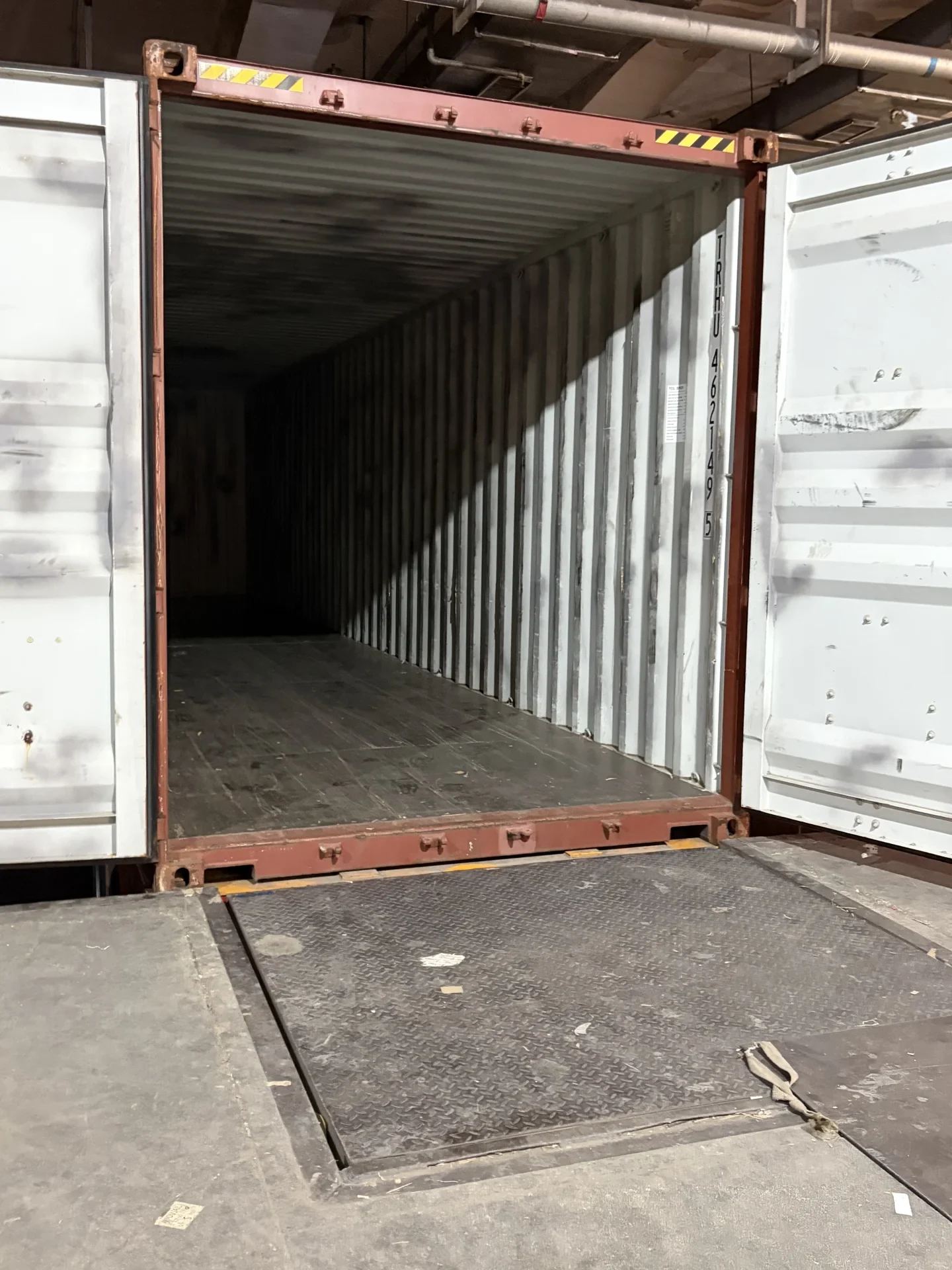
Choosing air freight vs sea freight means comparing the extra transport cost with the contribution margin you could lose while waiting for stock. Use shipment-specific quotes, realistic replenishment windows, and a demand forecast. Then test whether flying only the urgent quantity costs less than the stockout it could reasonably prevent. [2][3]
Compare the inventory outcome, not just the freight quote
Air freight pricing depends on the consignment; a single headline rate cannot establish your shipment cost. FedEx’s guidance also frames mode selection around business priorities, including speed, cost, and whether goods must move together. The framework below is an inference from those principles, not a published pricing rule. [2][3]
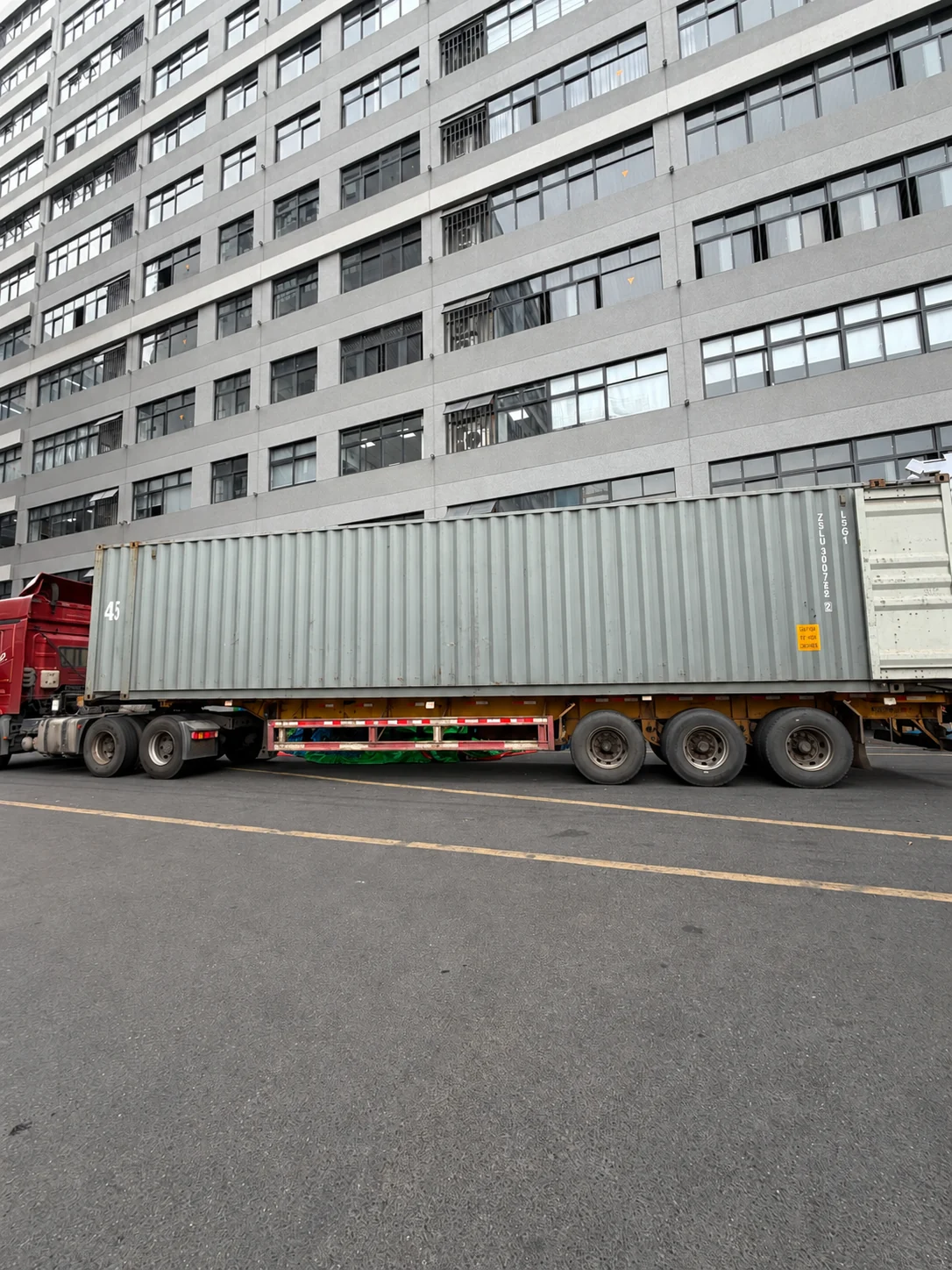
For a China exporter and overseas buyer, the useful comparison is the cost of getting saleable stock to the required location, plus the commercial effect of waiting. Compare the same quantity, delivery address, service scope, and readiness date. Otherwise, a cheap port-to-port quote can appear better than a more complete delivery quote simply because costs are missing. This is a proposed comparison method. [2][3]
| Decision factor | All air | All sea | Split air and sea |
|---|---|---|---|
| Transport spending | Test the full quoted cost against avoided stockout loss. | Check whether the quoted saving survives destination charges. | Include both bookings and any duplicated handling. |
| Inventory exposure | Model stock availability using the quoted delivery window. | Model demand through the quoted delivery window. | Use the air portion as a bridge until sea stock becomes usable. |
| Main failure case | Extra spending buys stock that arrives too late or does not sell. | Freight savings are outweighed by lost contribution margin. | The bridge quantity runs out, or duplicate costs erase savings. |
| Evidence needed | Complete quote, readiness confirmation, delivery assumptions. | Complete quote, delivery assumptions, stock cover. | Both quotes, separate packing details, bridge-demand forecast. |
This table is a decision framework, not a claim that either mode always costs less or arrives sooner. Populate it with shipment-specific offers rather than assumed rates or schedules. [2][3]
Build a comparable total landed cost
For this calculation, define total landed cost as product cost plus the costs assigned to moving and receiving the goods. Request separate figures for origin collection, export handling, main transport, destination handling, clearance service, applicable duties and taxes, and final delivery. Mark exclusions explicitly; do not treat an unquoted charge as zero. This is a proposed budgeting structure, not a tariff schedule. [2]
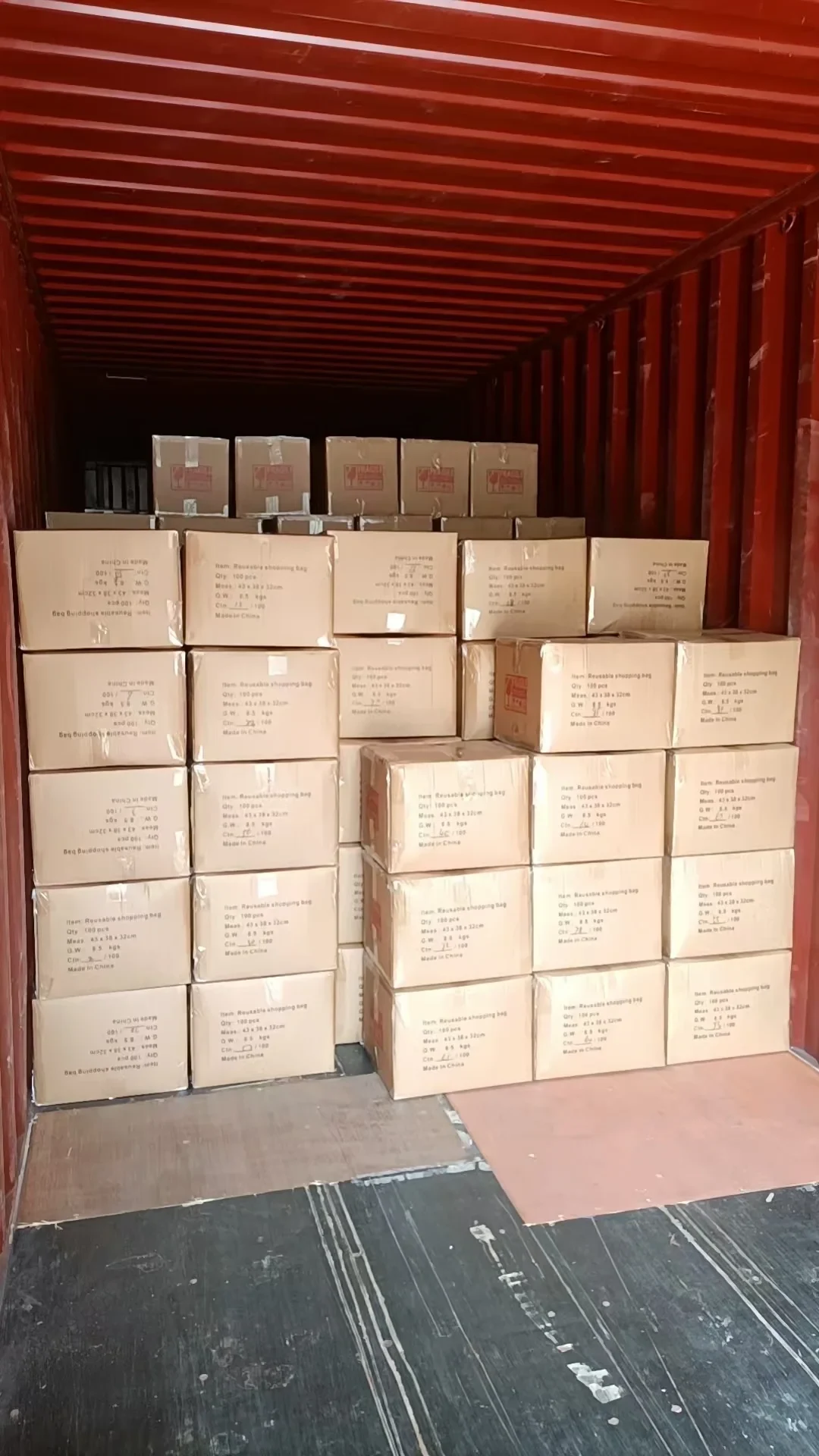
Keep inventory effects alongside landed cost rather than hiding them inside the freight figure. A useful planning equation is: decision cost = comparable landed cost + expected lost contribution margin + inventory carrying cost. Use the same tax treatment for every option, and ask your finance team how recoverable taxes should enter the cash-flow comparison. This equation is an analytical inference. [2][3]
Also confirm when goods become usable inventory. IATA describes onward handling through a forwarder hub, possible branch-facility movement, consignee handover, and final delivery. Arrival at an airport therefore should not be treated as the end of your replenishment calculation. [1]
Calculate the stockout trade-off: a hypothetical example
Everything in this example is hypothetical: quantities, costs, demand, and delivery windows are planning inputs, not market rates or service promises. Assume 1,000 units are ready in China, current stock will run out before either replenishment option, and 200 sales opportunities fall between the assumed air and sea availability dates. Comparing speed with business need follows the priority-based approach described by FedEx. [3]
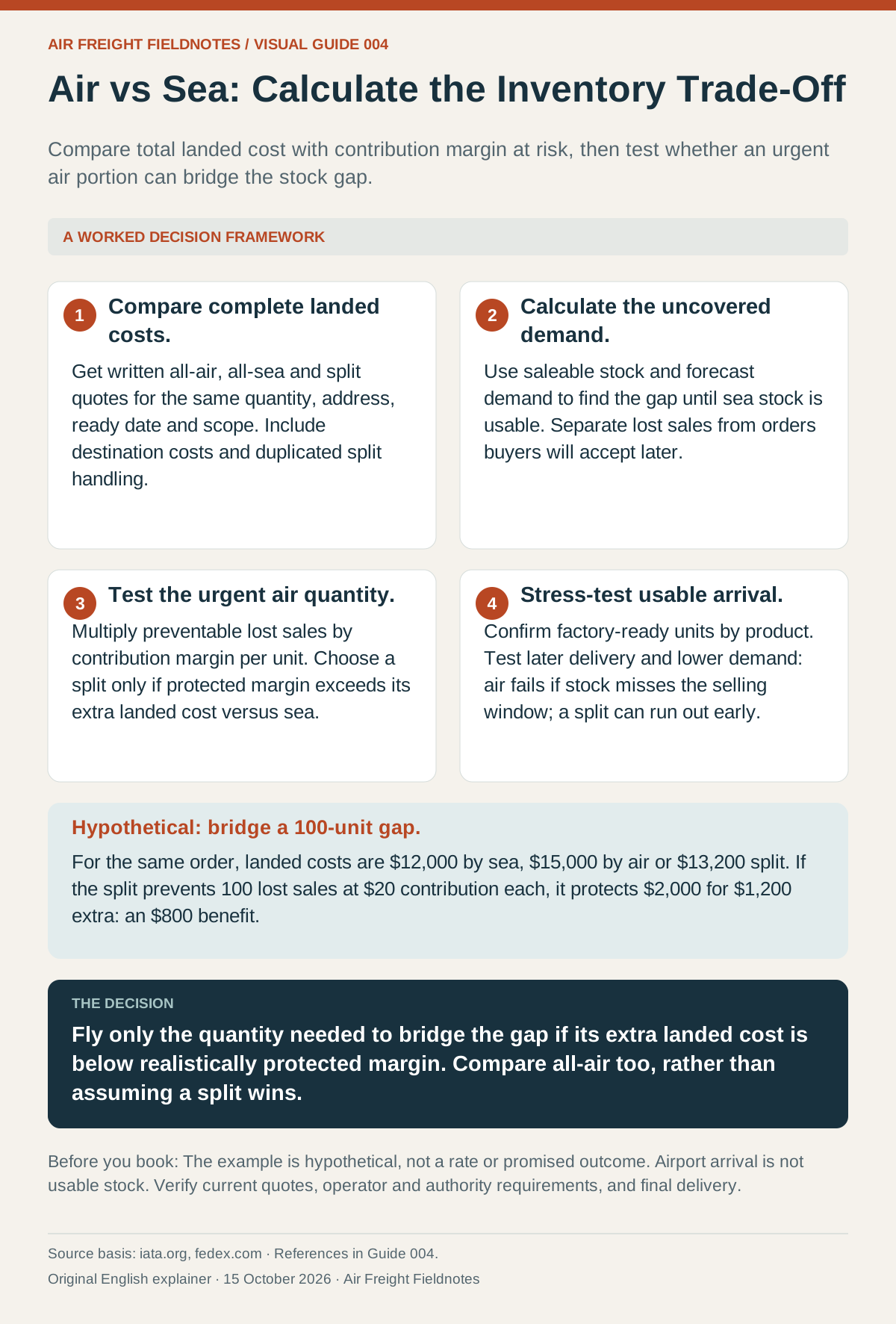
Read the infographic as text
Compare total landed cost with contribution margin at risk, then test whether an urgent air portion can bridge the stock gap.
- 1. Compare complete landed costs. Get written all-air, all-sea and split quotes for the same quantity, address, ready date and scope. Include destination costs and duplicated split handling.
- 2. Calculate the uncovered demand. Use saleable stock and forecast demand to find the gap until sea stock is usable. Separate lost sales from orders buyers will accept later.
- 3. Test the urgent air quantity. Multiply preventable lost sales by contribution margin per unit. Choose a split only if protected margin exceeds its extra landed cost versus sea.
- 4. Stress-test usable arrival. Confirm factory-ready units by product. Test later delivery and lower demand: air fails if stock misses the selling window; a split can run out early.
Hypothetical: bridge a 100-unit gap. For the same order, landed costs are $12,000 by sea, $15,000 by air or $13,200 split. If the split prevents 100 lost sales at $20 contribution each, it protects $2,000 for $1,200 extra: an $800 benefit.
Decision: Fly only the quantity needed to bridge the gap if its extra landed cost is below realistically protected margin. Compare all-air too, rather than assuming a split wins.
The example is hypothetical, not a rate or promised outcome. Airport arrival is not usable stock. Verify current quotes, operator and authority requirements, and final delivery.
Assume a selling price of $50 and variable product, selling, and fulfilment costs of $32 per unit, before the incremental transport difference. Contribution margin is therefore $18 per unit. Assume all 200 affected customers would otherwise abandon their purchases, and air replenishment would reach saleable stock before those purchases occur. These are hypothetical assumptions, not observed customer behaviour. [3]
- Hypothetical all-sea logistics quote: $1,500.
- Hypothetical all-air logistics quote: $5,500.
- Hypothetical split quote, with 200 units by air and 800 by sea: $3,000, including duplicated handling.
- All other landed-cost components are assumed equal; carrying-cost differences are omitted only for this example.
The hypothetical stockout exposure is 200 × $18 = $3,600. Relative to all sea, all air costs another $4,000, exceeding the contribution protected by $400. The split costs another $1,500 and protects the same assumed contribution, giving a $2,100 advantage over accepting the stockout. These are calculated scenario results, not predicted savings. [2][3]
The split option’s hypothetical break-even point is $1,500 ÷ $18 = 83.3 units, rounded up to 84 protected sales. If only 60 purchases would genuinely be lost, protected contribution falls to $1,080 and the split no longer pays. If customers will wait, count only the actual economic loss—not the full margin on every delayed order. This is sensitivity analysis based on the example’s assumptions. [3]
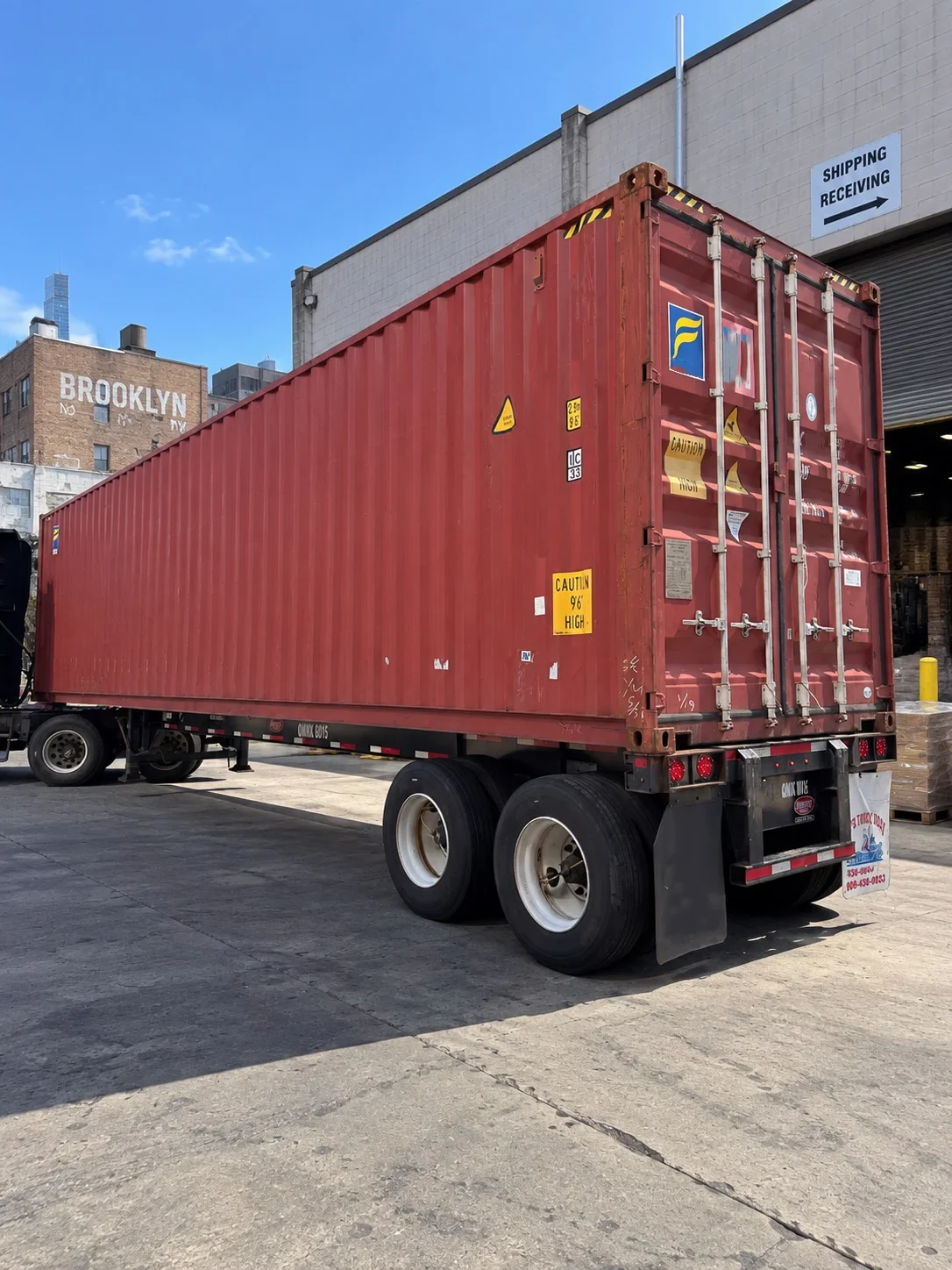
Check replenishment risk before booking
A modal split works only if the urgent quantity covers the relevant demand gap. As a planning inference, calculate demand from the expected stockout until the sea stock becomes usable, then test a later-arrival or higher-demand case. Avoid calling an entire shipment urgent when only selected products face a shortage. [1][3]
Use this actionable checklist to turn the comparison into a booking decision. It extends the sources’ emphasis on shipment-specific pricing, business priorities, and delivery handling. [1][2][3]
- Confirm factory-ready quantities by product, not just purchase-order total.
- Obtain comparable written quotes for all air, all sea, and a split.
- Record quote validity, exclusions, packing assumptions, and delivery scope.
- Calculate stock cover using available, saleable inventory.
- Estimate lost sales separately from orders customers will accept later.
- Test lower demand, later availability, and additional handling costs.
- Assign responsibility for checking each shipment through final receipt.
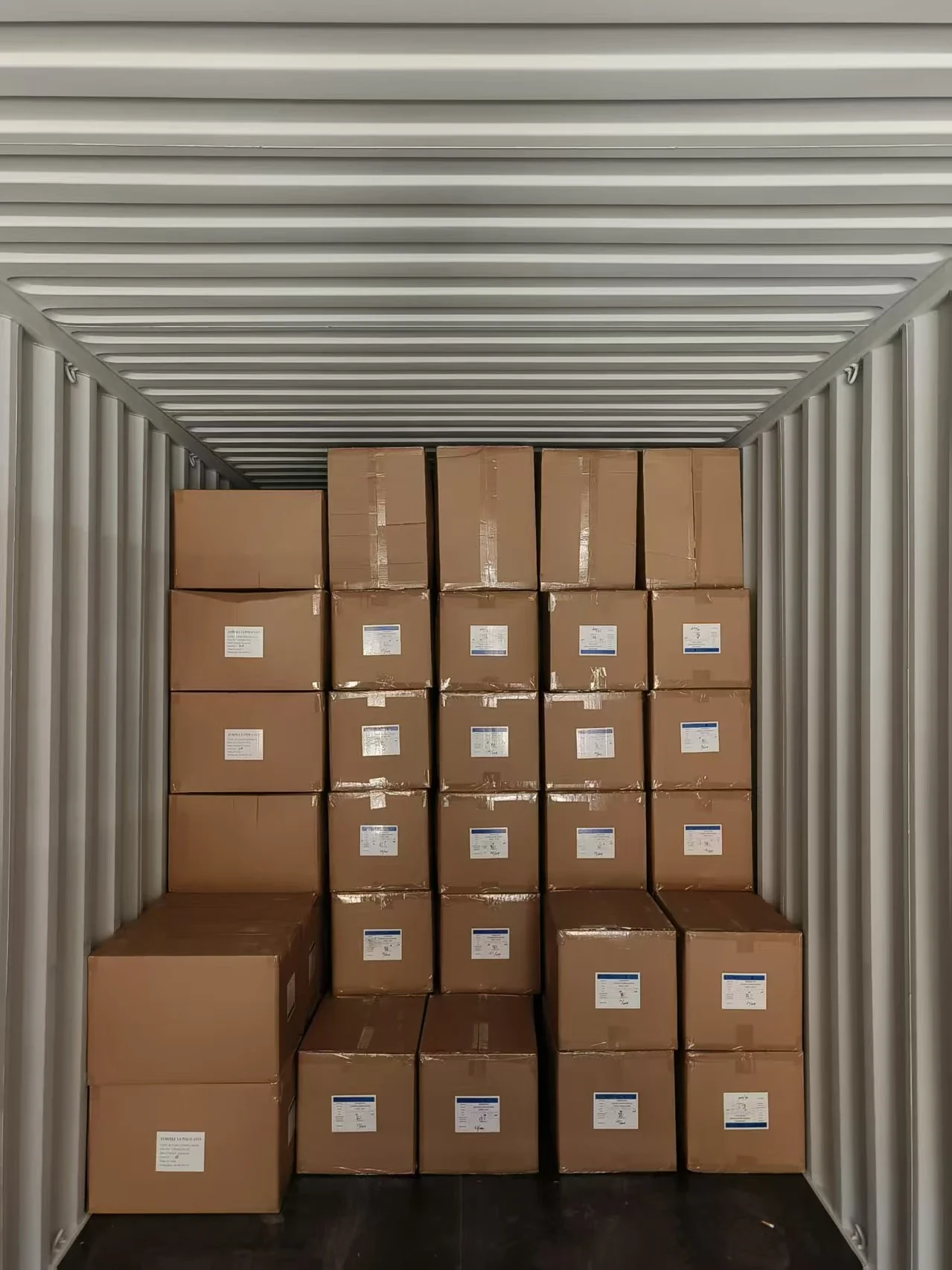
Failure cases include unavailable production, demand falling below forecast, and urgent stock arriving after the selling opportunity. Split shipments also fail economically when duplicated charges outweigh protected margin. Treat these as scenario risks to investigate, not as quantified probabilities supplied by the sources. [1][2][3]
FAQs about air freight vs sea freight
Should I compare freight cost per kilogram?
Use it as one input, not the final decision. Compare complete shipment costs and the inventory outcome; air cargo charges depend on the consignment, while the business choice also depends on priorities. [2][3]
How much inventory should I send by air?
As a planning inference, start with demand during the uncovered replenishment gap. Test whether the contribution protected by that quantity exceeds its incremental transport cost, then check a later-arrival scenario. [1][3]
Does an air shipment eliminate stockout risk?
No. Do not equate airport arrival with usable stock: onward handling and delivery remain relevant. Model the actual availability window and retain a fallback if the urgent goods miss the selling opportunity. [1]
Sources and further reading
- IATA - What to Know About Air Cargo HandlingPrimary source · Retrieved 15 October 2026
- IATA - Air Cargo Tariffs and Rules: What You Need to KnowPrimary source · Retrieved 15 October 2026
- Air Freight 101: A Simple Guide For SMEs | FedEx Hong Kong SAR, ChinaPrimary source · Retrieved 15 October 2026
Field research
- Reddit field research 1Topic discovery and anecdotal context; not evidence of a general rule.
- Reddit field research 2Topic discovery and anecdotal context; not evidence of a general rule.
Prepared from the linked primary references and public field research. Field photographs illustrate general handling; worked examples use separate hypothetical figures. Acceptance, charges and destination requirements should be checked against the specific shipment and current operator or authority instructions.