 Skip to content
Customs & duties
Country of Origin Marking
Country of Origin Marking is information on a product or its packaging identifying its origin where the destination's rules require it.
Understand it in practiceWhere it fits in the journey
Highlighted stages are commonly relevant- 01Agree — commonly relevant
- 02Prepare
- 03Transport
- 04Clear — commonly relevant
- 05Deliver
Country of Origin Marking at a glance
- Actual origin
- Required marking
- Destination rules
Does an origin certificate replace marking requirements?
Marking requirements and exceptions depend on the goods and jurisdiction. Check the actual product before printing labels.
Three separate release checks
| Check | What to confirm |
|---|---|
| Customs / agency | Required declarations, controls and release |
| Carrier / forwarder | Freight and document-release conditions |
| Terminal / warehouse | Availability, charges and collection appointment |
Scroll sideways to compare

Before you book
For customs & duties, have these details ready:
- Product materials, use and manufacturing origin
- The legal importer and appointed representative
- Current destination rules and supporting records
Sources & further reading
Plain-language educational guidance. The applicable contract, carrier tariff, official rules or insurance policy takes precedence. Illustrations show concepts, not a specific shipment or facility.
Published by Allwayforward as a plain-language freight reference. Examples are illustrative, not customer case studies. For a correction, send the term and supporting source.
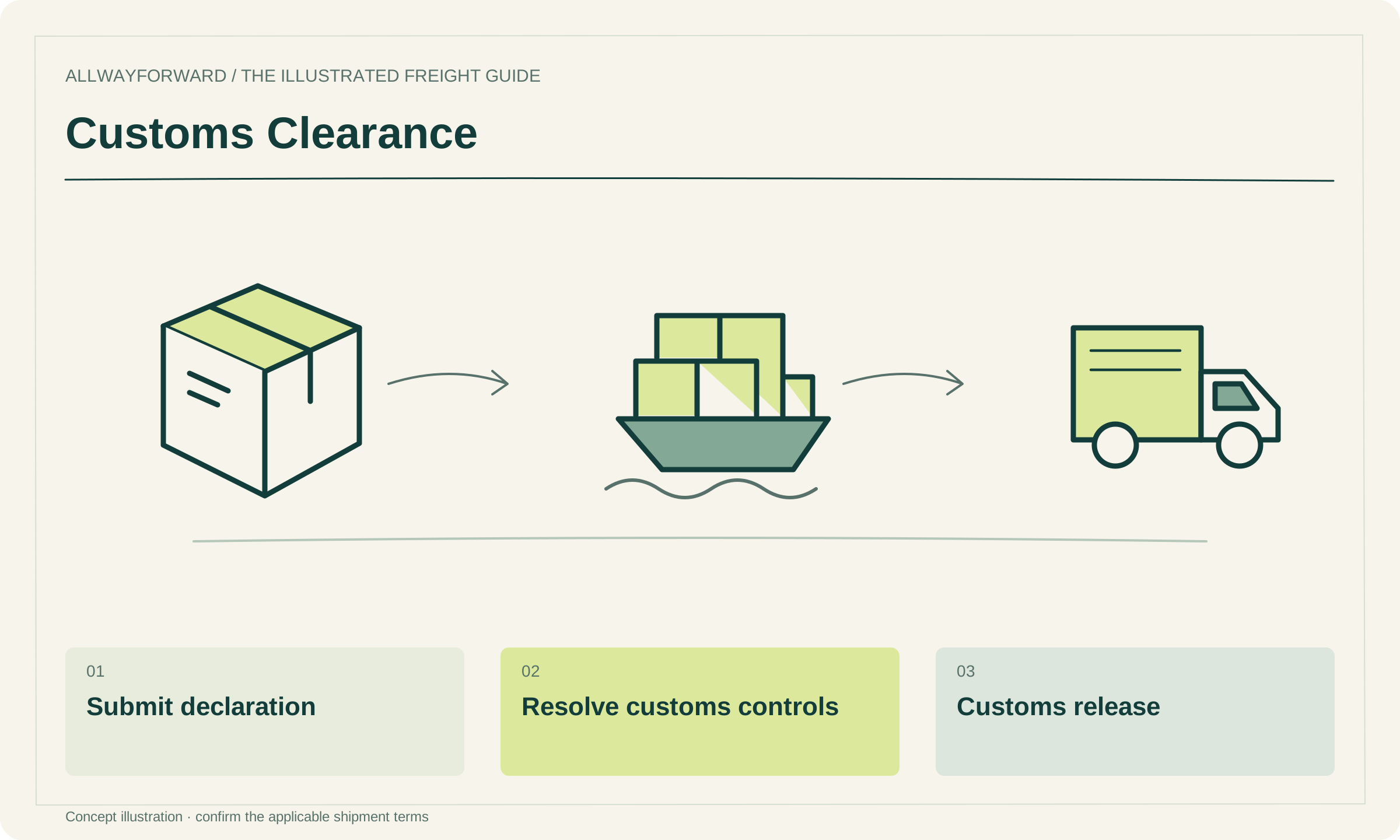 Customs Clearance
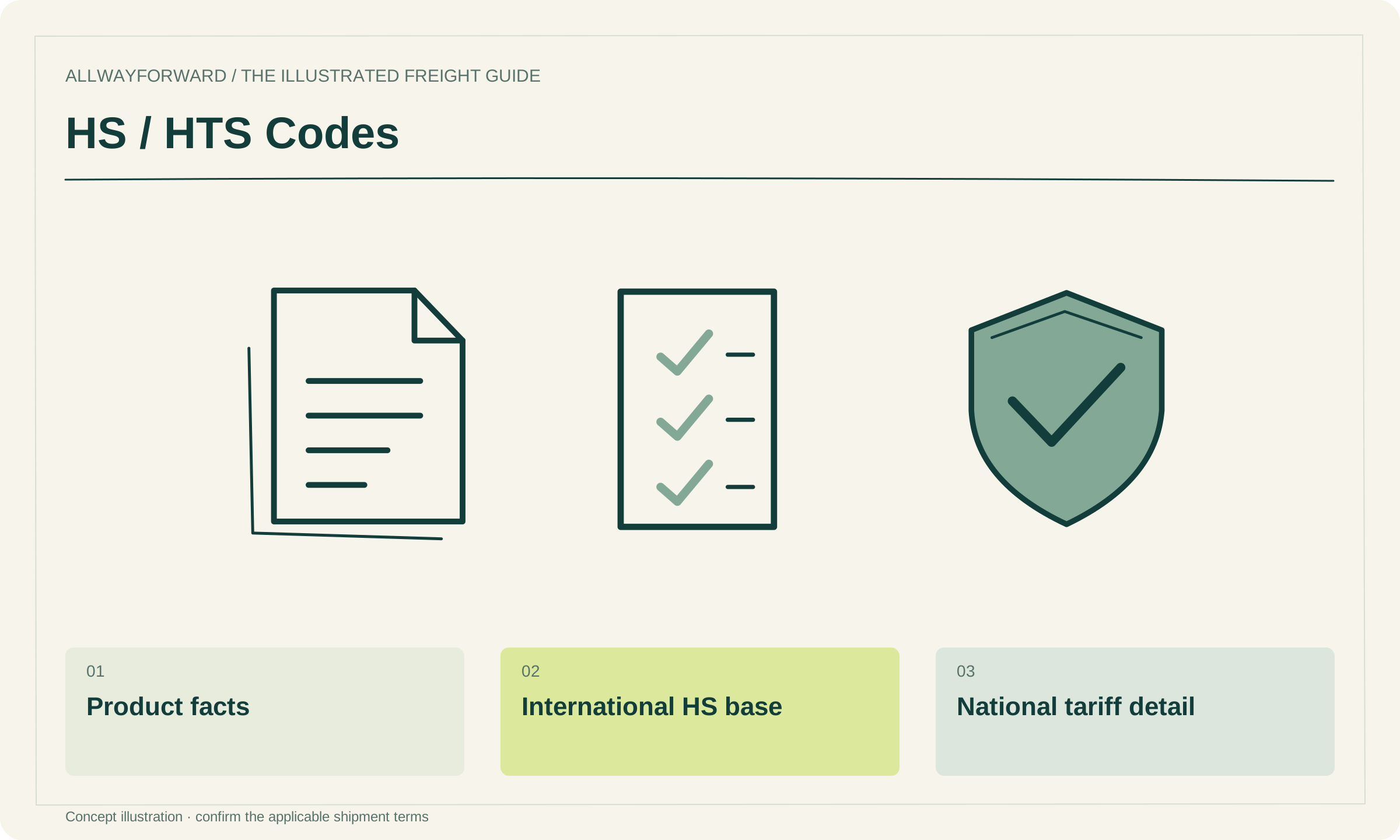 HS / HTS Codes
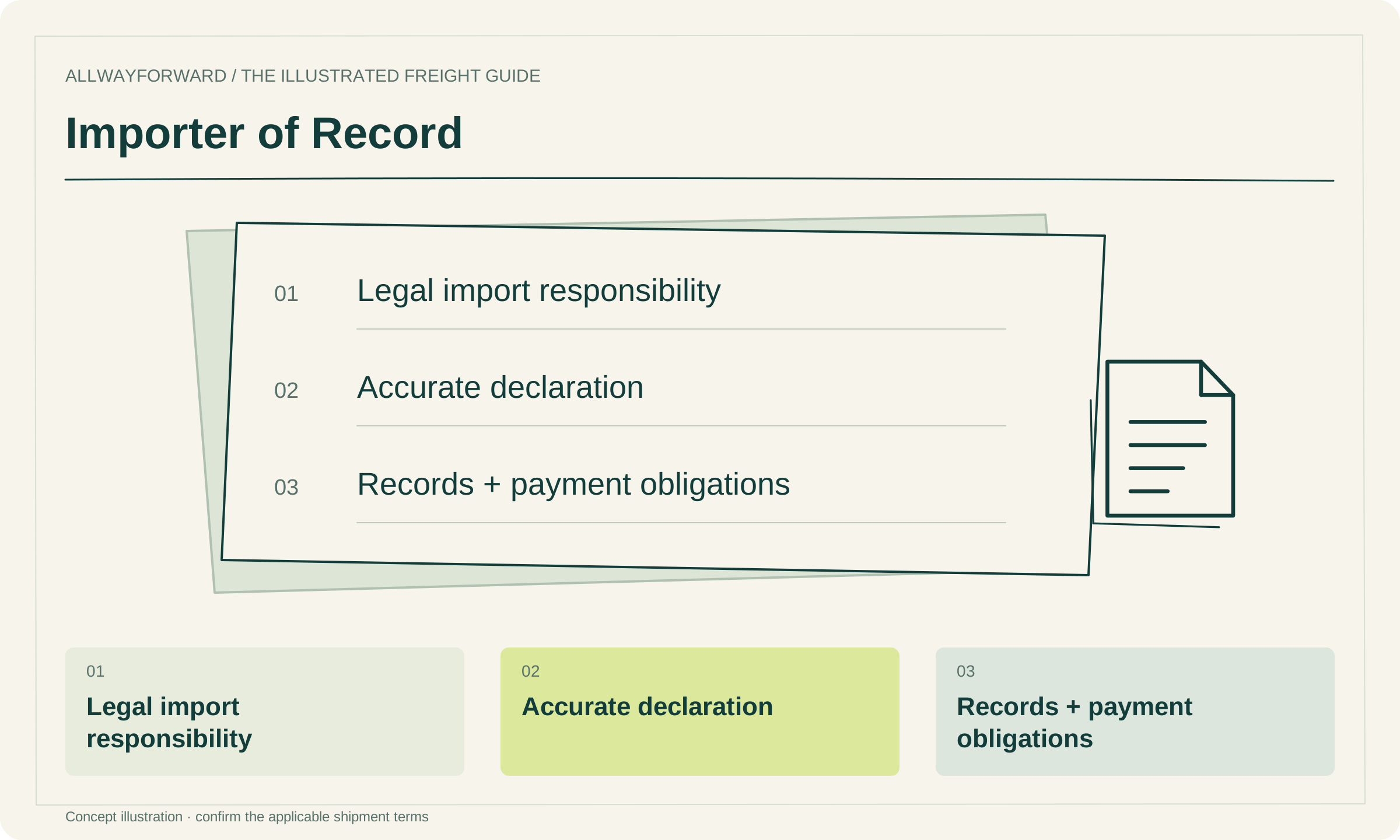 Importer of Record (IOR)
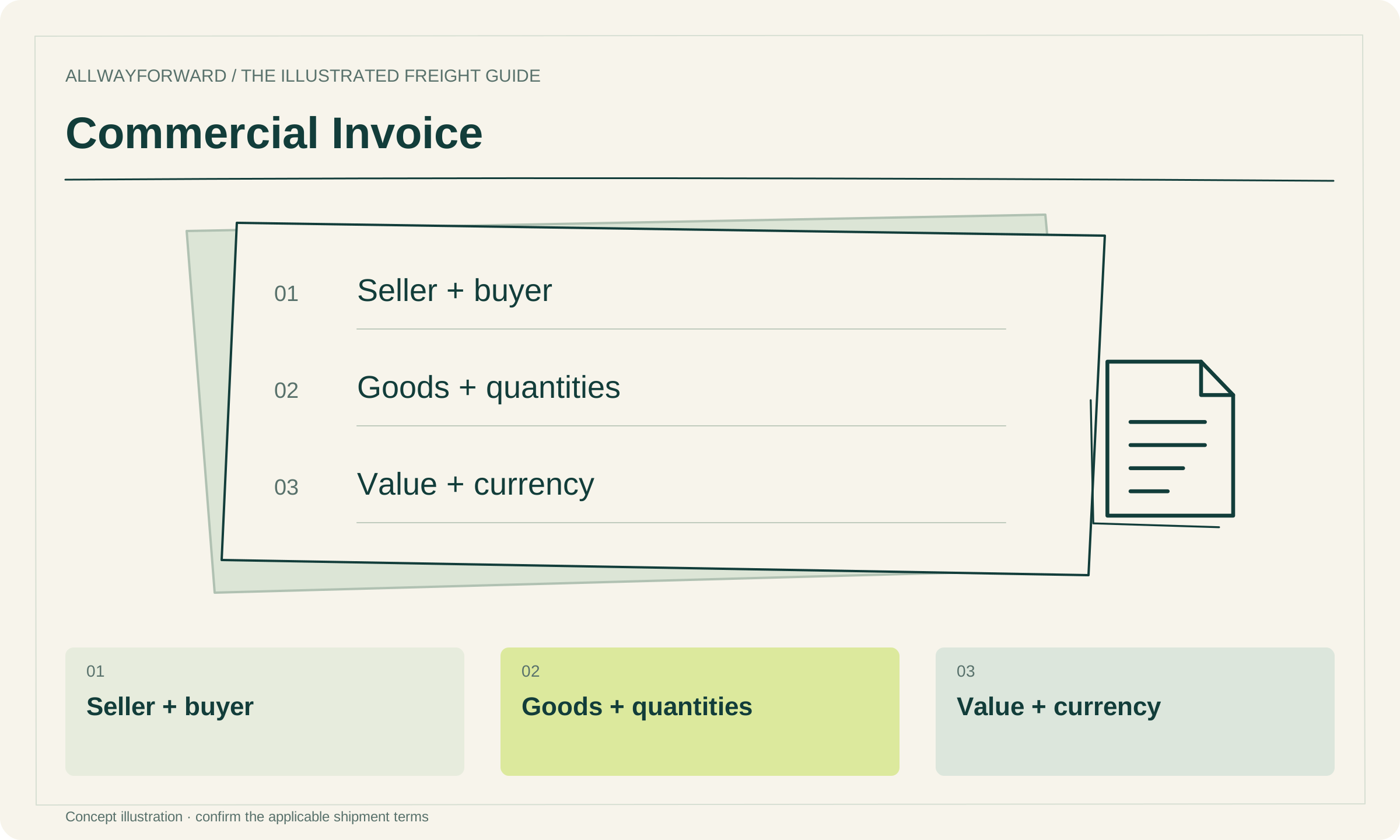 Commercial Invoice