 Skip to content
Customs & duties
Binding Tariff Information (BTI)
Binding Tariff Information (BTI) is an EU customs decision on the tariff classification of specified goods for its holder. It helps establish which commodity code applies to a described product.
Understand it in practiceWhere it fits in the journey
Highlighted stages are commonly relevant- 01Agree — commonly relevant
- 02Prepare
- 03Transport
- 04Clear — commonly relevant
- 05Deliver
Binding Tariff Information (BTI) at a glance
- Detailed product facts
- Classification decision
- Holder + covered goods
Does a BTI decision also establish origin or a future duty rate?
A classification decision does not by itself fix the future duty rate or establish the goods' origin.
Product codes do different jobs
| Code | Purpose |
|---|---|
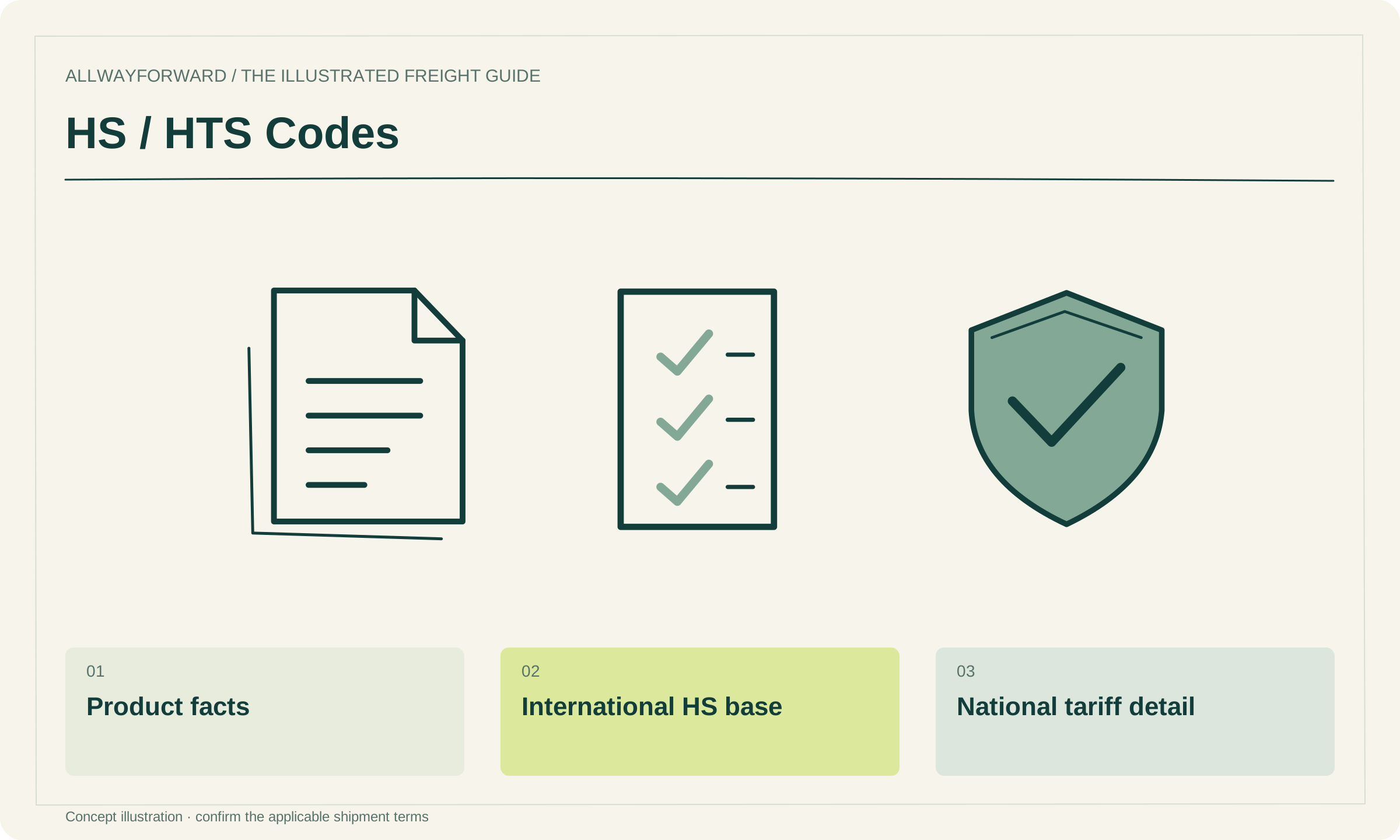
| HS | International goods classification at six digits |
| National tariff code | Destination-specific tariff detail |
| ECCN | U.S. export-control classification |
| SKU | A business’s own inventory identifier |
Scroll sideways to compare

Before you book
For customs & duties, have these details ready:
- Product materials, use and manufacturing origin
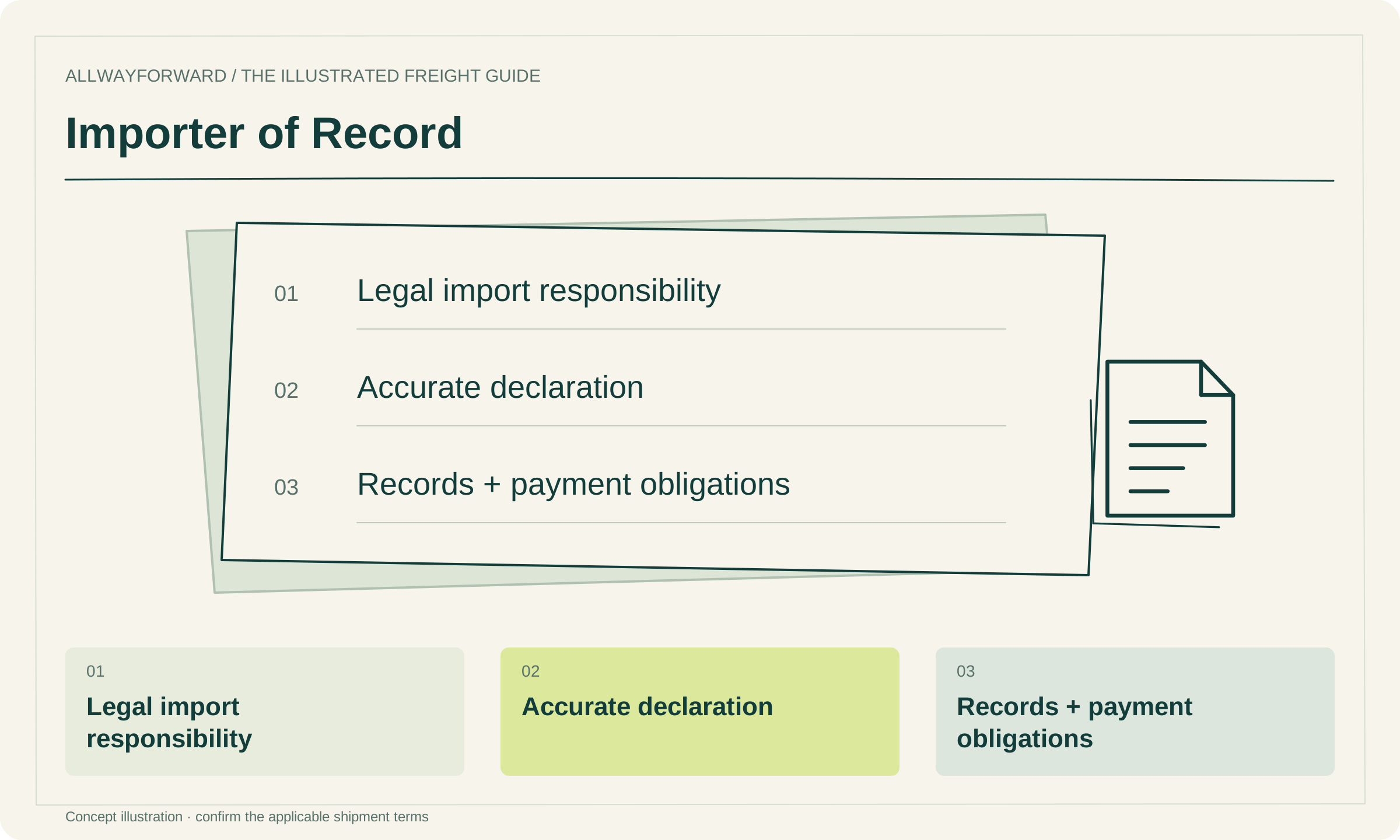
- The legal importer and appointed representative
- Current destination rules and supporting records
Sources & further reading
Plain-language educational guidance. The applicable contract, carrier tariff, official rules or insurance policy takes precedence. Illustrations show concepts, not a specific shipment or facility.
Published by Allwayforward as a plain-language freight reference. Examples are illustrative, not customer case studies. For a correction, send the term and supporting source.
 Customs Clearance
 HS / HTS Codes
 Importer of Record (IOR)
 Commercial Invoice