 Skip to content
FOB (Free on Board)
FOB (Free on Board) is an Incoterms® rule for sea or inland-waterway transport in which the seller delivers goods on board the buyer's nominated vessel at the named port of shipment.
Understand it in practiceWhere it fits in the journey
Highlighted stages are commonly relevant- 01Agree — commonly relevant
- 02Prepare
- 03Transport
- 04Clear
- 05Deliver
FOB (Free on Board) at a glance
- Named origin port
- Risk passes on board
- Buyer pays main carriage
Is terminal handover automatically FOB delivery?
Risk transfers on board at origin, not at the destination. For containers handed over earlier, consider FCA with a precise handover point.
Payment for the sea leg and transfer of risk
A buyer books the ocean leg for goods sold FOB a named origin port. The seller’s normal delivery point is on board the vessel there. For a container handed over at a terminal earlier, discuss FCA instead of assuming terminal receipt equals FOB delivery.
Costs and risk are different questions
| Rule | Usual risk handover | Import clearance |
|---|---|---|
| EXW | Goods available at named origin place | Buyer |
| FCA | Delivery to nominated carrier at agreed point | Buyer |
| FOB / CIF | On board at origin port | Buyer |
| DAP | At named destination, ready for unloading | Buyer |
| DDP | At named destination, ready for unloading | Seller |
Scroll sideways to compare
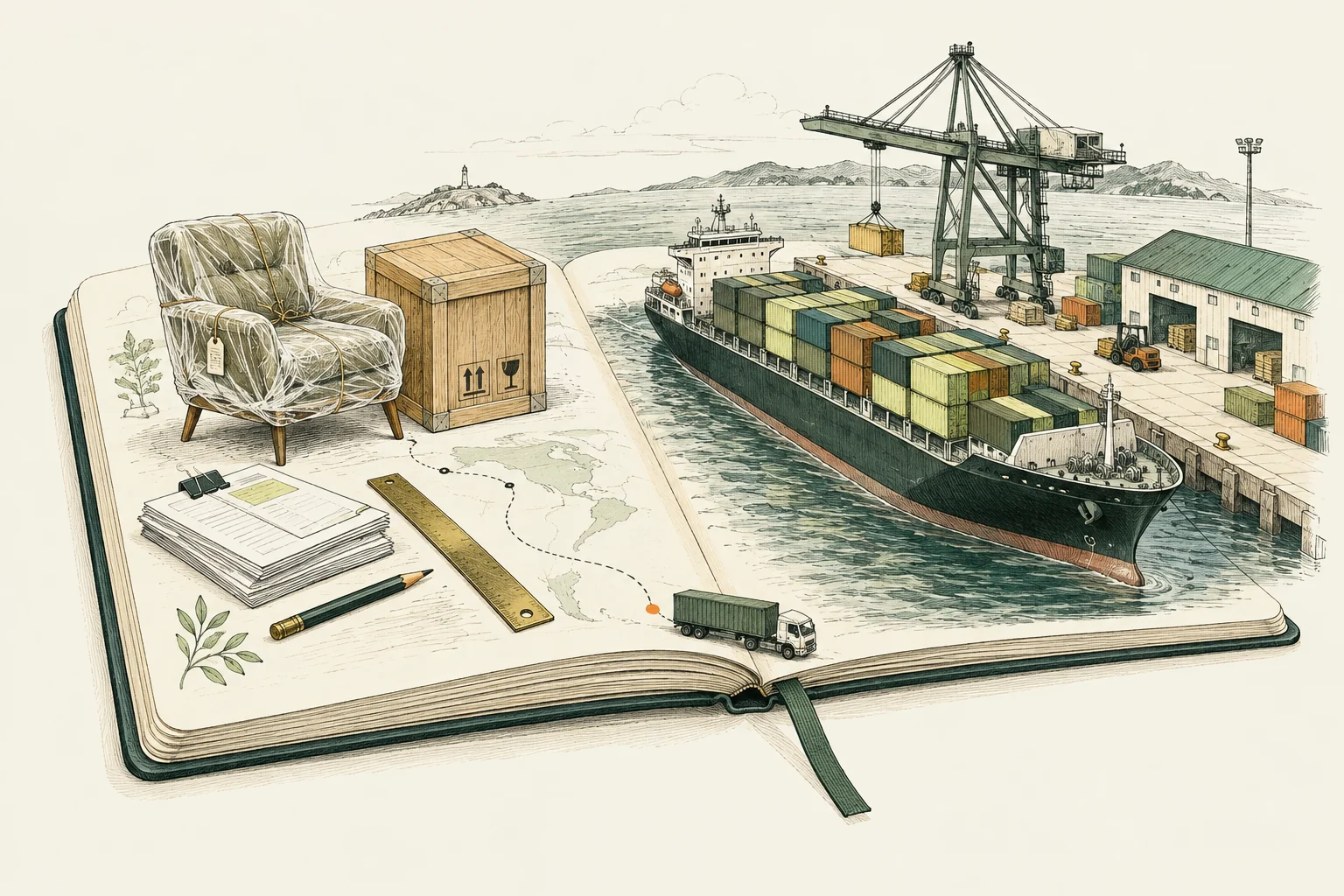
Simplified comparison of ordinary delivery obligations. Named places, agreed variations and exceptional circumstances matter. Incoterms® is a registered trademark of the International Chamber of Commerce.
Before you book
For trade terms, have these details ready:
- Exact named delivery place or port
- Incoterms® edition in the sales contract
- Who handles customs, duties and unloading
Sources & further reading
Plain-language educational guidance. The applicable contract, carrier tariff, official rules or insurance policy takes precedence. Illustrations show concepts, not a specific shipment or facility.
Published by Allwayforward as a plain-language freight reference. Examples are illustrative, not customer case studies. For a correction, send the term and supporting source.
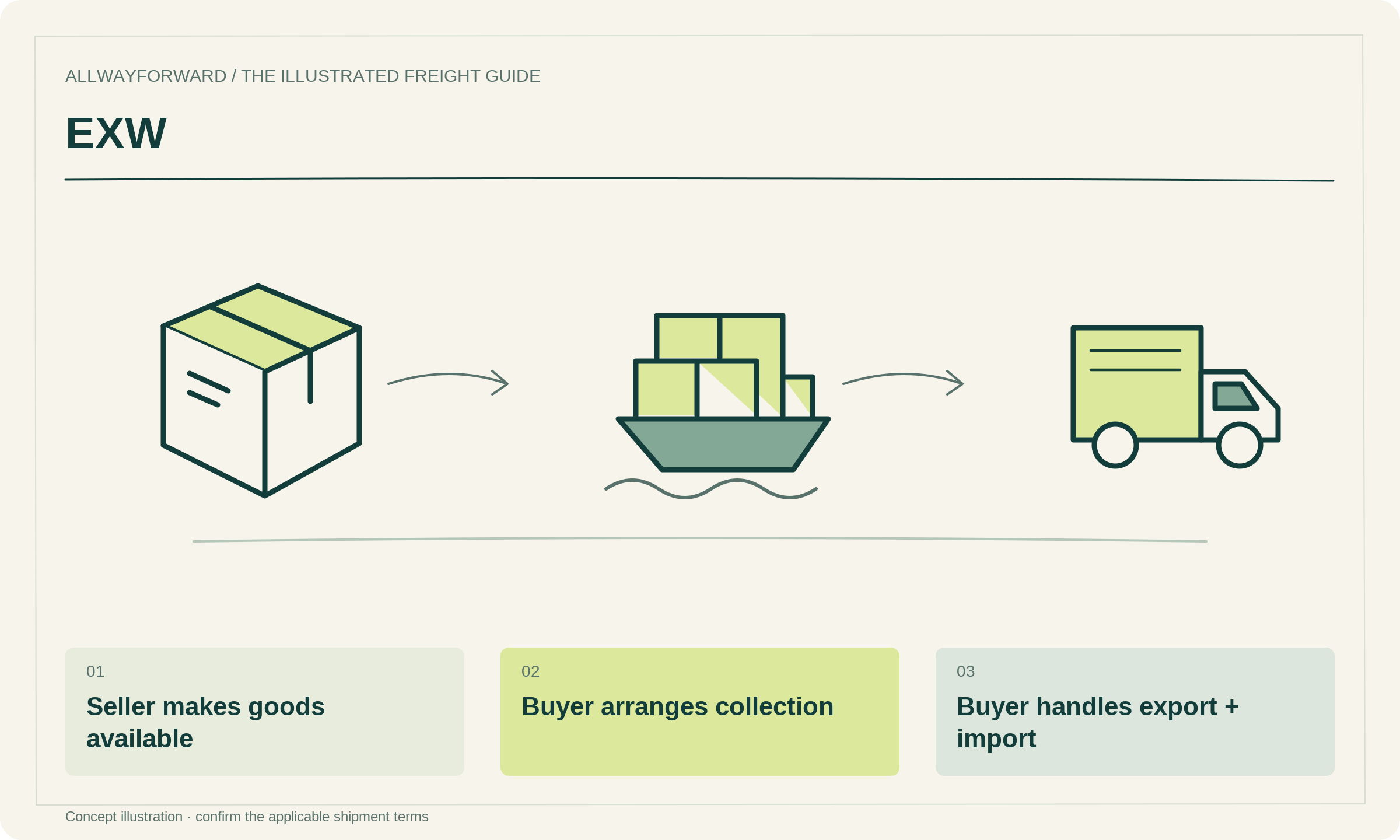 EXW (Ex Works)
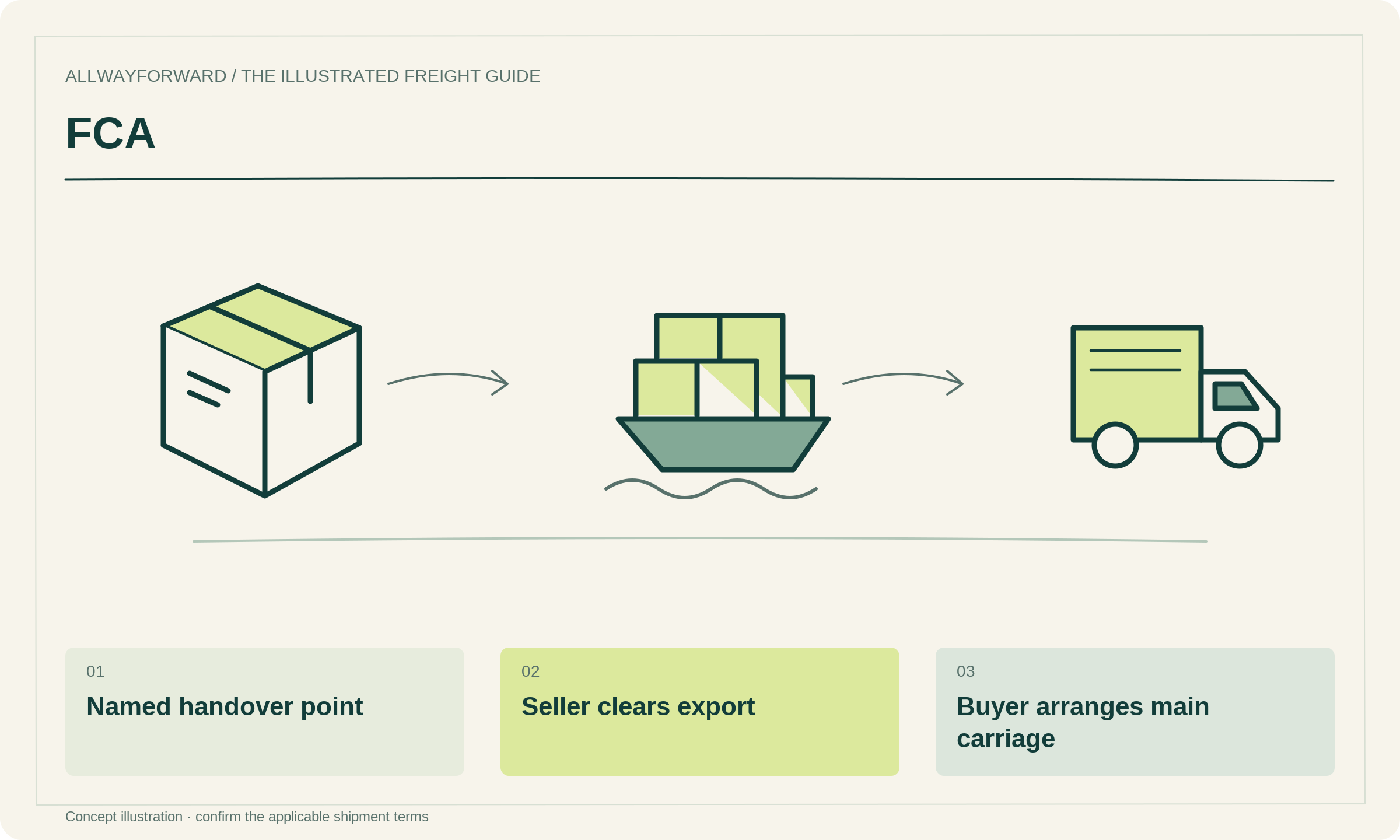 FCA (Free Carrier)
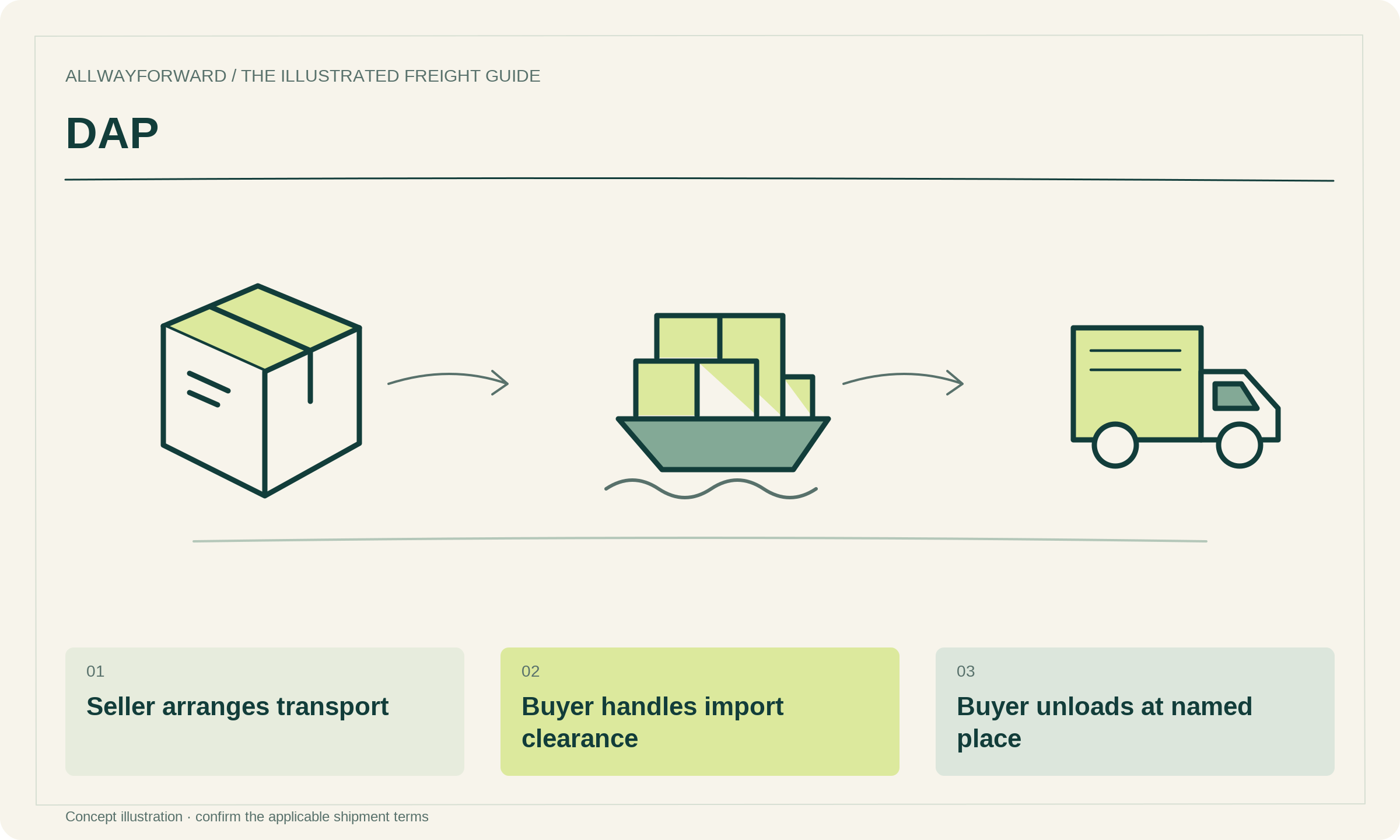 DAP (Delivered at Place)
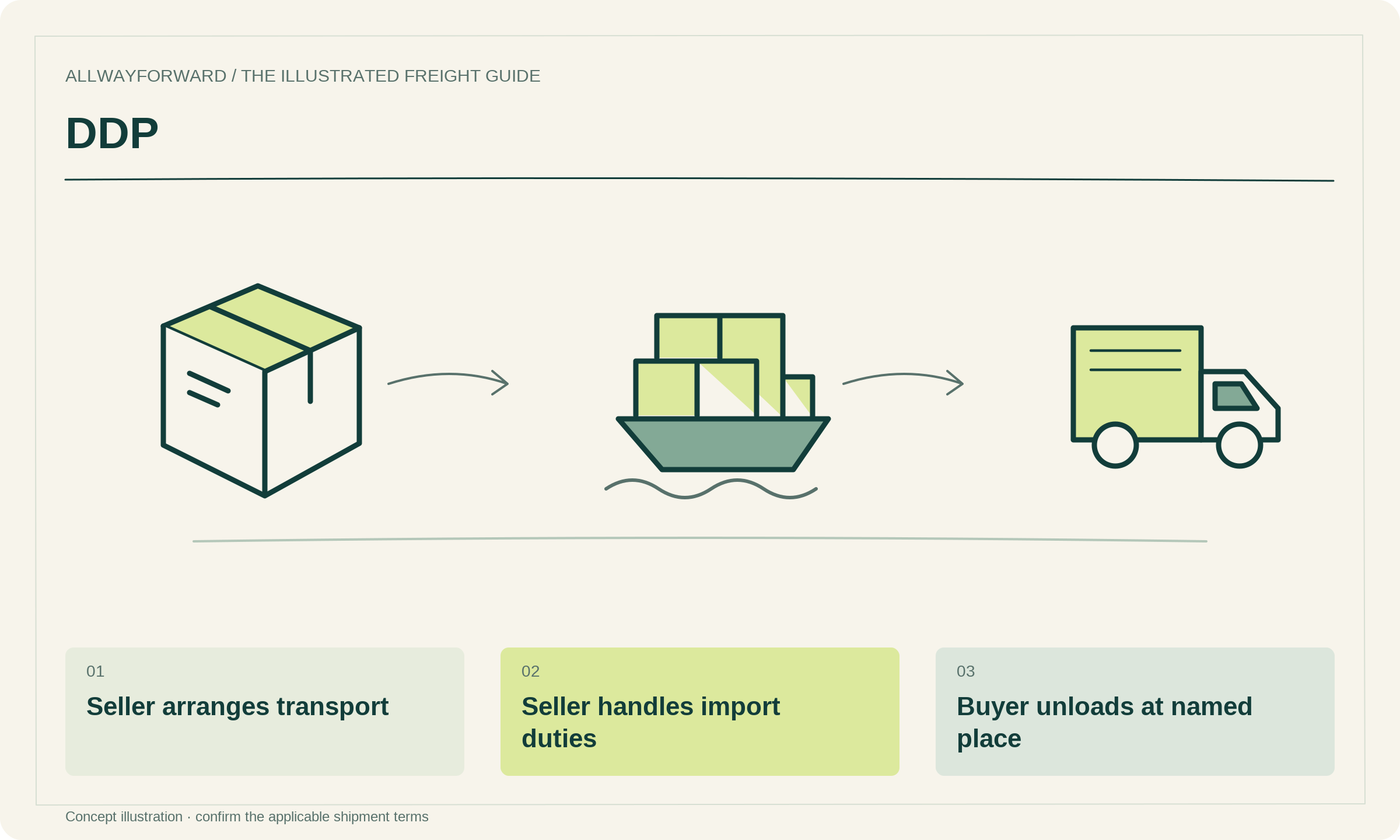 DDP (Delivered Duty Paid)