 Skip to content
Commercial Invoice
Commercial Invoice is the seller's document describing the transaction: buyer and seller, goods, quantities, values, currency and agreed commercial terms. Customs uses it as part of the import assessment.
Understand it in practiceWhere it fits in the journey
Highlighted stages are commonly relevant- 01Agree — commonly relevant
- 02Prepare
- 03Transport
- 04Clear — commonly relevant
- 05Deliver
Commercial Invoice at a glance
- Seller + buyer
- Goods + quantities
- Value + currency
What should a useful commercial invoice describe?
Use accurate product descriptions and actual transaction details. A packing list supplements the invoice; it does not replace it.
Describe the goods precisely
For a furniture order, itemized descriptions such as wooden dining chairs and upholstered sofas are more useful than “home goods.” Match quantities, currency and transaction values to the actual sale and packing records.
Give each document its own job
| Document | Main question it answers |
|---|---|
| Commercial invoice | What was sold, by whom and at what value? |
| Packing list | What is inside each physical package? |
| Transport document | Who carries the goods and how are they released? |
Scroll sideways to compare

Before you book
For documents, have these details ready:
- Correct legal parties and shipment references
- Matching product descriptions, pieces and weights
- Required originals, authorizations and release instructions
Sources & further reading
Plain-language educational guidance. The applicable contract, carrier tariff, official rules or insurance policy takes precedence. Illustrations show concepts, not a specific shipment or facility.
Published by Allwayforward as a plain-language freight reference. Examples are illustrative, not customer case studies. For a correction, send the term and supporting source.
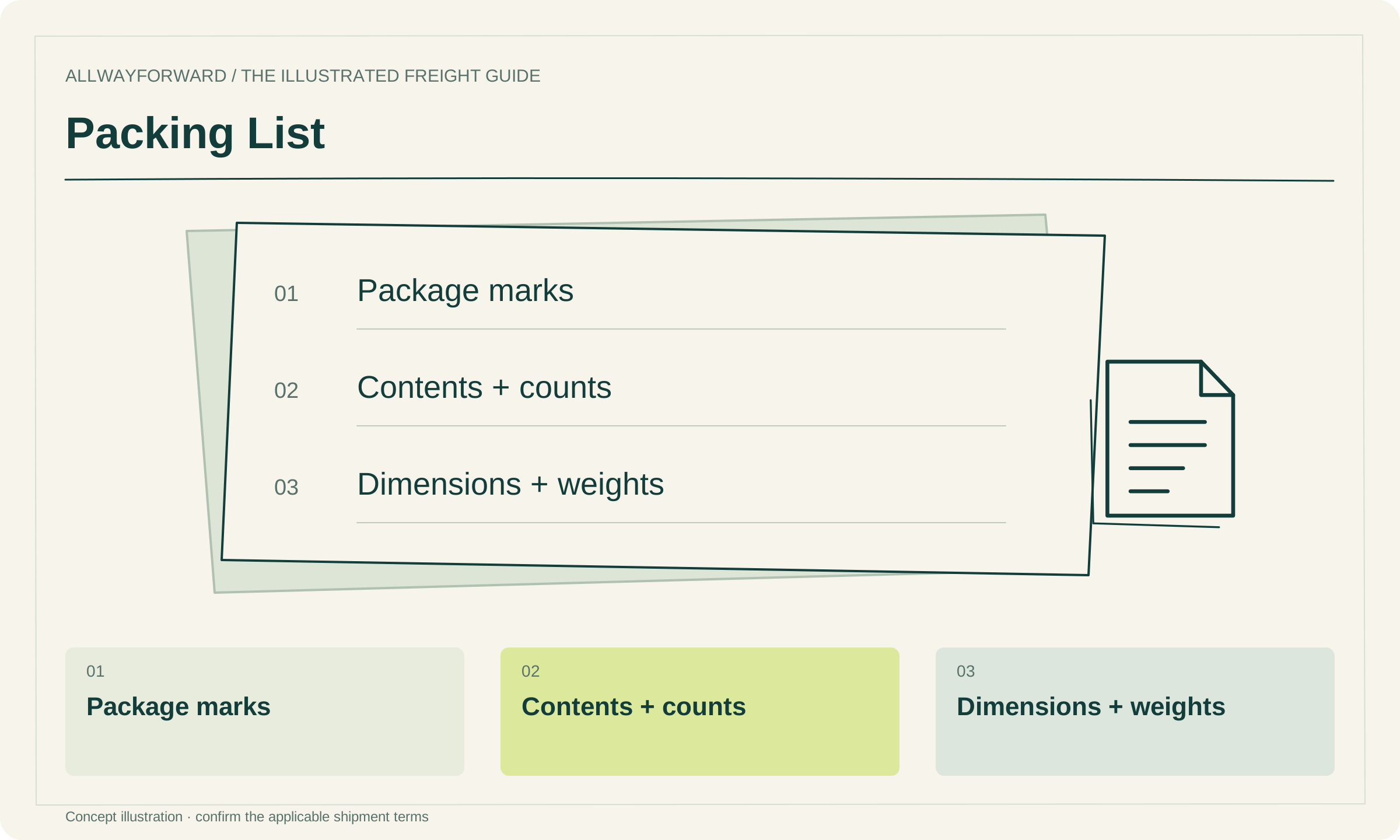 Packing List
 Bill of Lading (B/L)
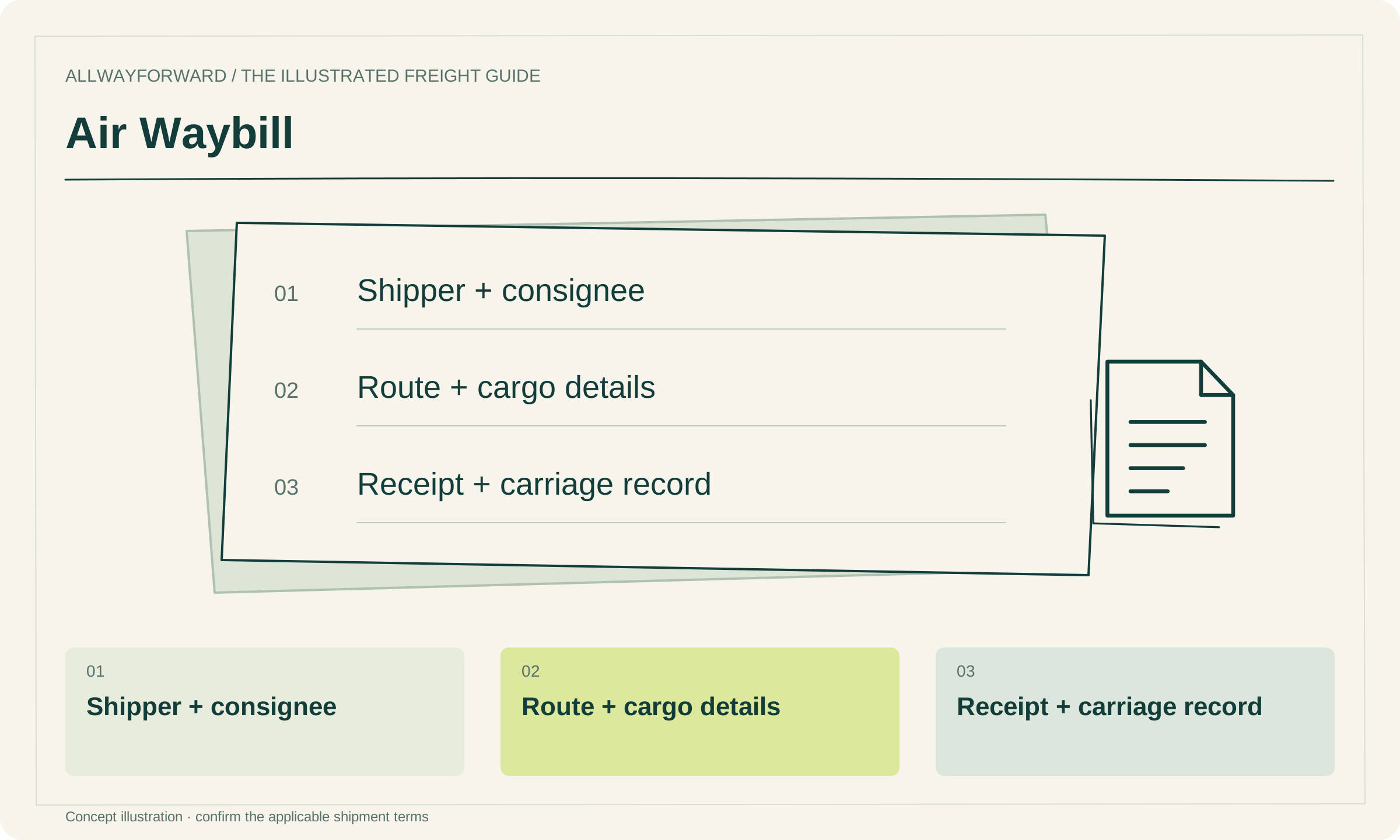 Air Waybill (AWB)