 Skip to content
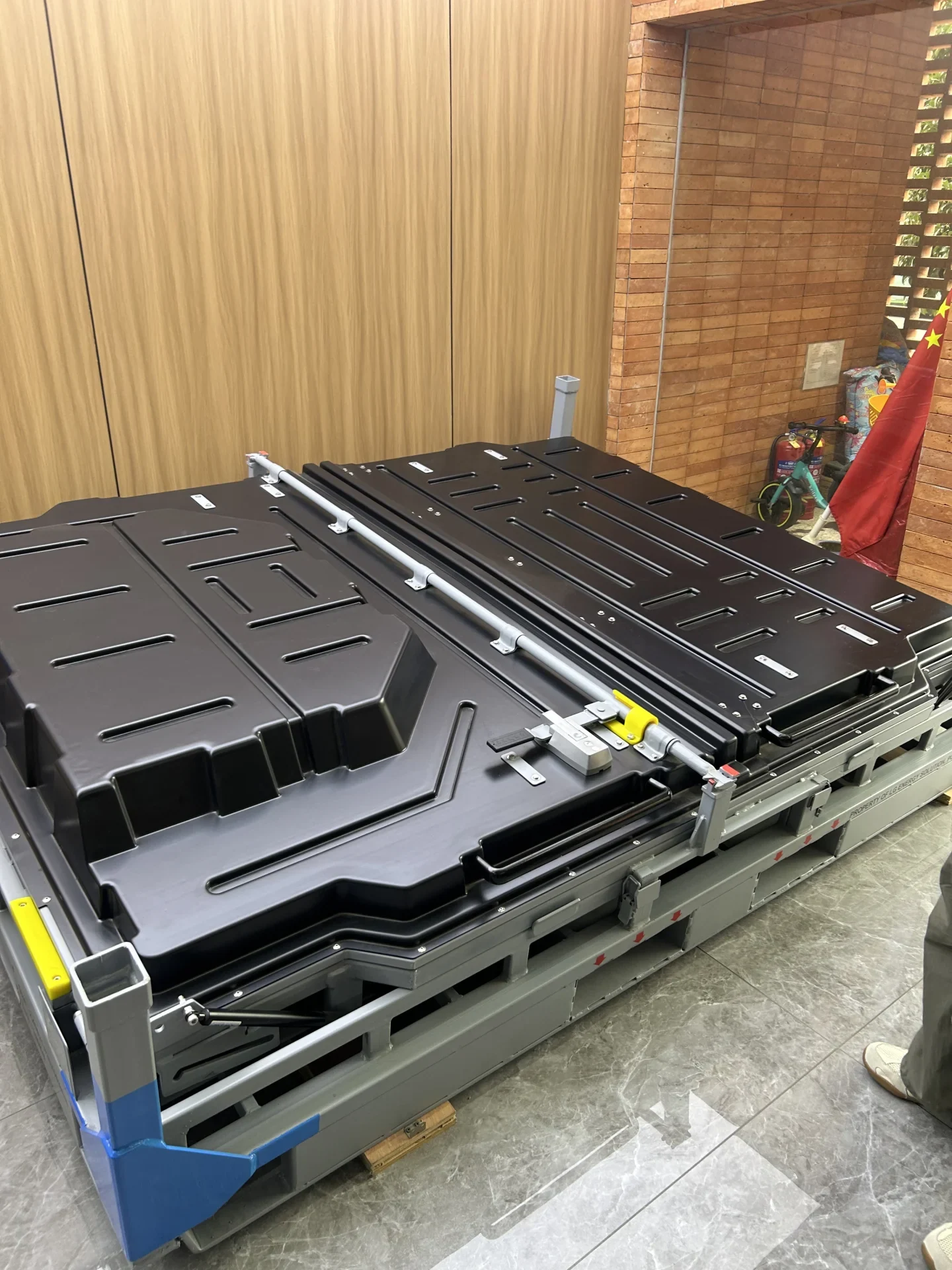
For sds lithium battery shipping, treat a safety data sheet as supporting information, not proof of UN testing or a completed dangerous goods classification. A forwarder should review separate evidence for battery identity, testing, condition, packing, and carrier acceptance. This is a screening framework, not a shipment approval or guarantee. [1][3]
Why an SDS does not answer every shipping question
A useful product file must answer different questions, rather than repeat the same information across several documents. IATA stresses that lithium battery handling needs precision and that differences between organizations’ procedures can create gaps. The practical recommendation for exporters is simple: one familiar document should not stand in for every safety check. [1]
In the screening framework below, a safety data sheet (SDS) provides supporting safety information; a battery test summary addresses testing evidence; and dangerous goods (DG) classification addresses how the actual shipment should be assessed for transport. These are separate review tasks. The cited references explain the importance of coordinated battery safety, but do not provide the detailed UN testing or classification provisions. Treat this distinction as a document-review framework, not a complete regulatory determination. [1][3]
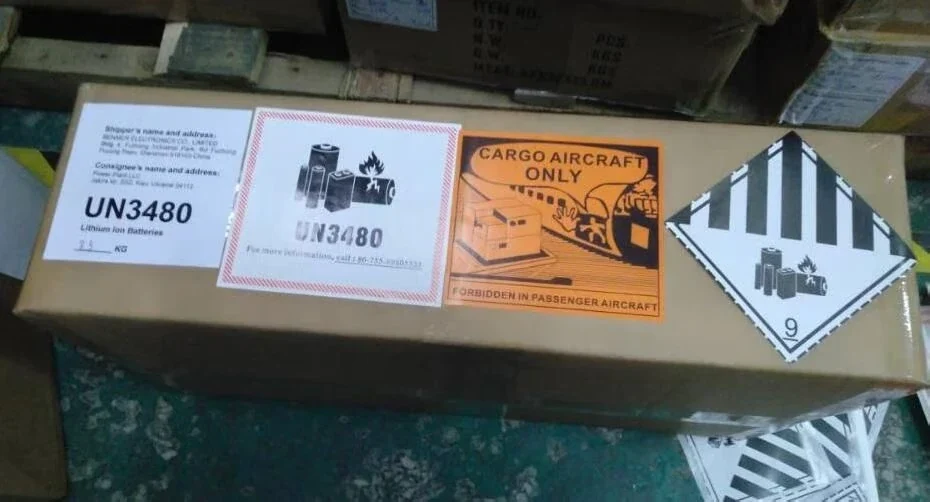
That limitation matters when a supplier says, “We have an SDS, so the batteries can fly.” A forwarder should instead ask what evidence supports that specific conclusion. Equally, receiving a document labelled “test summary” should not end the review: the document still needs to be connected to the product being offered. These are practical recommendations from IATA’s emphasis on consistent procedures. [1]
Compare the documents by the question they answer
The following comparison is a recommended screening tool, not a statement that every shipment needs an identical document package. Confirm the applicable requirements with the reviewing forwarder and carrier; the cited guidance do not establish a universal checklist or acceptance rule. [1][3]
| File item | Question for the reviewer | What not to assume |
|---|---|---|
| Safety data sheet | What safety information does the supplier provide about this product? | Its presence proves UN testing or completes DG classification. |
| Battery test summary | What testing evidence is presented, and which battery model does it identify? | A summary for a similar model covers the supplied battery. |
| Classification assessment | How has the actual battery and shipment configuration been assessed? | A classification copied from an earlier order remains suitable. |
| Product specifications and photographs | Can the reviewer connect the documents to the battery and finished product? | Appearance alone establishes identity, condition, or compliance. |
| Packing and condition information | What will physically be tendered, and are any safety concerns unresolved? | Document completeness means the packed cargo is acceptable. |
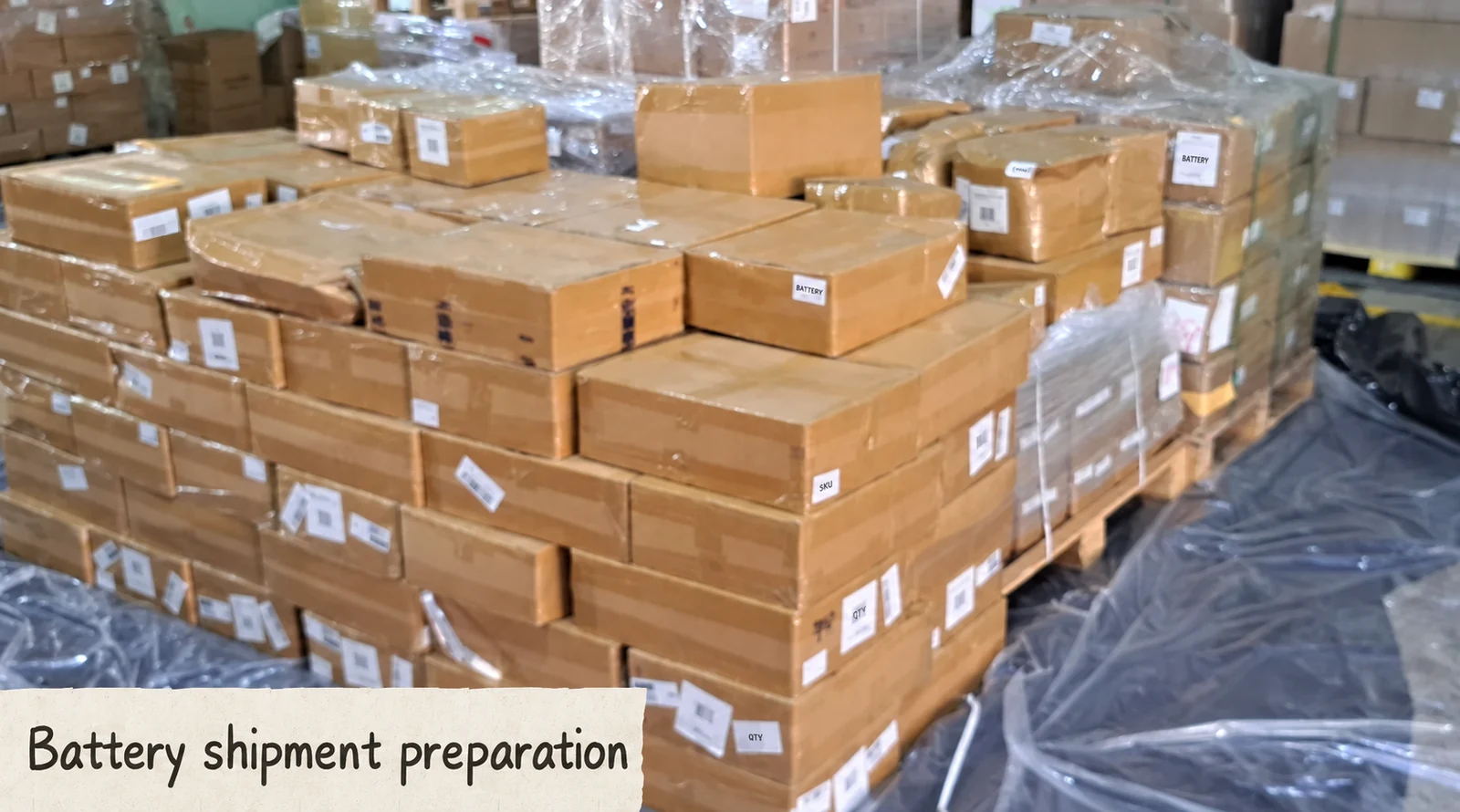
The comparison separates evidence from conclusions. A document can be useful without being sufficient. This approach follows the broader safety principle in IATA’s material: coordinated checks across organizations matter, rather than reliance on a single stakeholder’s assurance. [1]
How a forwarder can screen the product file
The workflow below is a proposed practice inferred from the supplied safety material, not a description of every forwarder’s procedures. Start with identity, then check evidence, shipment configuration, and unresolved exceptions. Keep questions in writing so that the exporter, buyer, forwarder, and handling parties work from the same information. [1]
- Identify the goods: record the finished-product name, battery maker, battery model, and supplier contact.
- Describe the configuration: state whether batteries are installed in equipment, packed alongside it, or offered separately.
- Collect separate evidence: request the SDS, relevant battery test summary, specifications, and the proposed classification assessment.
- Cross-check identity: compare model names across the documents, labels, photographs, and order records. Ask for an explanation of mismatches.
- Check condition: ask specifically about damage, recalls, returns, and any known heat or safety incident.
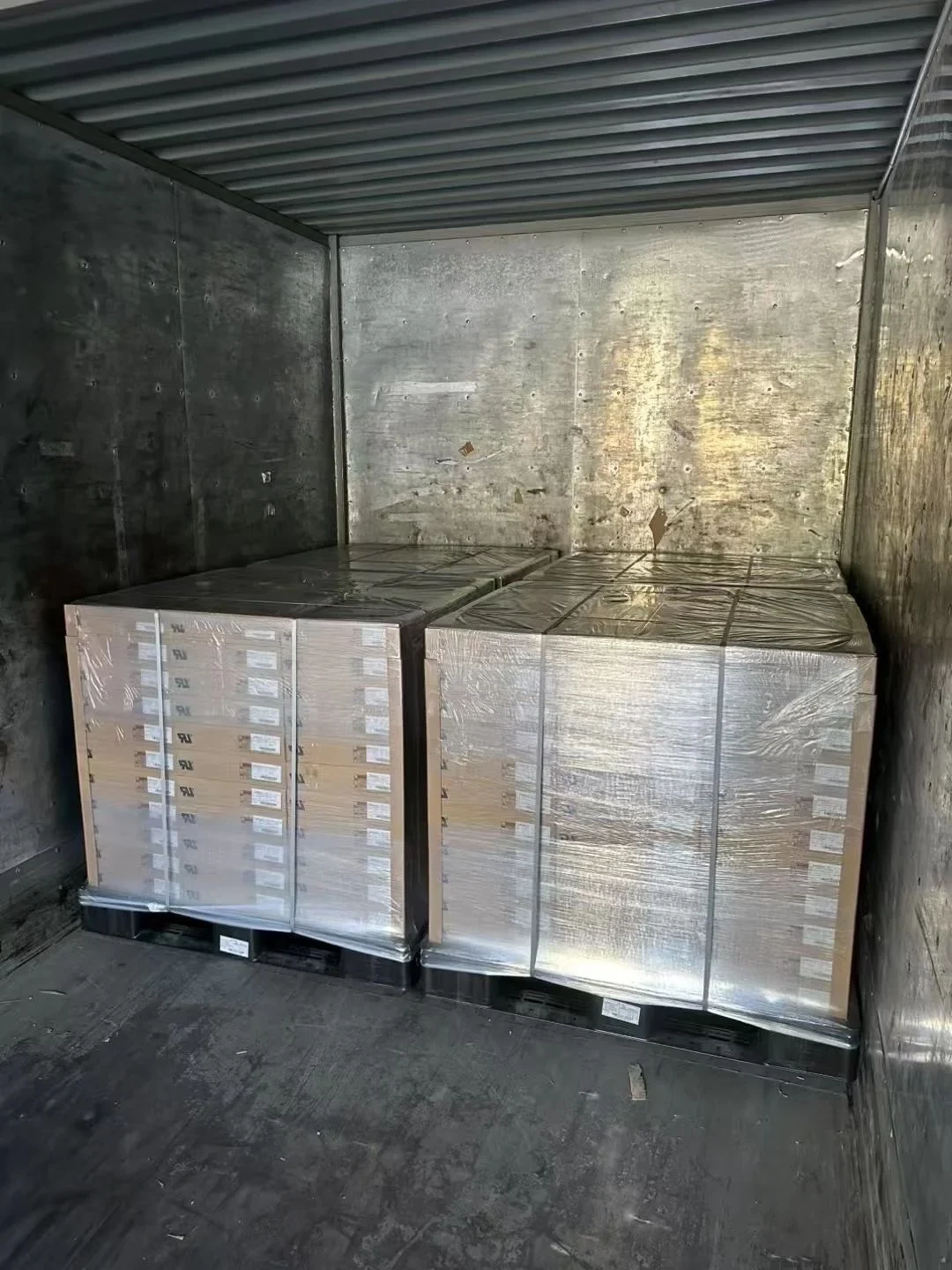
- Describe the packed shipment: provide quantities, packaging details, and photographs for review rather than relying on a catalogue image.
- Close open questions: obtain the reviewer’s response before treating the file as ready for the next transport step.
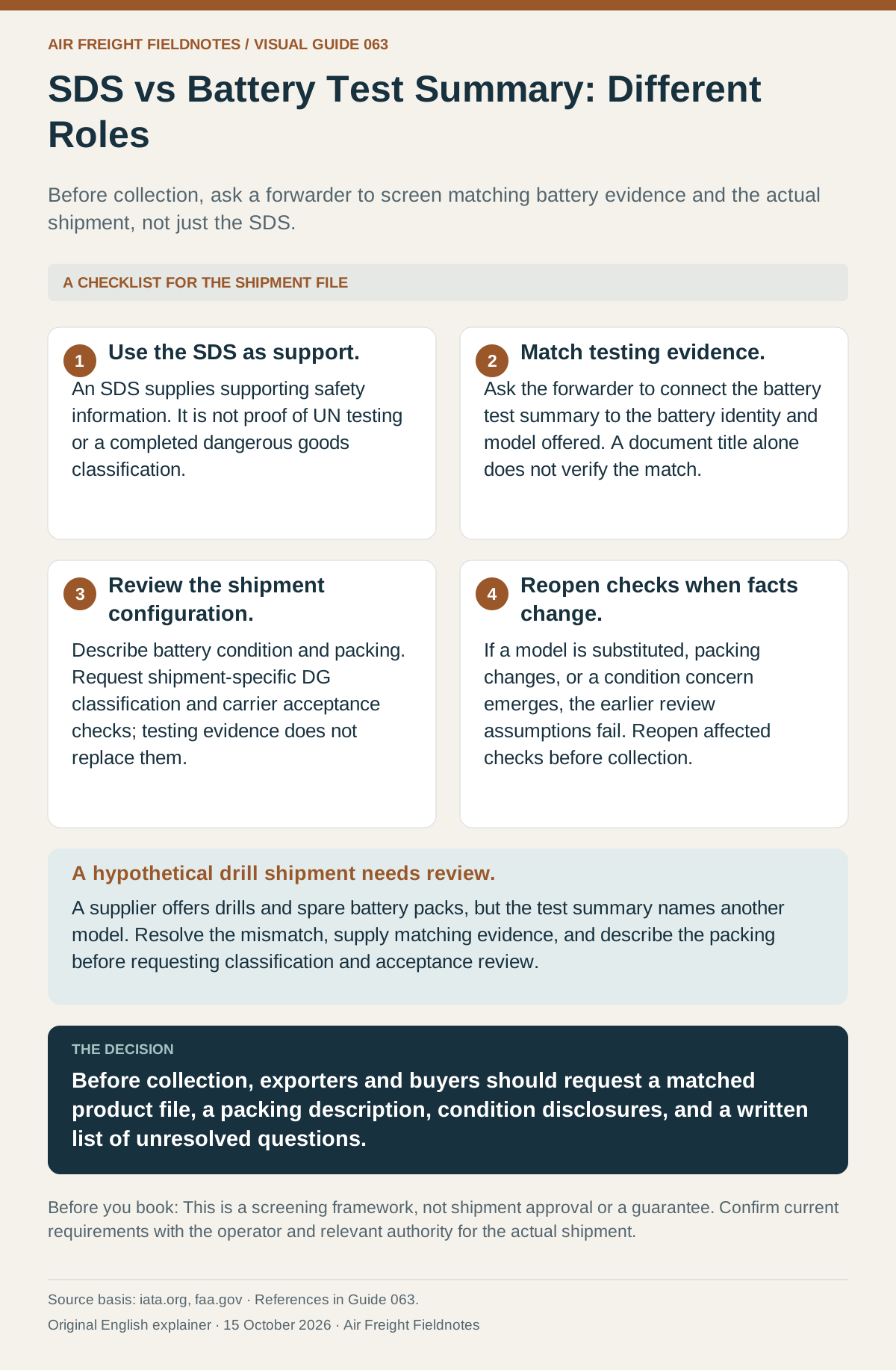
Read the infographic as text
Before collection, ask a forwarder to screen matching battery evidence and the actual shipment, not just the SDS.
- Use the SDS as support. An SDS supplies supporting safety information. It is not proof of UN testing or a completed dangerous goods classification.
- Match testing evidence. Ask the forwarder to connect the battery test summary to the battery identity and model offered. A document title alone does not verify the match.
- Review the shipment configuration. Describe battery condition and packing. Request shipment-specific DG classification and carrier acceptance checks; testing evidence does not replace them.
- Reopen checks when facts change. If a model is substituted, packing changes, or a condition concern emerges, the earlier review assumptions fail. Reopen affected checks before collection.
A hypothetical drill shipment needs review. A supplier offers drills and spare battery packs, but the test summary names another model. Resolve the mismatch, supply matching evidence, and describe the packing before requesting classification and acceptance review.
Decision: Before collection, exporters and buyers should request a matched product file, a packing description, condition disclosures, and a written list of unresolved questions.
This is a screening framework, not shipment approval or a guarantee. Confirm current requirements with the operator and relevant authority for the actual shipment.
Condition deserves its own check. FAA guidance specifically warns about damaged or recalled batteries and battery-powered devices likely to spark or generate dangerous heat. Its supplied wording includes aircraft carriage and baggage examples; it should not be stretched into a complete cargo acceptance procedure. For cargo, flag the issue and seek shipment-specific assessment rather than interpreting paperwork as clearance. [3]
Certification can also inform a buyer’s questions, but it is not a substitute for reviewing the goods. IATA describes CEIV Lithium Batteries as a shared framework, with stakeholders certified individually. Its Qatar Airways Cargo example discusses certification initiatives involving the airline and Qatar Aviation Services. Neither excerpt establishes approval for a particular exporter’s shipment. [1][2]
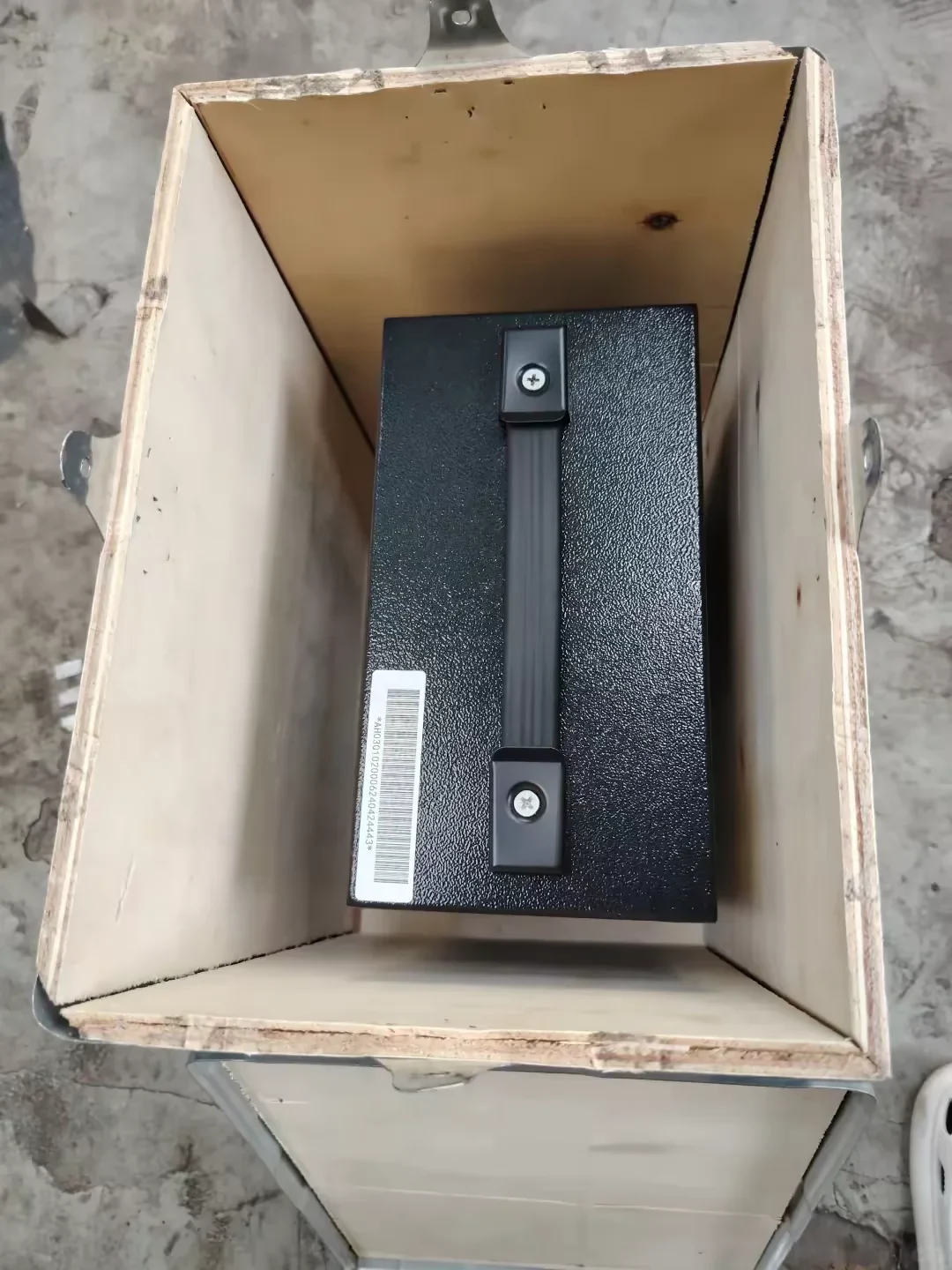
Hypothetical example: cordless tools with spare packs
Hypothetical example: a China exporter proposes sending cordless drills and spare battery packs to an overseas buyer. The file contains an SDS naming Battery A, a test summary naming Battery B, and photographs without a readable model label. Assume the goods are new, but their condition and final packing have not yet been confirmed. This example illustrates the screening framework; it is not a verified shipment case. [1][3]
The decision is to pause the file review, not declare the shipment compliant or permanently reject it. Ask the supplier to identify the battery actually supplied, explain the A/B mismatch, provide matching evidence, and describe how the drills and spare packs will be presented. Then request a classification and acceptance review of that configuration. This is an inferred risk-control decision, not a quoted regulatory procedure. [1]
The framework fails if answers cannot be verified, model substitutions occur after review, or the packing changes without being reassessed. It also fails if a condition problem is concealed by otherwise tidy paperwork. In those cases, the original review assumptions no longer hold; reopen the affected checks rather than relying on the earlier conclusion. [1][3]
FAQs about SDS lithium battery shipping
Can I send only the SDS to get an initial review?
You can use it to begin the conversation, but describe the product and identify what evidence is missing. Under this proposed framework, an SDS alone does not resolve testing, identity, classification, packing, or condition questions. Do not confuse an initial document response with shipment approval. [1][3]
Does a battery test summary replace DG classification?
Do not treat those review tasks as interchangeable. Testing evidence and the assessment of the actual shipment answer different questions. The cited references do not reproduce the governing UN provisions, so obtain a shipment-specific review instead of using this article as a classification ruling. [1][3]
What should an overseas buyer request before collection?
Request the matched product file, a clear packing description, disclosure of condition concerns, and a written list of unresolved questions. This is a practical recommendation from IATA’s emphasis on coordination: the buyer should know what has been reviewed, what remains uncertain, and which assumptions must remain unchanged. [1][3]
Sources and further reading
- IATA - Strengthening Safety in Lithium Battery TransportPrimary source · Retrieved 15 October 2026
- IATA - Qatar Airways Cargo: Elevating Lithium Battery Safety Through Industry LeadershipPrimary source · Retrieved 15 October 2026
- Lithium Battery Resources | Federal Aviation AdministrationPrimary source · Retrieved 15 October 2026
Field research
- Reddit field research 1Topic discovery and anecdotal context; not evidence of a general rule.
- Reddit field research 2Topic discovery and anecdotal context; not evidence of a general rule.

Prepared from the linked primary references and public field research. Field photographs illustrate general handling; worked examples use separate hypothetical figures. Acceptance, charges and destination requirements should be checked against the specific shipment and current operator or authority instructions.