 Skip to content

The practical answer
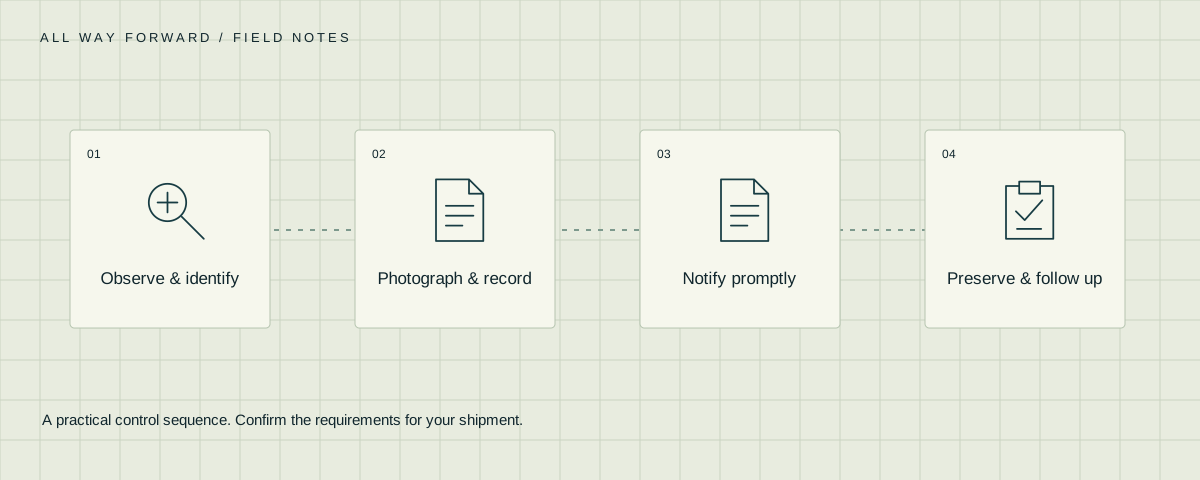
If cargo arrives damaged or short, protect people first, record the condition and identify the affected packages. Notify the responsible transport parties and insurer promptly through the required channels. Preserve packaging and evidence, and distinguish initial notification from a formal claim.
Record observations, not guesses
Photograph the shipment before unpacking when safe: container or vehicle reference, seal, package marks, external condition and the surrounding load. Then photograph internal protection and the affected goods. Use wide views to establish context and close-ups to show the damage. Keep original files with timestamps.
Write specific observations such as “crate 04: right panel broken, tabletop corner chipped” rather than “everything damaged.” Count the affected items and record quantities that are still unverified. Do not make unsupported statements about where damage occurred simply because it was discovered at delivery.
Make the delivery record useful
Record visible exceptions accurately on the appropriate receiving record and retain a copy. If the receiving party cannot inspect a sealed package at that moment, record the actual inspection limitation rather than making a false clean-condition statement. Follow the carrier’s and insurer’s process for subsequent concealed-damage notification.
Save the packing list, invoice, transport documents, booking and service scope, condition photographs from origin, delivery record and correspondence. For an FCL move, include relevant container and seal records. These items help connect the claimed damage to a particular shipment and package.
Notify promptly and preserve options
Send an initial factual notice to the relevant parties using the contact and claim channels in the transport contract and policy. Ask what inspection, survey, preservation and formal-claim documents are required. Carrier guidance, such as Maersk’s cargo-claims guide, emphasizes timely notification and evidence of condition. [1]
Do not rely on a generic 21-day period or an old dollar-per-kilogram figure. Notice periods, suit deadlines and liability rules depend on the transport document, applicable regime, route and policy. Record the actual deadlines that the responsible parties identify and seek professional advice where necessary.
Keep a loss register and mitigation record
| Record | Purpose |
|---|---|
| Item / package identifier | Connect evidence to the packing list |
| Observed damage and discovery time | Establish what was found and when |
| Photograph and document references | Keep the evidence traceable |
| Repair / replacement evidence | Support the claimed amount without guessing |
| Mitigation and instructions | Document reasonable steps and approvals |
Protect salvageable goods where safe. Preserve damaged packaging and goods until the relevant parties have given inspection or disposal instructions, unless safety or a lawful requirement dictates otherwise. Record any necessary urgent action and its reason.
Cargo insurance and carrier liability are different routes of recovery. Neither a notice nor a submitted claim guarantees payment. Check the policy, exclusions, deductible and claim procedure; avoid assuming that booking transport automatically insures the full cargo value.
Use before the next handoff
Your action checklist
Ticks stay in this browser. No shipment details are sent.
Common questions
Is reporting damage the same as submitting a claim?
No. A notice alerts the relevant party. A formal claim normally needs a stated amount, supporting documents and compliance with the applicable process and deadlines.
Can I discard damaged packaging immediately?
Preserve it for inspection where safe and follow the relevant carrier or insurer instructions. If urgent disposal is necessary, document the reason and evidence first.
Sources & scope
Primary references checked 21 October 2026. Carrier examples describe that provider’s process; confirm the requirements of your own booking and destination.
Editorial preparation: Allwayforward Editorial Team. The worksheets and worked examples are original planning aids, not carrier forms or a substitute for shipment-specific instructions.