 Skip to content

Plan & book
How to read a booking confirmation and manage cutoffs
Turn an ocean booking confirmation into a practical task list for shipping instructions, VGM, cargo delivery and customs coordination.
Practical guideField guide / 01
Build a shipment plan that survives contact with the real world.

A useful starting point
A shipment plan needs more than an estimated sailing date. It needs an accurate cargo record, a named owner for each handoff and written evidence that each critical task is complete. Start here before collecting goods from one factory or several suppliers.
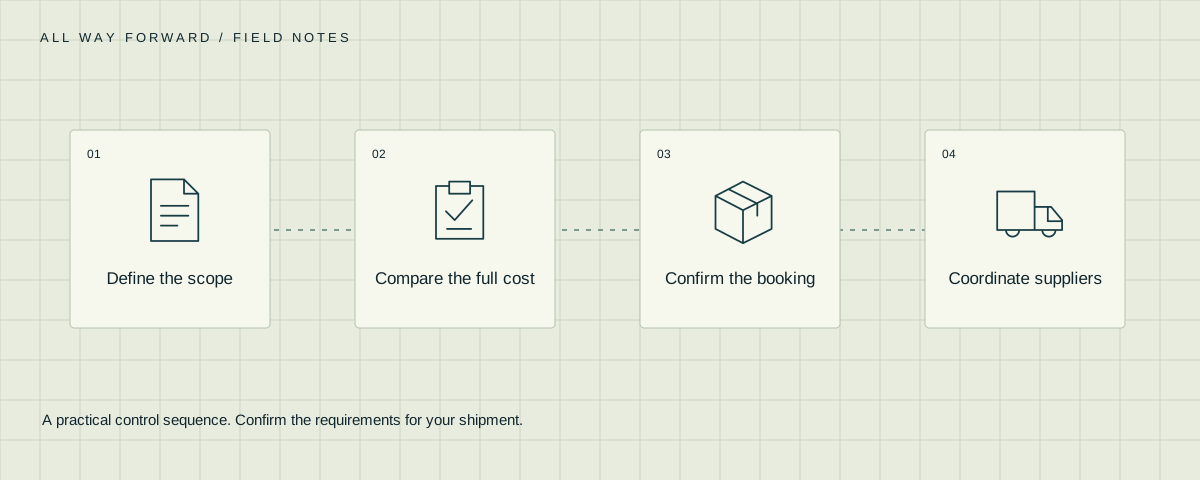
Use the buyer’s delivery requirement to work backwards. Identify the delivery address, site access and receiving date first; then agree the transport scope and a realistic cargo-ready date. Ask which parties handle export formalities, destination clearance, unloading and empty-container return. Write the named place and Incoterms edition into the sale agreement, and confirm the forwarder’s service scope separately. Incoterms allocate specified responsibilities between buyer and seller; a freight quotation still needs its own inclusions and exclusions.
Plan & book
Turn an ocean booking confirmation into a practical task list for shipping instructions, VGM, cargo delivery and customs coordination.
Practical guide
Plan & book
Compare freight quotations using a consistent shipment scope, charge basis, currency and exclusions, with an original worked example.
Practical guide
Plan & book
Coordinate furniture and building materials from several suppliers using one receiving register, packing plan and shipment approval.
Practical guideFrom definition to action
Use a glossary explanation for a term, then return to the guide to apply it to your shipment.
Primary references checked 21 October 2026. Carrier examples describe that provider’s process; confirm the requirements of your own booking and destination.
Editorial preparation: Allwayforward Editorial Team. The worksheets and worked examples are original planning aids, not carrier forms or a substitute for shipment-specific instructions.