 Skip to content
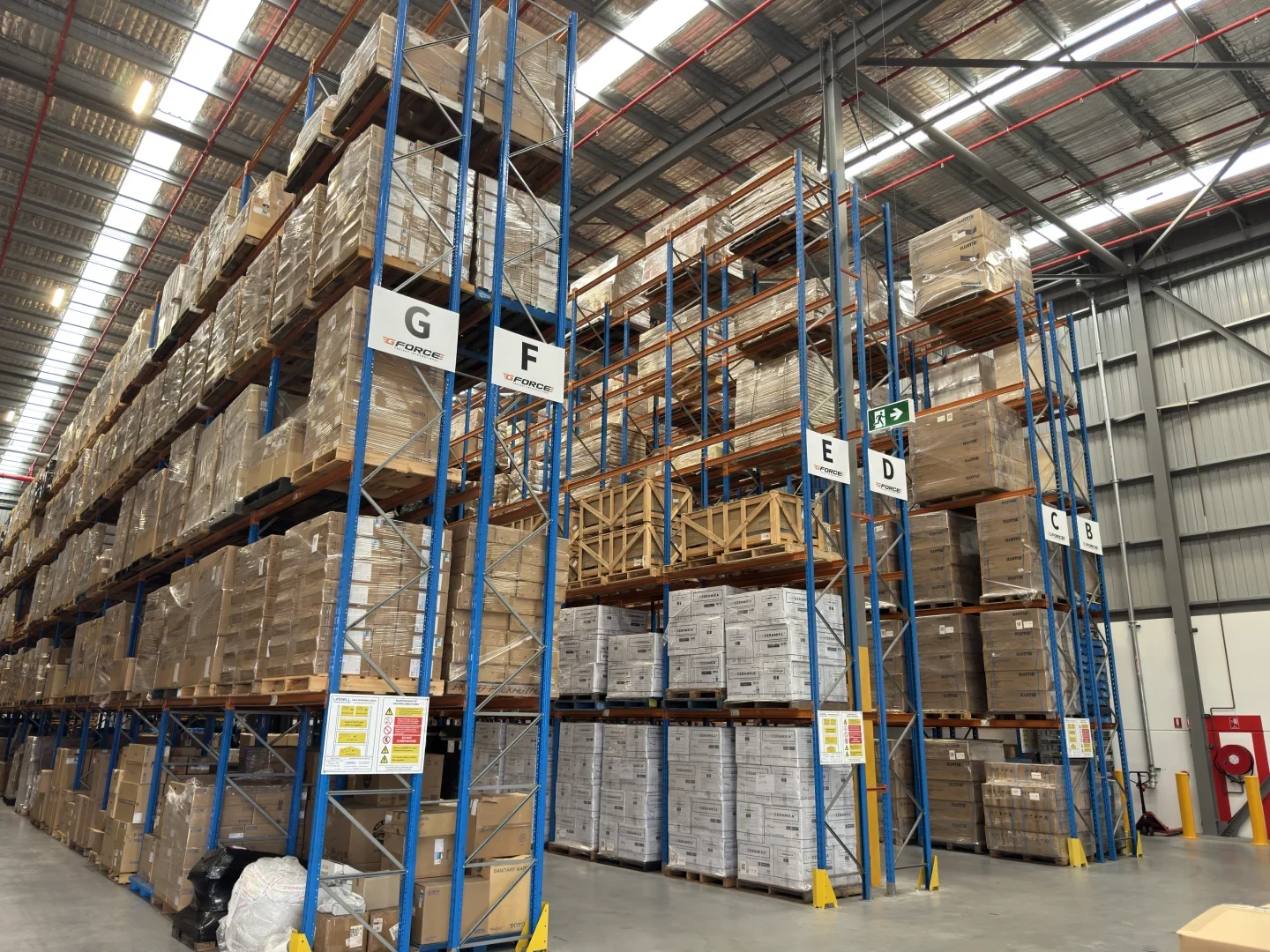
For air freight China to Europe, plan the arrival gateway, customs clearance point and final delivery address separately. Treat EU and UK movements as distinct customs plans. Name the intended importer, confirm whether customs transit is needed, and agree who handles clearance, taxes and delivery before accepting a freight quote.
Start with the final country, not just the arrival airport
A useful shipment plan identifies three places: the first arrival airport, the intended customs clearance location and the final delivery address. They need not be identical. The European Commission explains that customs transit can allow clearance at the destination rather than at the entry point into the customs territory. [1]
For planning, keep the EU and UK on separate worksheets. Do not use “Europe” as a substitute for a named customs destination. The supplied Commission material explains EU transit, not UK import procedures; it therefore cannot establish the UK requirements for a particular shipment. Obtain separate confirmation for any UK clearance or cross-territory movement. [1]
Before requesting quotes, write a route statement such as: “China collection address → proposed European gateway → proposed clearance location → buyer’s warehouse.” Add the country at every stage. Ask each bidder to correct the route statement if its proposed service uses a different gateway or clearance point.
This prevents a common planning failure: comparing an airport-only price with a service that includes clearance support and onward delivery. Request separate scope lines for origin handling, air carriage, arrival handling, customs work, any transit movement and final delivery. Leave unknown amounts marked “to confirm,” rather than treating them as zero.
Name the importer and allocate the work
Create a responsibility sheet before booking. List the seller, buyer, intended importer, customs representative, transit coordinator and delivery provider. Ask for each business’s legal name and written acceptance of its assigned work. One business may perform several functions, but do not infer responsibility merely because it appears on the freight quote.
In particular, ask: “Which entity will act as importer for this shipment, and who has confirmed that arrangement?” Do not assume that appointing a courier or customs broker answers that question. Treat an unanswered importer field as a booking issue to resolve, not an administrative detail to complete after arrival.
Use these questions to make the allocation practical:
- Who supplies and checks the product description, invoice and packing information?
- Who confirms destination-specific product requirements before dispatch?
- Who instructs the customs representative and approves declarations?
- Who funds duties, taxes, handling and any unplanned storage?
- Who receives release confirmation and authorizes onward delivery?
If the contract uses DDP, obtain written confirmation of how the seller’s import-duty responsibilities will be carried out lawfully in the destination. Do not treat a delivery label as proof that the importer arrangement works. Likewise, keep the ownership agreement separate from the transport and customs responsibility sheet.
Compare gateway clearance with customs transit
Customs transit is a procedure, not simply another name for trucking cargo away from an airport. The Commission describes it as allowing temporary suspension of import duties, taxes and commercial policy measures while goods move to their clearance destination. Suspension should not be read as cancellation of those obligations. [1]
The following comparison is a planning framework inferred from that distinction. It is not a determination that a particular shipment qualifies for transit. Ask the proposed customs provider to validate the route and procedure before relying on either option. [1]
| Planning point | Clearance at arrival gateway | Transit to another clearance point |
|---|---|---|
| Clearance location | Ask whether clearance will be completed at the entry gateway. | Name the intended destination clearance location. |
| Customs movement | Confirm what must happen before onward delivery. | Confirm the applicable transit procedure and responsible provider. |
| Duties and taxes | Confirm the payment arrangements for gateway clearance. | Confirm how temporary suspension and destination obligations will be handled. |
| Quote comparison | Request arrival, clearance and final-delivery charges. | Request transit handling, destination clearance and delivery charges. |
| Failure question | What happens if clearance cannot proceed at arrival? | What happens if the proposed transit arrangement is unavailable? |
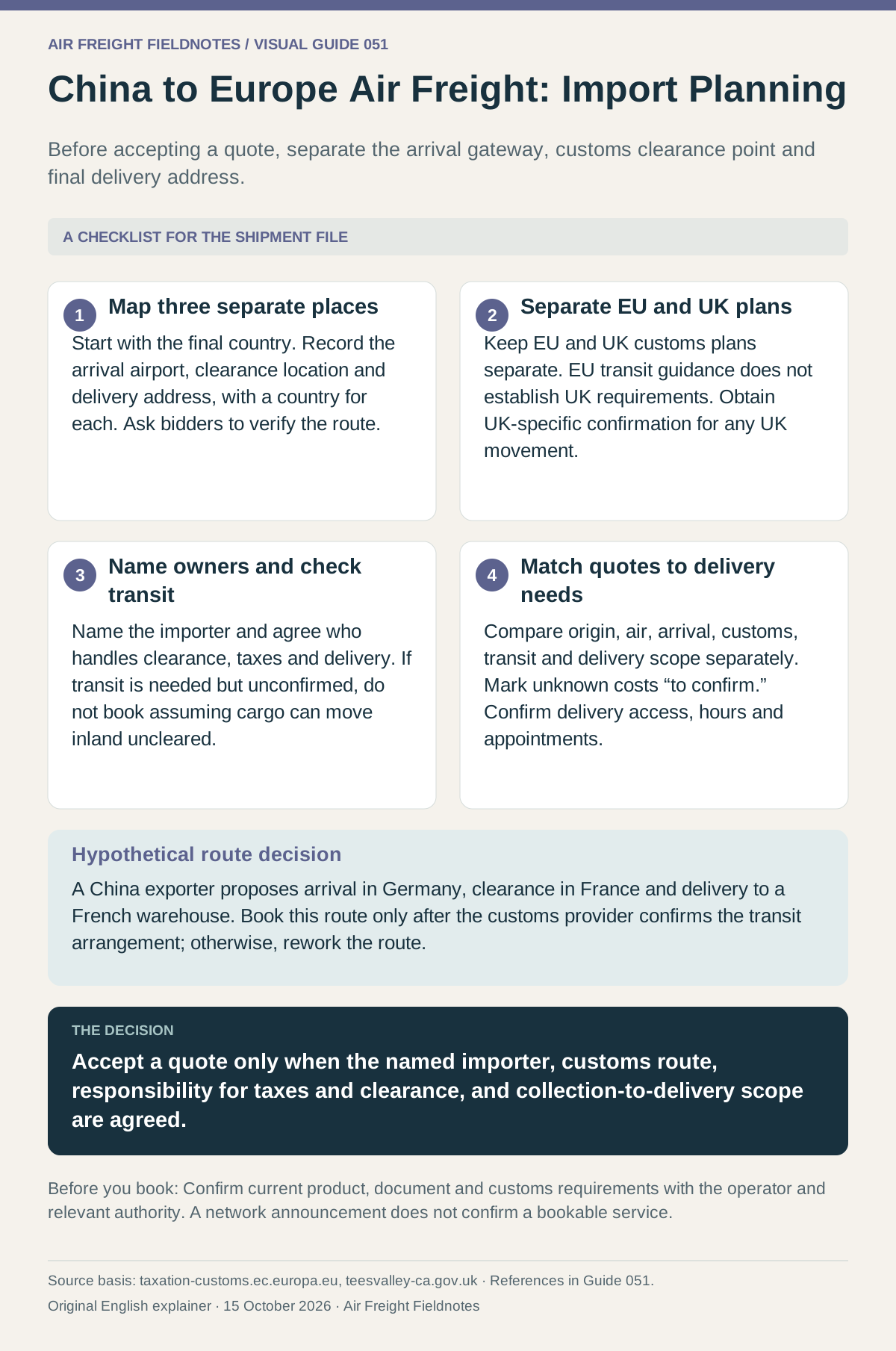
Read the infographic as text
Before accepting a quote, separate the arrival gateway, customs clearance point and final delivery address.
- 1. Map three separate places Start with the final country. Record the arrival airport, clearance location and delivery address, with a country for each. Ask bidders to verify the route.
- 2. Separate EU and UK plans Keep EU and UK customs plans separate. EU transit guidance does not establish UK requirements. Obtain UK-specific confirmation for any UK movement.
- 3. Name owners and check transit Name the importer and agree who handles clearance, taxes and delivery. If transit is needed but unconfirmed, do not book assuming cargo can move inland uncleared.
- 4. Match quotes to delivery needs Compare origin, air, arrival, customs, transit and delivery scope separately. Mark unknown costs “to confirm.” Confirm delivery access, hours and appointments.
Hypothetical route decision A China exporter proposes arrival in Germany, clearance in France and delivery to a French warehouse. Book this route only after the customs provider confirms the transit arrangement; otherwise, rework the route.
Decision: Accept a quote only when the named importer, customs route, responsibility for taxes and clearance, and collection-to-delivery scope are agreed.
Confirm current product, document and customs requirements with the operator and relevant authority. A network announcement does not confirm a bookable service.
Union transit is used for customs transit operations between EU countries, with the supplied source also identifying Andorra and San Marino. That description does not establish the correct procedure for every route involving the UK or another non-EU destination. Route-specific confirmation remains necessary. [1]
Test the route, then build the delivery plan
Do not equate an airport development announcement with a bookable service. The supplied Teesside announcement describes cooperation to expand freight networks and mentions additional scheduled services due to be announced. The reasonable inference is that a development agreement alone does not confirm capacity, routing or a departure for your shipment. [3]
Ask the quoting provider to confirm the proposed route, cargo acceptance, booking status and delivery scope. Request a delivery estimate with its assumptions, not an unconditional promise. Record what changes if space is unavailable, documents need correction or clearance takes longer than expected.
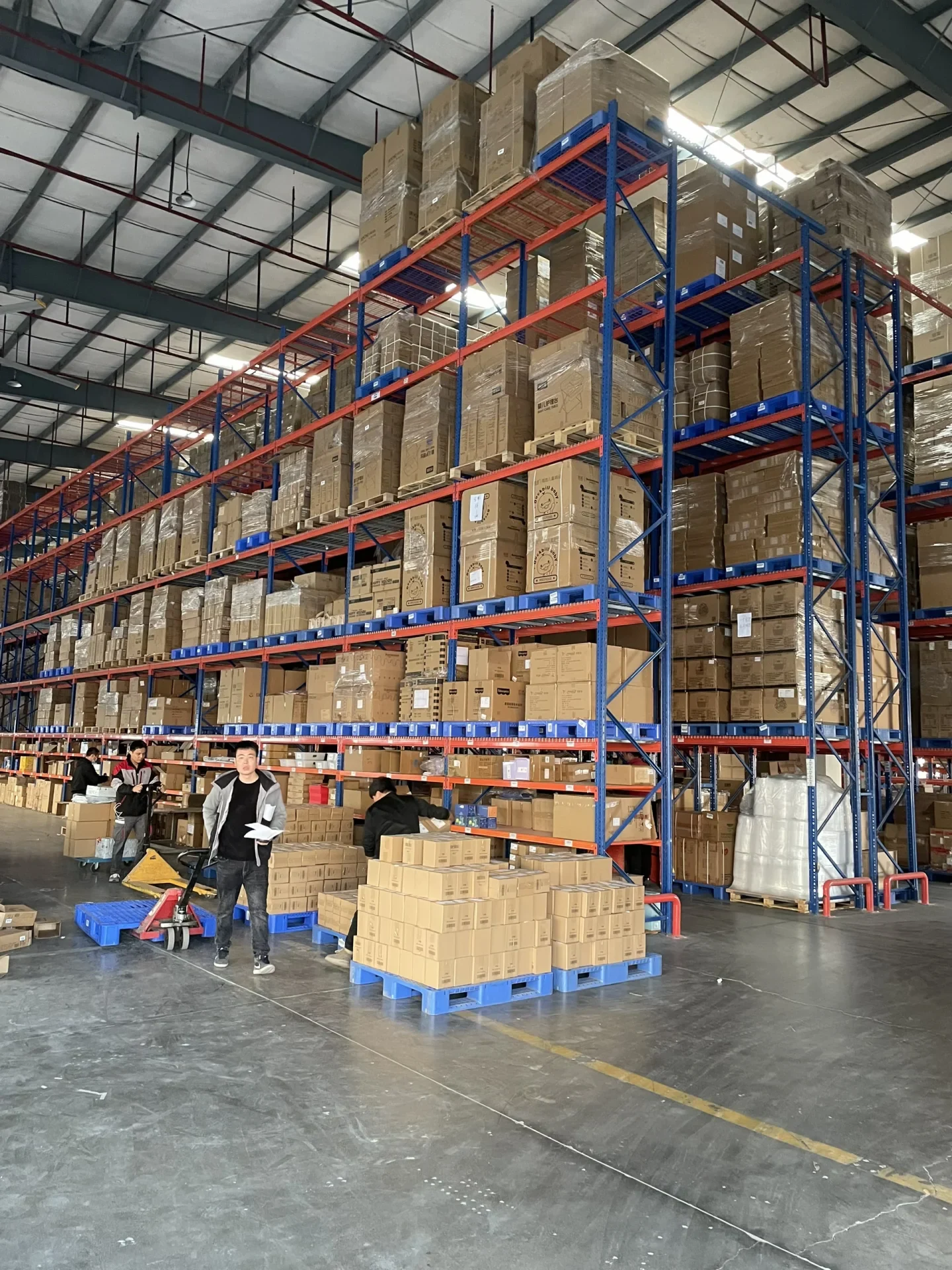
Hypothetical worked decision example: A Chinese exporter and a buyer in an EU country compare two offers for ordinary merchandise. Offer A proposes clearance at the arrival gateway. Offer B proposes transit to a clearance location nearer the buyer. Assume both providers have confirmed cargo acceptance, and the intended importer has accepted its role.
The buyer should compare complete scope rather than the air-carriage line alone. Ask Offer A to include post-clearance delivery. Ask Offer B to include transit administration, destination clearance and delivery. Then compare who coordinates exceptions and where the buyer can resolve a document problem most effectively.
In this hypothetical, Offer B is a candidate only after the customs provider confirms the proposed transit arrangement. If that confirmation fails, do not book on the assumption that the cargo can simply move inland uncleared. Rework the route or obtain a supported alternative. This follows from treating transit as a customs procedure rather than ordinary onward transport. [1]
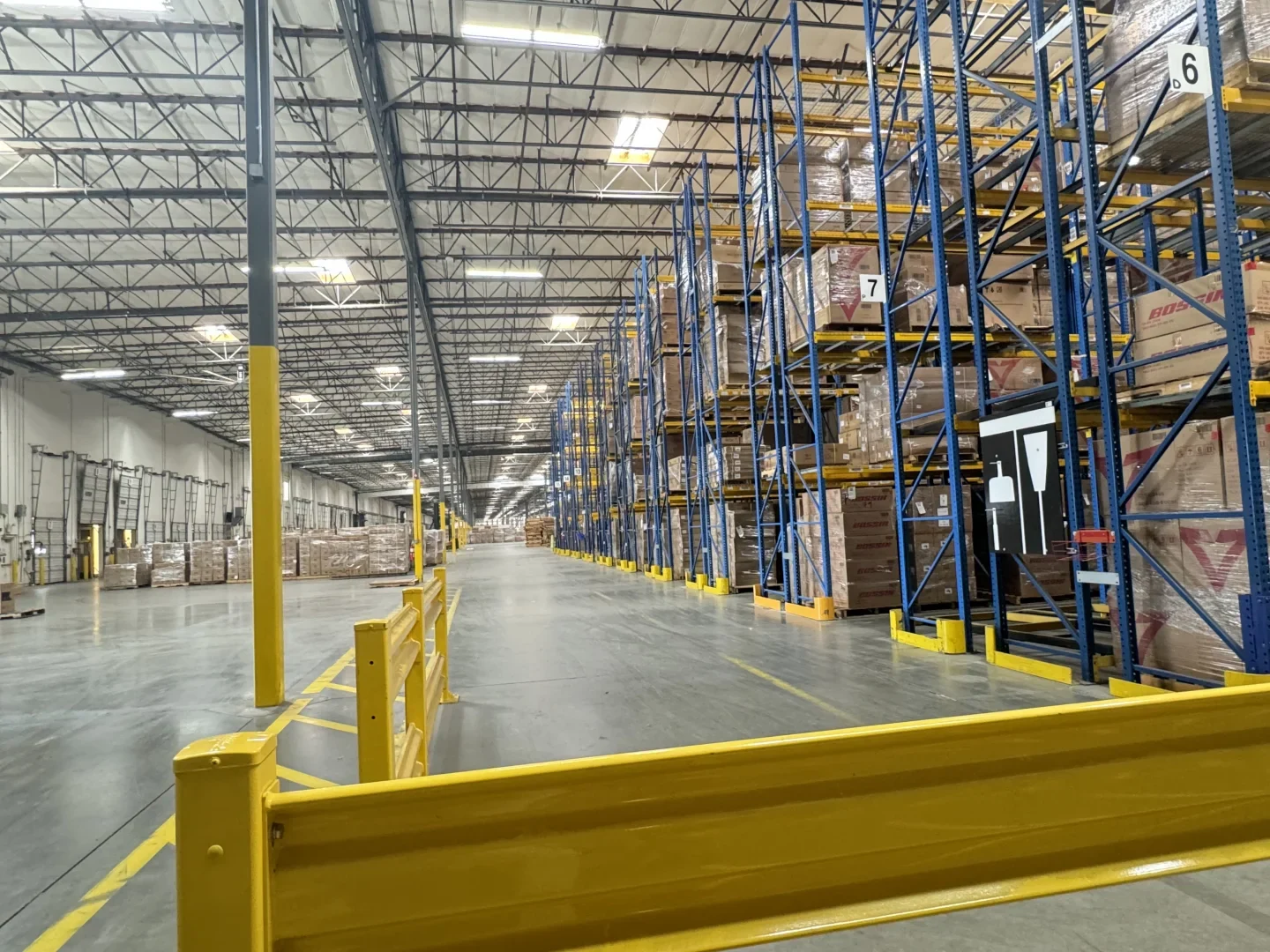
Pre-booking checklist:
- Record the gateway country, clearance country and delivery country.
- Keep EU and UK requirements in separate confirmation records.
- Name the importer and obtain acceptance of responsibilities.
- Confirm product and document requirements with the destination provider.
- Identify who arranges and manages any customs transit.
- Compare quotes against the same collection-to-delivery scope.
- Confirm delivery access, receiving hours and appointment needs.
- Agree exception contacts, spending approvals and update frequency.
Frequently asked questions
Must goods clear customs at the first EU airport?
Not necessarily. The Commission explains that customs transit can allow clearance at the destination instead of the entry point. Whether that works for your shipment requires confirmation of the applicable procedure and route. [1]
Does an EU transit explanation also establish UK requirements?
No. The supplied material describes EU customs transit and Union transit. Use it to frame questions, not as confirmation of UK import arrangements. Request a separate UK-specific plan from the provider handling that movement. [1]
Does a new air-cargo partnership confirm a usable service?
No. The supplied announcement concerns network development and includes services still to be announced. Confirm the actual routing and booking with your provider before using that airport in a committed delivery plan. [3]
Sources and further reading
- Customs transit - Taxation and Customs Union - European CommissionPrimary source · Retrieved 15 October 2026
- Teesside Secures New Agreement To Develop Global Air Cargo Links - Tees ValleyPrimary source · Retrieved 15 October 2026
Field research
- Reddit field research 1Topic discovery and anecdotal context; not evidence of a general rule.
- Xiaohongshu field research 2Topic discovery and anecdotal context; not evidence of a general rule.
Prepared from the linked primary references and public field research. Field photographs illustrate general handling; worked examples use separate hypothetical figures. Acceptance, charges and destination requirements should be checked against the specific shipment and current operator or authority instructions.