 Skip to content

The practical answer
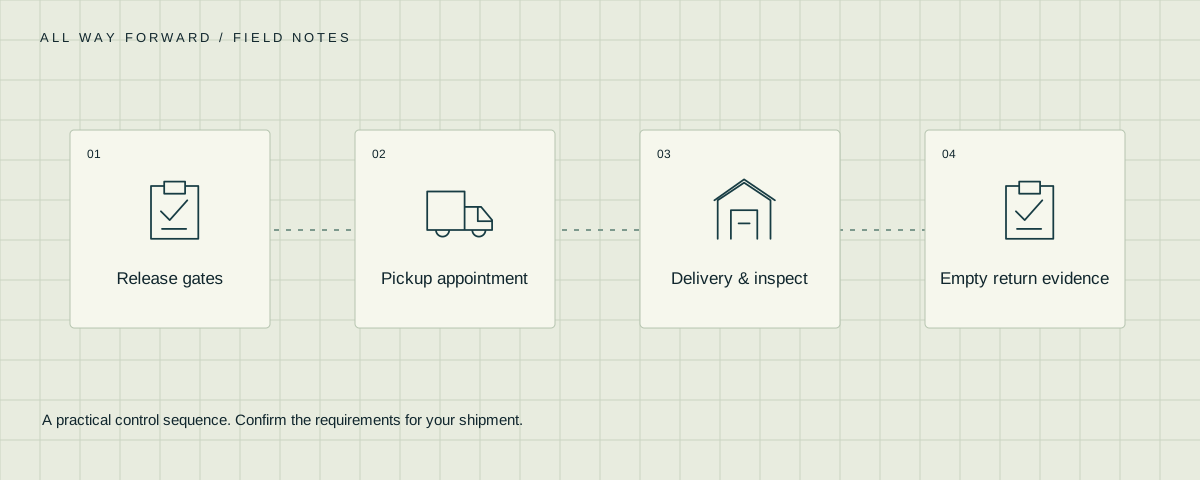
Arrange pickup only after confirming document release, customs status, cargo availability and the collection requirements. Book the receiving team and equipment before dispatch. For carrier-owned FCL equipment, track the empty-return obligation separately from delivery of the goods.
Treat ETA and availability as different milestones
Use the current ETA to plan people and documents, then obtain the actual availability status from the relevant terminal, warehouse or agent. A vessel can have arrived while a container is not yet available for collection. Ask what reference, appointment, identification and payment or credit clearance the pickup operator needs.
For LCL, confirm the destination CFS, deconsolidation and cargo-ready status. The importer normally collects the released shipment from the CFS or arranges onward delivery; it should not assume it is responsible for returning the consolidator’s entire ocean container.
Read the free-time terms for this shipment
Carrier demurrage and detention can be charged separately or combined; terminal storage may be separate. Maersk’s published terms distinguish these arrangements and direct users to country-specific conditions. [1] Ask for the applicable start event, free days, calendar rules, last free day, charging bands and return location.
Keep carrier and terminal clocks on separate lines when they are separate charges. Do not assume a customs hold, weekend or missing appointment pauses a clock. Record the relevant terms and request clarification or mitigation from the responsible party with evidence.
Confirm the receiving site can accept the load
| Before dispatch | Confirm |
|---|---|
| Access | Address, entrance, vehicle restrictions and contact |
| Appointment | Receiving date, time zone, slot and booking reference |
| Unloading | Who supplies labour, forklift, crane or liftgate; whether equipment suits the cargo |
| Service scope | Curbside, dock, inside delivery, unpacking or installation only if agreed |
| Waiting and exceptions | Included waiting, extra charges and escalation contact |
Door delivery does not automatically include carrying a sofa upstairs or positioning a stone slab. Describe the actual receiving task before accepting the delivery quotation.
Close the container and cargo records separately
At delivery, count and inspect packages within the agreed receiving scope, record discrepancies accurately and keep the proof of delivery. For an FCL move, confirm the nominated empty-return depot and its acceptance instructions before the truck departs. Save the empty gate-in or equipment-interchange record.
Example: the goods reach the site on Tuesday, but the empty container is accepted on Thursday. Those are two distinct events. The delivery receipt does not establish Tuesday as the empty-return date. Use actual timestamps when reviewing a detention invoice.
If collection or return is unavailable, preserve appointment attempts, depot instructions and correspondence, and escalate promptly. A planning calculator can organize an estimate; the contractual terms and recorded events determine the actual charge.
Use before the next handoff
Your action checklist
Ticks stay in this browser. No shipment details are sent.
Common questions
Does door-to-door service include unloading?
Check the written scope. Equipment, unloading, inside delivery, unpacking and installation are separate tasks unless expressly included.
Does delivering the goods stop container detention?
Not necessarily. For the relevant FCL arrangement, the empty container may need to be accepted at the nominated return location. Confirm the applicable terms.
Sources & scope
Primary references checked 21 October 2026. Carrier examples describe that provider’s process; confirm the requirements of your own booking and destination.
Editorial preparation: Allwayforward Editorial Team. The worksheets and worked examples are original planning aids, not carrier forms or a substitute for shipment-specific instructions.