 Skip to content
Arrival & delivery
Destination pickup checklist: release, delivery and empty return
Prepare ocean cargo pickup with separate checks for release, availability, appointments, unloading and container return.
Practical guideField guide / 04
Arrival is a milestone. Delivery is a coordinated job.
A useful starting point
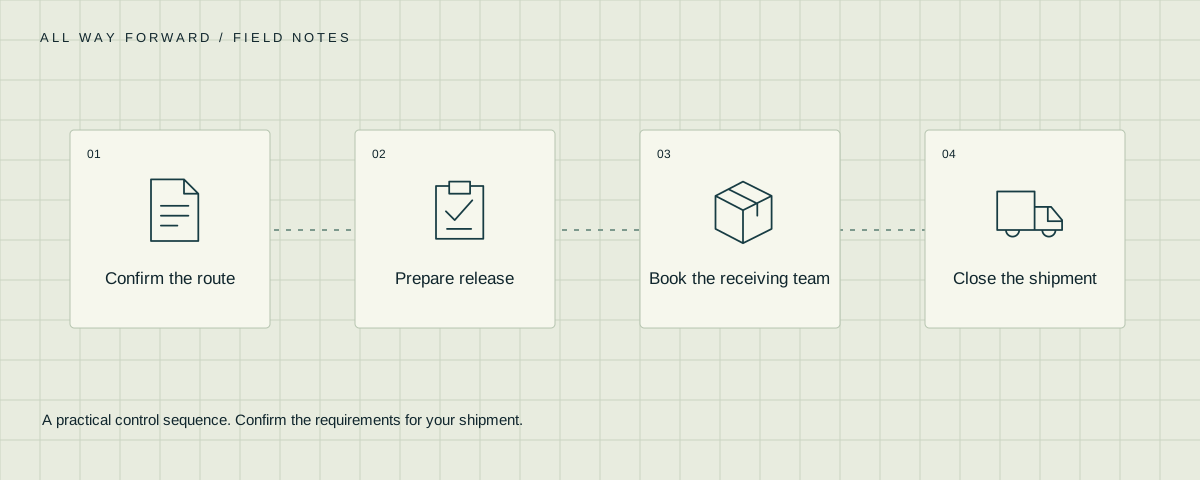
A vessel arrival estimate does not mean the goods are ready to collect. Clearance, carrier release, terminal or warehouse availability and a delivery appointment must line up. Prepare these tasks while the cargo is moving, with an owner and an escalation contact for each one.
Send a pre-arrival packet to the receiving team and broker. Include the current transport document, cargo list, routing, release plan, relevant invoices and delivery restrictions. Check the current ETA, then confirm cargo availability separately. Record actual pickup, delivery and empty-return events, not only planned dates. For an air or rail leg, obtain the relevant operator’s document and terminal rules; do not transfer ocean-container assumptions to another transport mode.
Arrival & delivery
Prepare ocean cargo pickup with separate checks for release, availability, appointments, unloading and container return.
Practical guide
Arrival & delivery
Build a useful cargo damage record with package identification, photographs, delivery exceptions, notices and supporting documents.
Practical guide
Arrival & delivery
Verify the contracting party, current route, transport locations and destination handoff instead of relying on outdated carrier lists.
Practical guideFrom definition to action
Use a glossary explanation for a term, then return to the guide to apply it to your shipment.
Primary references checked 21 October 2026. Carrier examples describe that provider’s process; confirm the requirements of your own booking and destination.
Editorial preparation: Allwayforward Editorial Team. The worksheets and worked examples are original planning aids, not carrier forms or a substitute for shipment-specific instructions.