 Skip to content
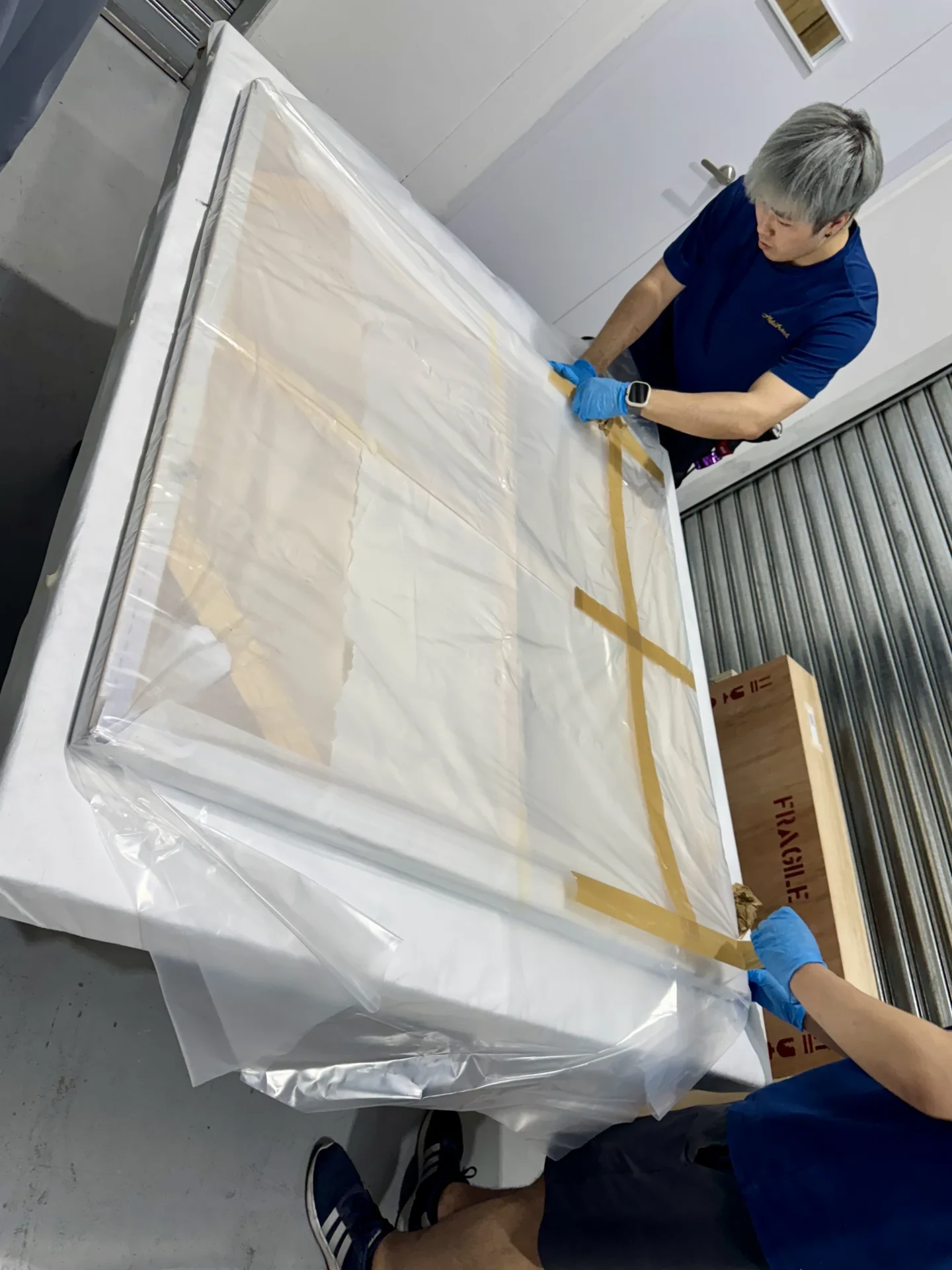
Air freight packaging should protect goods against compression, handling, moisture and tamper exposure while keeping dimensions proportionate to the product. Choose packaging for the item and its handovers, record condition with photos, and confirm acceptance requirements before dispatch. No generic box or wrapping method guarantees damage-free transport across every handover. [1][2][3]
Design Air Freight Packaging Around the Handovers
Air cargo handling includes processing at the origin cargo facility, preparation for loading, unloading at destination, and handover to the consignee or freight forwarder. Packaging therefore needs attention beyond the flight itself. IATA describes a transport chain involving forwarders, airlines and ground handlers, with shared procedures intended to reduce damage and delays. [1][2]
The practical recommendation is to design for the whole agreed route. For a China exporter and overseas buyer, that means discussing pickup, warehouse handling, airport acceptance and final delivery before sealing the shipment. One business may perform several functions; ask who physically handles the goods at each stage rather than relying on company labels alone. This is a planning recommendation based on the multi-party chain. [1][2]
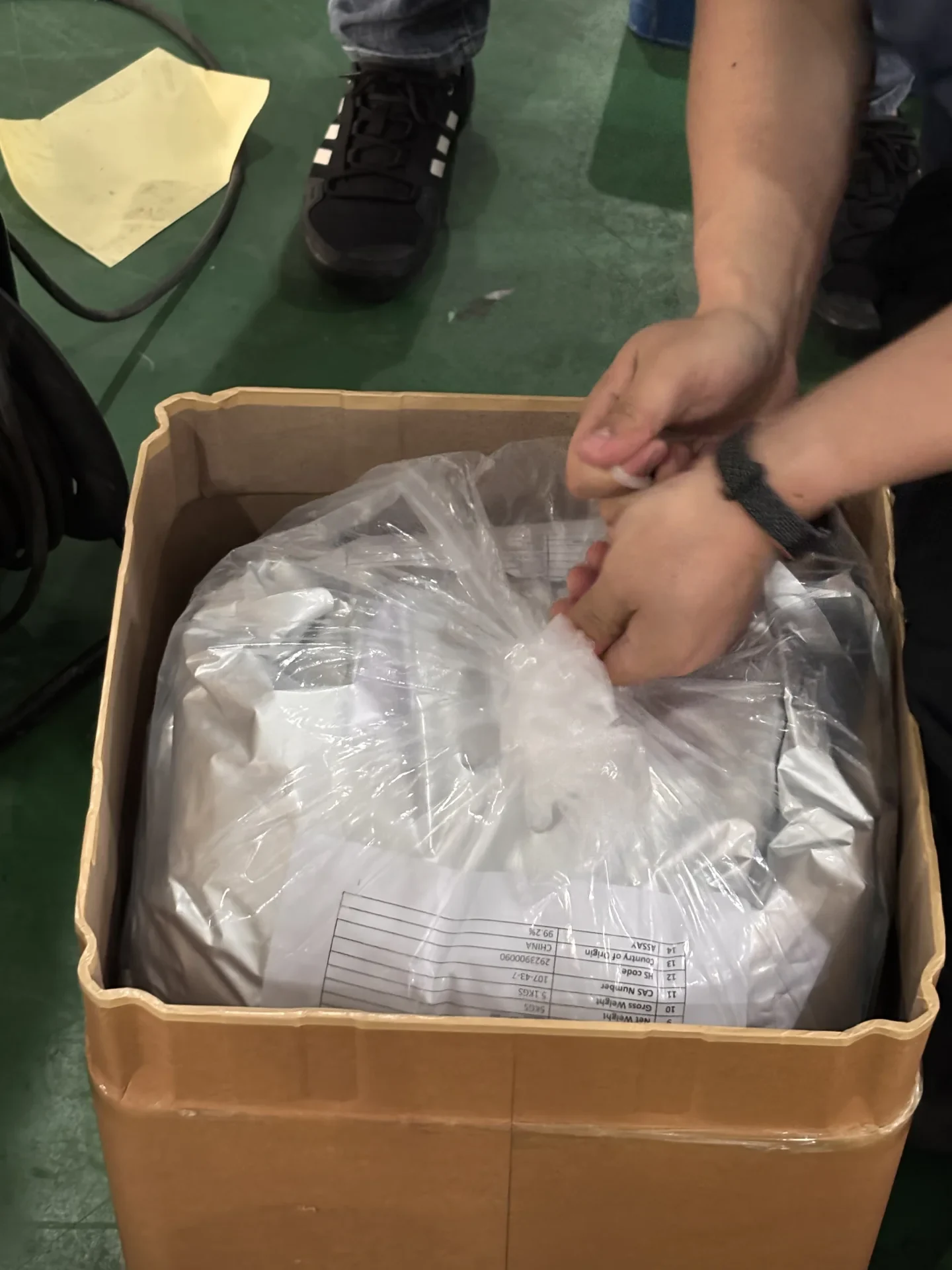
Start with the packed product’s weight, dimensions, fragility and sensitivity. Then identify what could fail: a carton wall, an unsupported product corner, an internal restraint or a closure. Packaging should match the item’s size and fragility; adding a larger outer box without improving support can increase bulk without solving the actual weakness. [3]
Compare Protection Against Four Main Exposures
The table below is a practical risk-assessment framework, not an IATA packaging specification. Its recommendations apply the supplied guidance on handling consistency and product-appropriate packaging. Suitability still needs confirmation for the particular goods, route and service. [1][2][3]
| Exposure | Packaging approach to assess | Failure case to check | Useful evidence photo |
|---|---|---|---|
| Compression | A load-bearing outer package with internal support where needed | The outer wall bends and transfers force onto a fragile product surface | Support layout before closing, plus all outer faces afterward |
| Handling movement | Restraints and cushioning matched to the product’s weight and fragility | The item shifts, contacts the wall or escapes its supports | Product position, clearances and restraint attachment points |
| Moisture exposure | A suitable barrier and sealing method, assessed for the product | Water enters through gaps, or moisture remains trapped inside | Barrier condition and closure before the outer package is sealed |
| Tamper exposure | Closures or numbered seals that make opening easier to notice | A seal is missing, cannot be matched to records or gives false confidence | Seal identifiers, closure lines and shipment reference together |
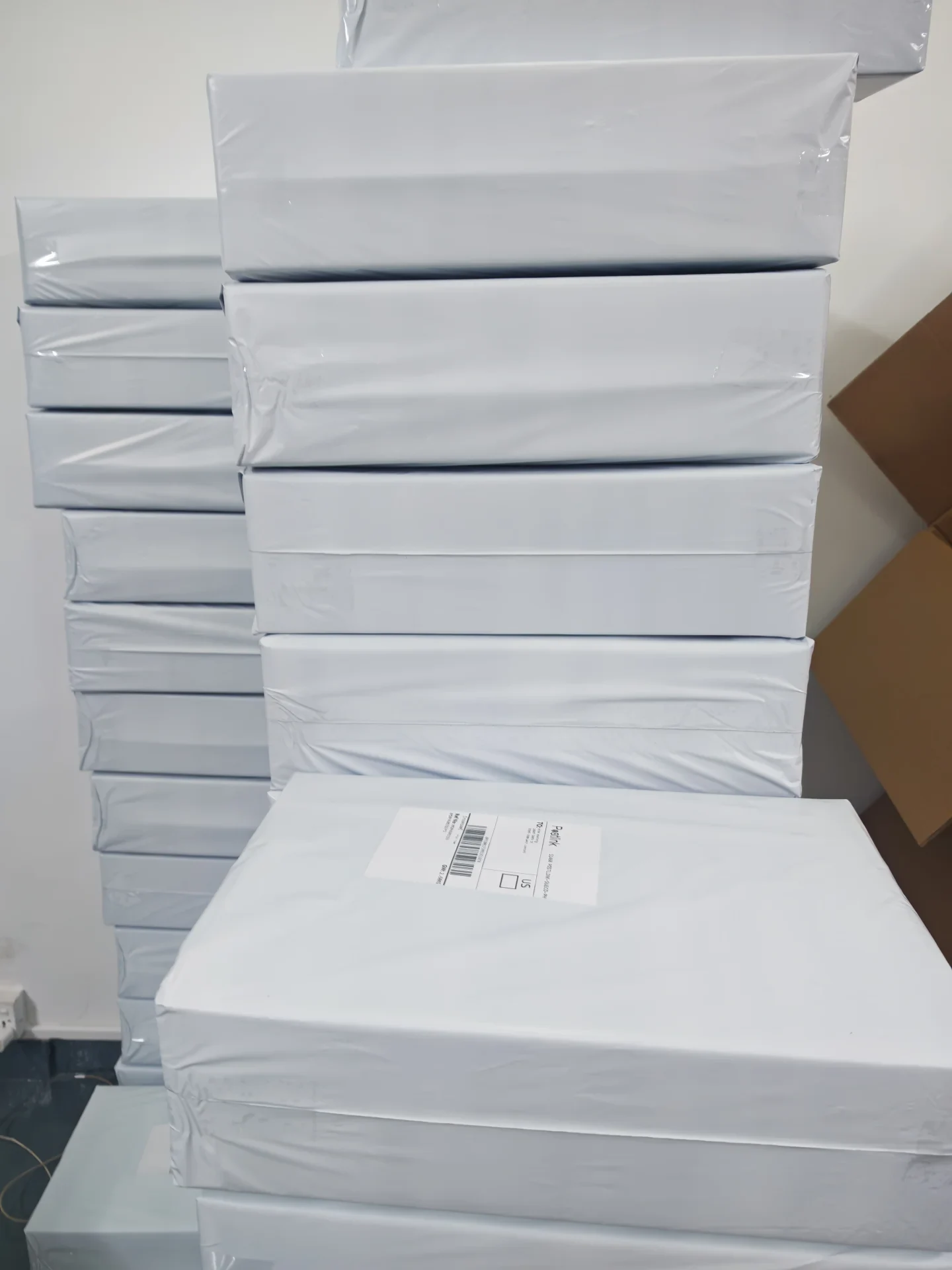
For compression, ask the packaging supplier how the proposed construction supports the packed load under the expected conditions. For handling, check whether the product can move inside its supports. These are recommended checks, not proof of transport performance: a visual inspection alone does not establish that packaging will withstand every handling event. [1][2][3]
For moisture-sensitive goods, ask a packaging specialist whether the barrier, packing conditions and any moisture-control material suit the product. For tamper concerns, agree how seal identifiers will be recorded and checked. These are inferred precautions; the cited references do not specify moisture-barrier designs or security-seal performance. [1][2]
Balance Package Suitability With Chargeable Size
FedEx explains that oversized packaging can consume unnecessary space and that dimensional-weight pricing can reward more compact packaging. It also advises matching packaging to the size and fragility of the item. The useful balance is therefore adequate protection without avoidable empty volume—not simply the smallest possible carton. [3]
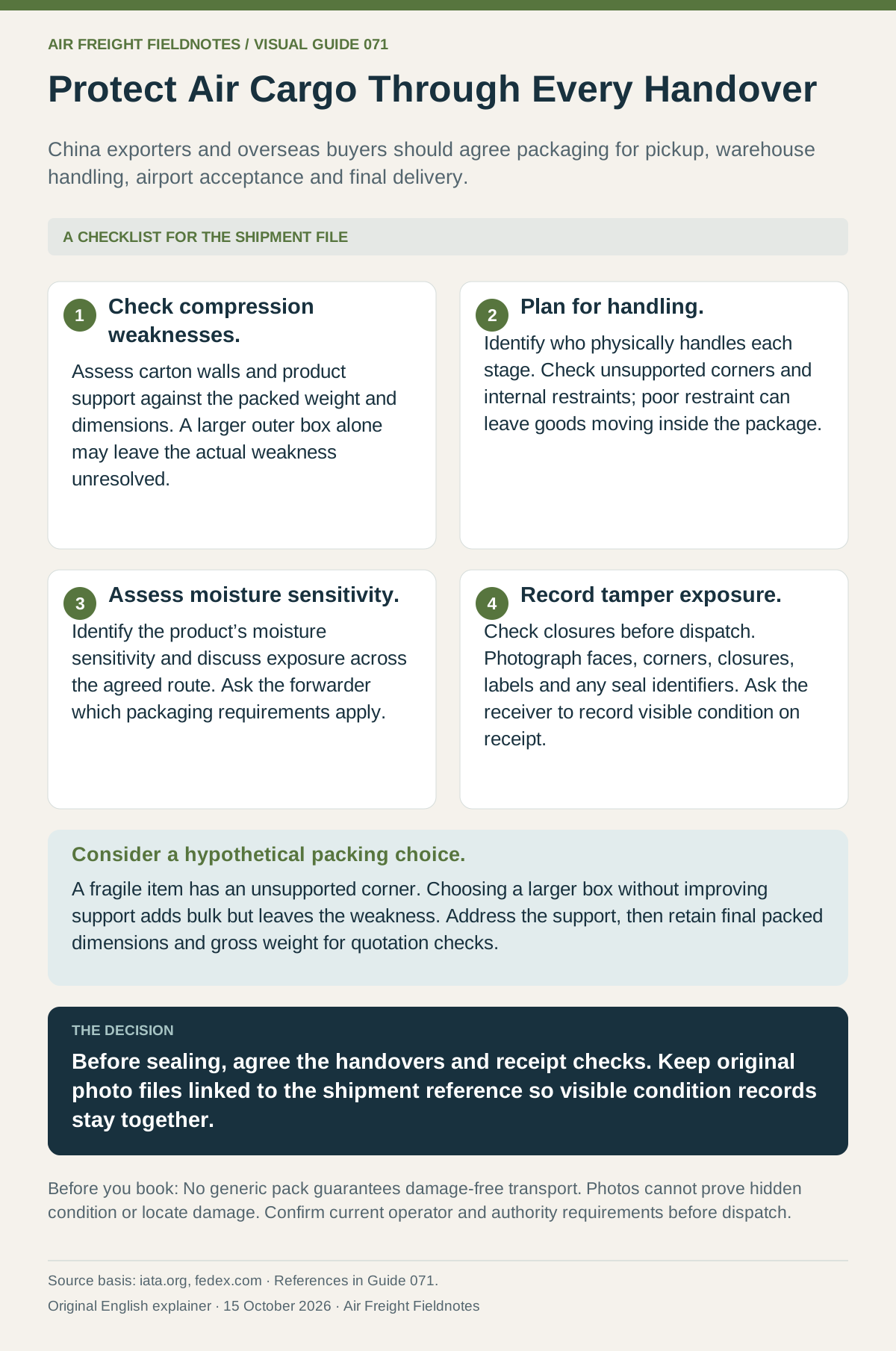
Read the infographic as text
China exporters and overseas buyers should agree packaging for pickup, warehouse handling, airport acceptance and final delivery.
- Check compression weaknesses. Assess carton walls and product support against the packed weight and dimensions. A larger outer box alone may leave the actual weakness unresolved.
- Plan for handling. Identify who physically handles each stage. Check unsupported corners and internal restraints; poor restraint can leave goods moving inside the package.
- Assess moisture sensitivity. Identify the product’s moisture sensitivity and discuss exposure across the agreed route. Ask the forwarder which packaging requirements apply.
- Record tamper exposure. Check closures before dispatch. Photograph faces, corners, closures, labels and any seal identifiers. Ask the receiver to record visible condition on receipt.
Consider a hypothetical packing choice. A fragile item has an unsupported corner. Choosing a larger box without improving support adds bulk but leaves the weakness. Address the support, then retain final packed dimensions and gross weight for quotation checks.
Decision: Before sealing, agree the handovers and receipt checks. Keep original photo files linked to the shipment reference so visible condition records stay together.
No generic pack guarantees damage-free transport. Photos cannot prove hidden condition or locate damage. Confirm current operator and authority requirements before dispatch.
Before approving a redesign, request a quotation using the finished outer dimensions and packed weight. Ask the provider to state its measurement method, dimensional divisor, rounding and charging basis. This is a recommended commercial check: the supplied material explains dimensional-weight pricing but does not establish a universal calculation rule. [3]
Hypothetical worked decision example: A China exporter is packing an 18 kg instrument. Option A measures 60 × 50 × 40 cm; Option B measures 55 × 45 × 35 cm. Assume the hypothetical contract calculates dimensional kilograms as cubic centimetres divided by 6,000 and charges the greater of actual or dimensional weight, before any rounding. These are example assumptions, not universal rules. [3]
- Option A: 120,000 ÷ 6,000 = 20 kg dimensional weight; assumed chargeable weight is 20 kg.
- Option B: 86,625 ÷ 6,000 = approximately 14.44 kg dimensional weight; assumed chargeable weight is 18 kg.
Under those hypothetical terms, Option B reduces chargeable weight by 2 kg. It is preferable only if its supports, cushioning and closures remain suitable. If shrinking the box removes necessary clearance or allows movement, the apparent saving is not a sound packaging decision. No freight price or damage outcome is assumed. [3]

Use a Packing and Handover Evidence Checklist
The following recommended checklist turns packaging choices into a repeatable release process. IATA’s material supports consistent procedures across the transport chain; it does not prescribe this particular checklist or photo set. Agree responsibilities between the exporter, buyer and service providers before collection. [1][2]
- Describe the goods: record item identity, quantity, weight and known sensitivity.
- Confirm suitability: obtain packaging guidance for the actual product, not merely a similar-looking item.
- Inspect materials: check outer packaging, supports, cushioning and closures before use.
- Check internal restraint: confirm the product sits as designed without obvious unsupported contact points.
- Record hidden protection: photograph supports, barriers and restraints before closing.
- Record the finished package: photograph faces, corners, closures, labels and any seal identifiers.
- Measure after packing: retain final dimensions and gross weight for quotation checks.
- Confirm acceptance: ask the forwarder about shipment-specific packaging and handling requirements.
- Agree receipt checks: tell the receiver what to inspect and how to record visible discrepancies.
As an evidence recommendation, keep original photo files linked to the shipment reference. Ask receivers to record visible condition before unpacking where practical. Photos can document what was visible at a particular point, but cannot by themselves establish hidden condition or identify where damage occurred. Treat them as one part of a handover record. [1][2]
Frequently Asked Questions
Is more cushioning always better?
No. Packaging should match the item’s size and fragility. Extra material inside an oversized box may increase volume without resolving poor restraint. Assess product support and movement rather than judging protection by cushioning quantity alone. [3]
Can packaging photos prove that goods arrived undamaged?
Not by themselves. The practical recommendation from a multi-stage handling chain is to record condition at more than one handover. Packing photos document visible preparation; receipt and unpacking records provide different evidence. Neither eliminates uncertainty about hidden damage. [1][2]
Does good packaging guarantee airline acceptance?
No such guarantee follows from the available guidance. IATA describes acceptance and preparation as parts of a wider handling process. Confirm shipment-specific requirements with the service provider before dispatch rather than treating a strong outer package as complete acceptance approval. [1][2]
Sources and further reading
- IATA - What to Know About Air Cargo HandlingPrimary source · Retrieved 15 October 2026
- IATA - IATA Cargo Handling Manual (ICHM)Primary source · Retrieved 15 October 2026
- What is Dimensional Weight? | FedExPrimary source · Retrieved 15 October 2026
Field research
- Reddit field research 1Topic discovery and anecdotal context; not evidence of a general rule.
- Reddit field research 2Topic discovery and anecdotal context; not evidence of a general rule.
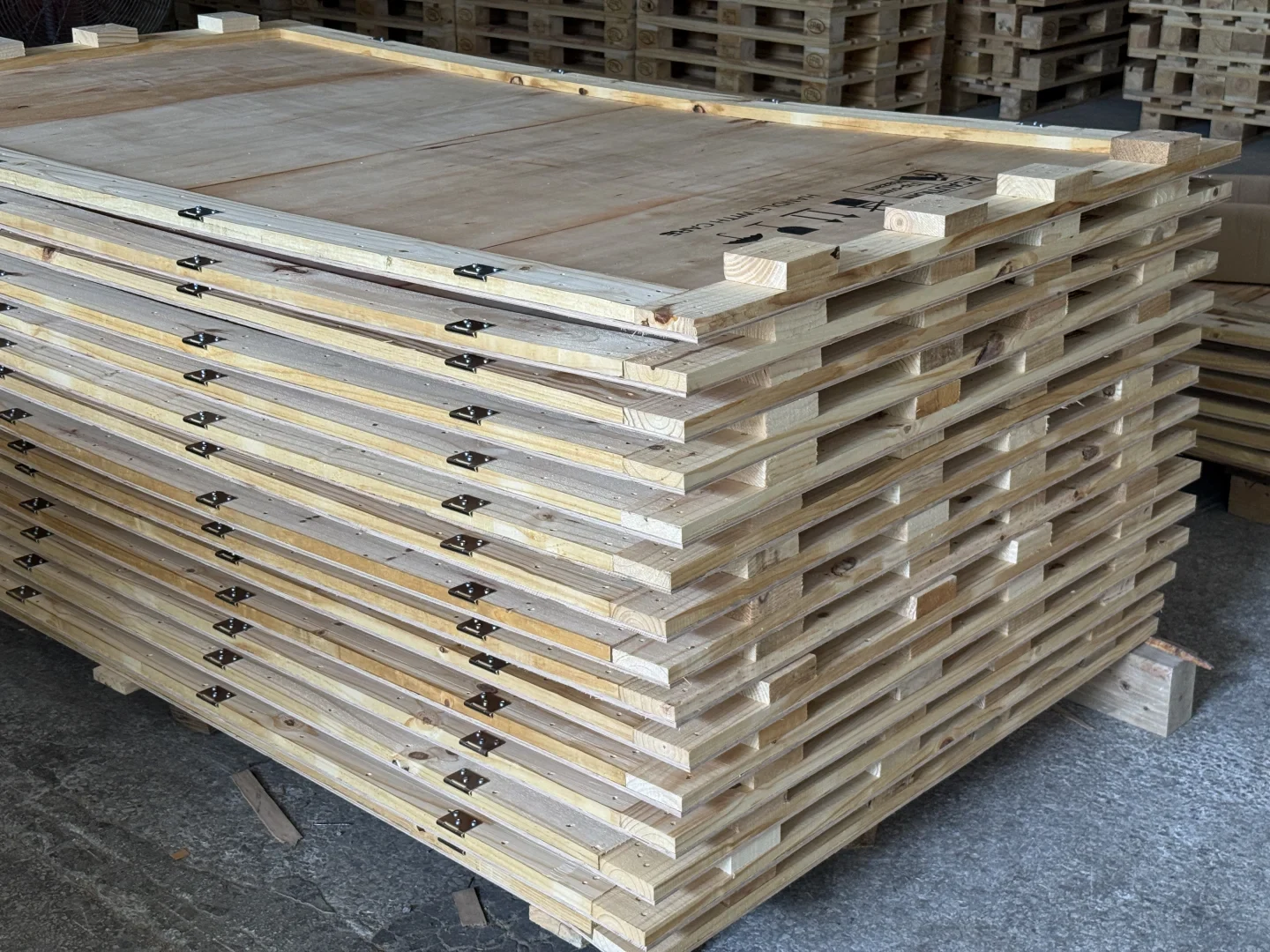
Prepared from the linked primary references and public field research. Field photographs illustrate general handling; worked examples use separate hypothetical figures. Acceptance, charges and destination requirements should be checked against the specific shipment and current operator or authority instructions.