 Skip to content
Cargo protection
Concealed Damage Coverage
Policy wording addressing cargo damage discovered only after packaging is opened, subject to specified evidence and reporting conditions.
Understand it in practiceWhere it fits in the journey
Highlighted stages are commonly relevant- 01Agree — commonly relevant
- 02Prepare — commonly relevant
- 03Transport — commonly relevant
- 04Clear — commonly relevant
- 05Deliver — commonly relevant
Concealed Damage Coverage at a glance
- Damage found later
- Condition evidence
- Policy notification rules
Is damage discovered after unpacking automatically covered?
Photograph packaging and the goods promptly. Late discovery does not automatically prove that damage happened during the insured journey.
Do not confuse these protections
| Term | Meaning |
|---|---|
| Carrier liability | Responsibility under transport terms and law |
| Declared value | A declaration that may affect contractual liability |
| Cargo insurance | Cover under a separate policy with its own conditions |
Scroll sideways to compare

Before you book
For cargo protection, have these details ready:
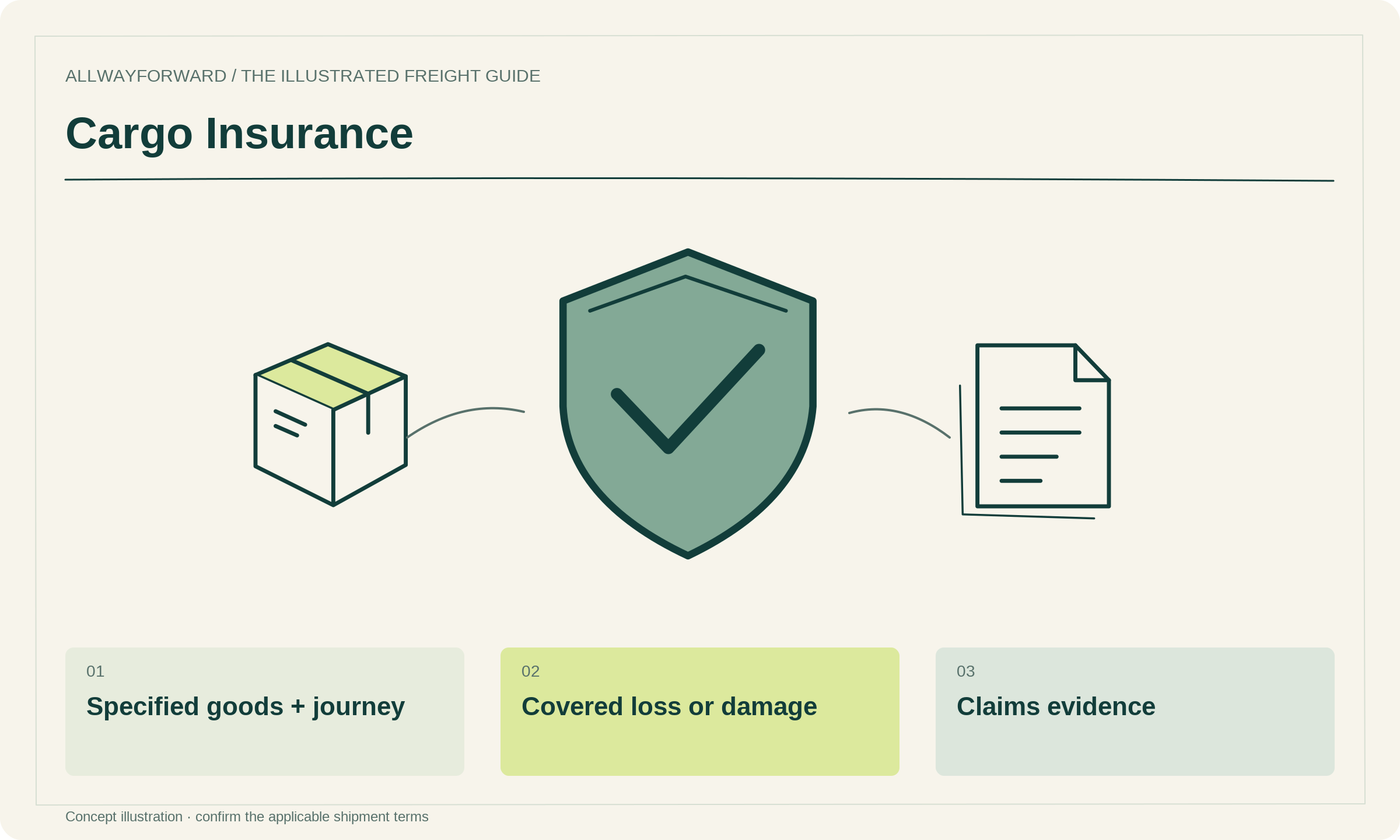
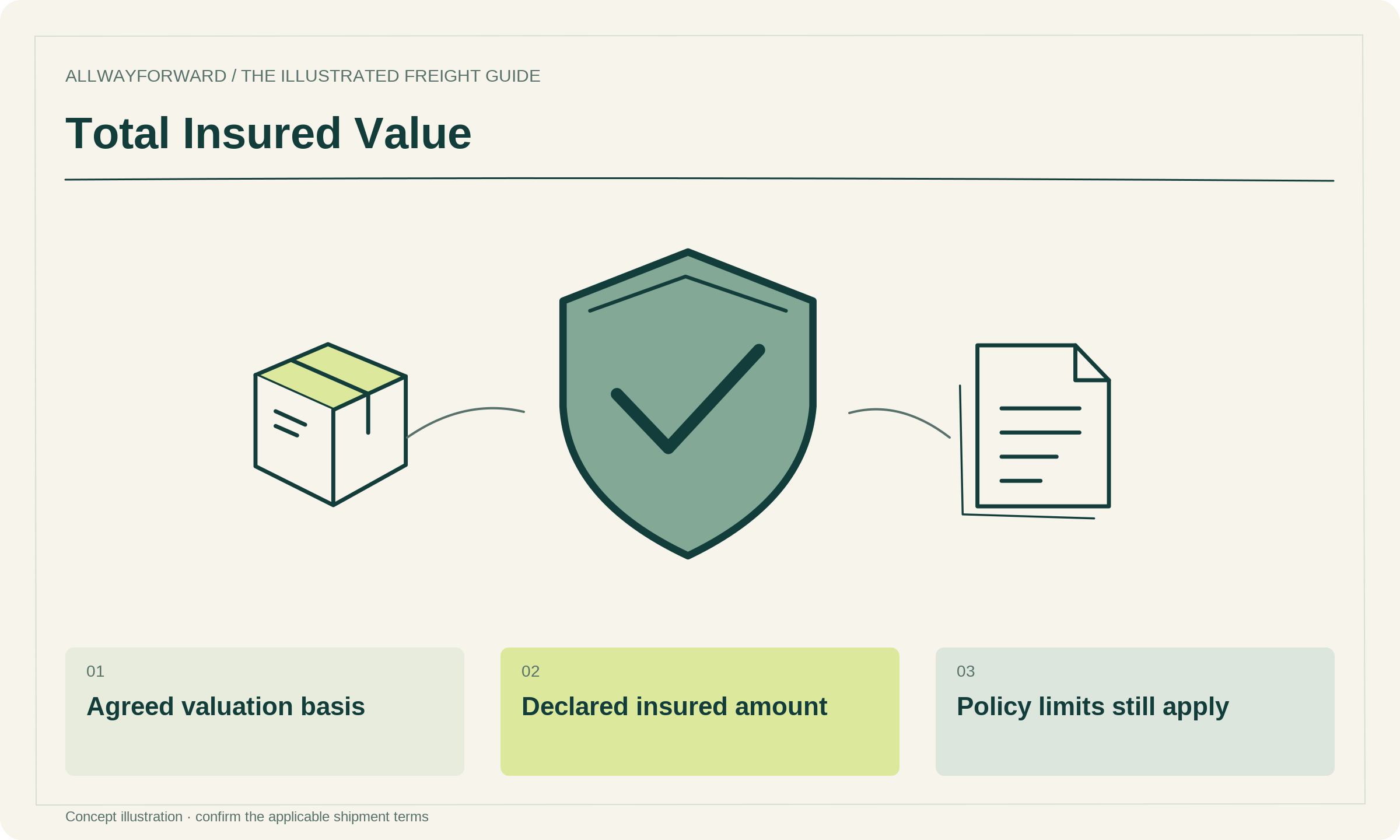
- Insured goods, journey and value
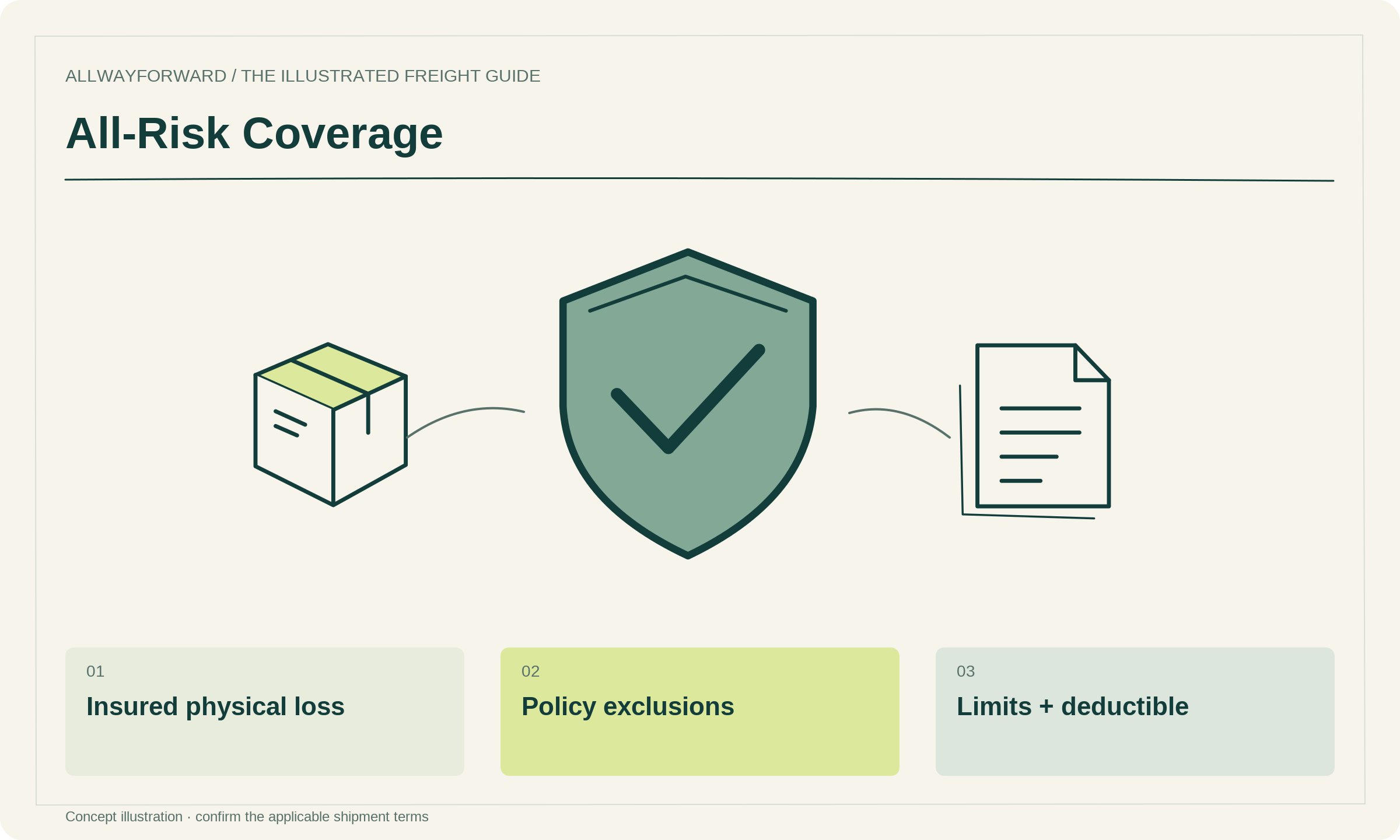
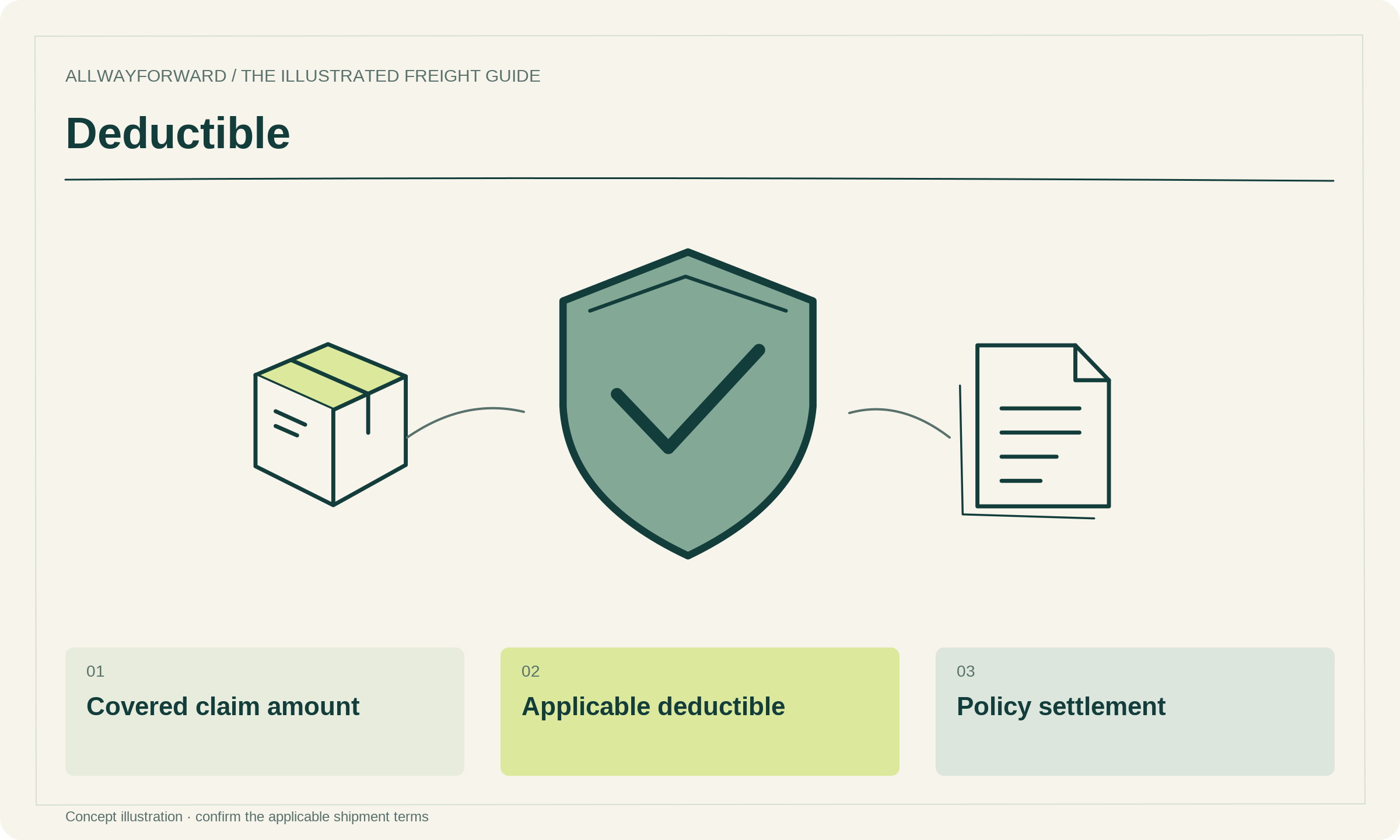
- Exclusions, limits and deductible
- Condition photos, records and claims procedure
Sources & further reading
Plain-language educational guidance. The applicable contract, carrier tariff, official rules or insurance policy takes precedence. Illustrations show concepts, not a specific shipment or facility.
Published by Allwayforward as a plain-language freight reference. Examples are illustrative, not customer case studies. For a correction, send the term and supporting source.
 Cargo Insurance
 All-Risk Coverage
 Deductible
 Total Insured Value